Mediterranean Garden Ideas That Create a Timeless Outdoor Retreat
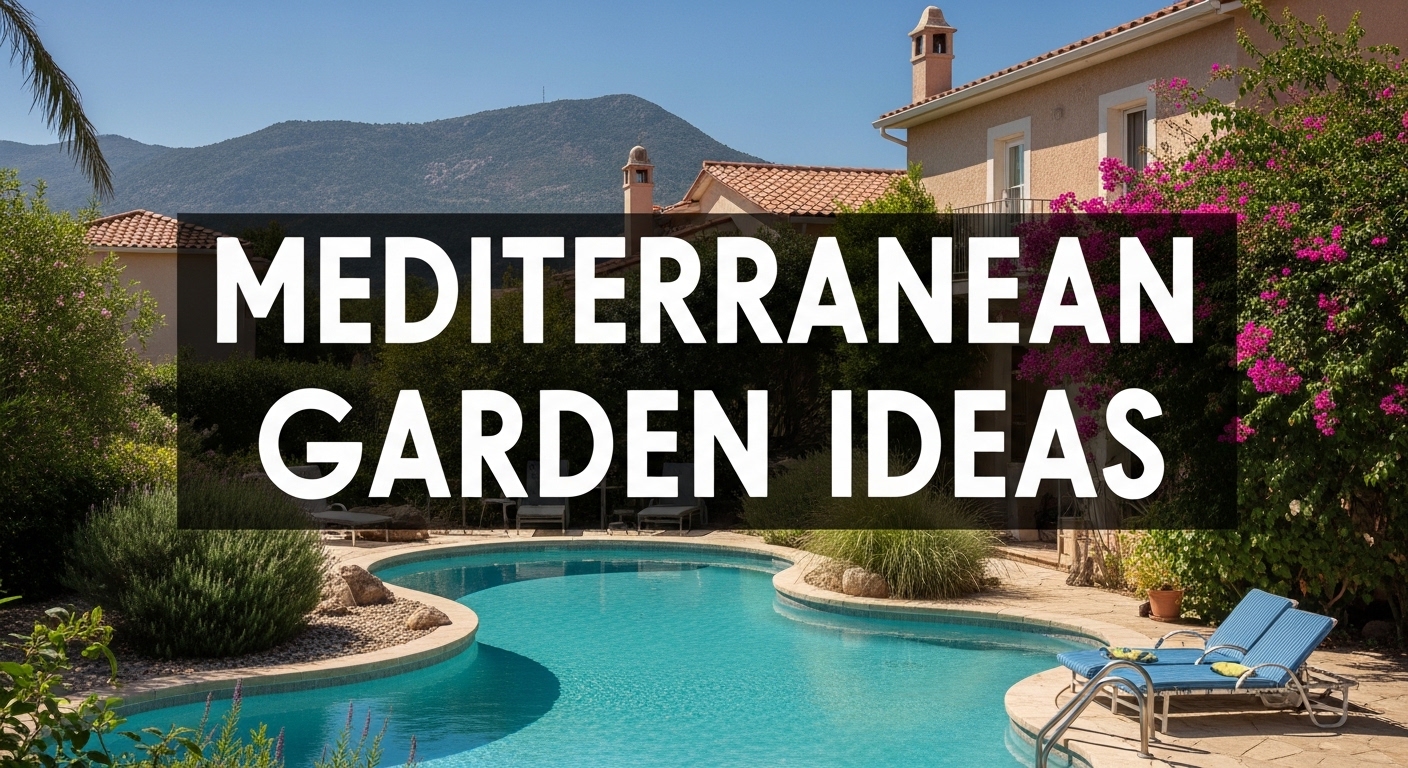
Mediterranean garden ideas have endured for centuries because they respond to climate, lifestyle, and the simple pleasure of outdoor living. In regions where summers are long and light is abundant, gardens were shaped not as decorative afterthoughts but as essential rooms of the home. Having worked with compact courtyards, suburban backyards, and rural properties, I have seen how this approach brings structure, shade, and serenity to everyday life.
Mediterranean landscapes are rooted in practicality. They rely on durable materials, climate-appropriate planting, and thoughtful transitions between indoors and outdoors.
A Courtyard-Centered Layout
A courtyard arrangement works beautifully for homeowners seeking privacy and intimacy. The layout logic is simple: enclose the garden with walls, hedges, or built forms so the space feels protected from wind and noise. Proportions matter here, as a courtyard that is too narrow will feel compressed, while one too large loses its sense of shelter.
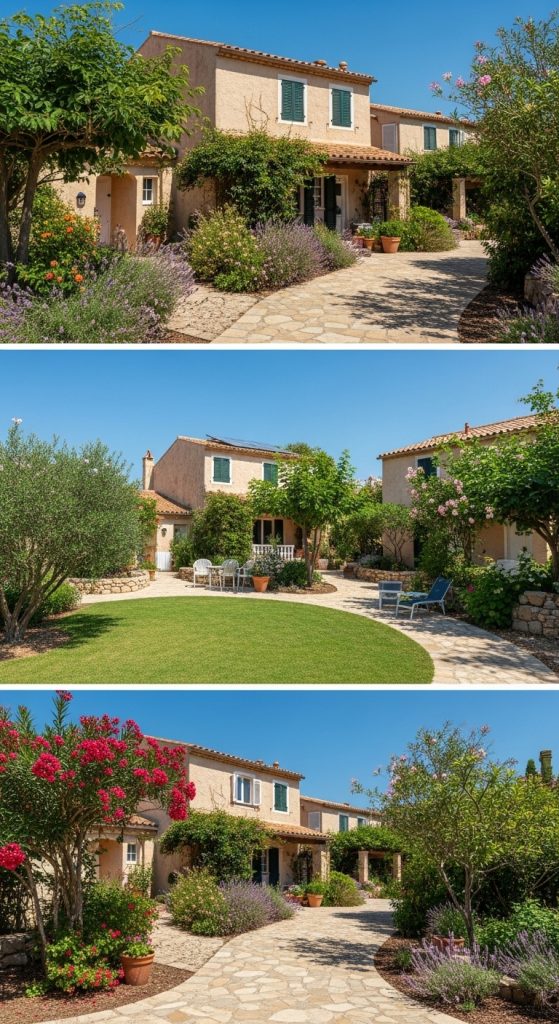
Materials such as limestone, travertine, or textured plaster help bounce light while keeping the atmosphere warm. In smaller properties, consider vertical planting to soften walls without consuming floor space. A common mistake is overcrowding the center; leave generous circulation around seating so the garden feels intentional rather than cluttered.
A Sun-Soaked Terrace With Stone Underfoot
Stone terraces define Mediterranean gardens. The layout should prioritize flow from the home’s interior, ideally aligning doorways with pathways or seating zones. Large-format pavers reduce visual noise and make modest spaces appear broader.
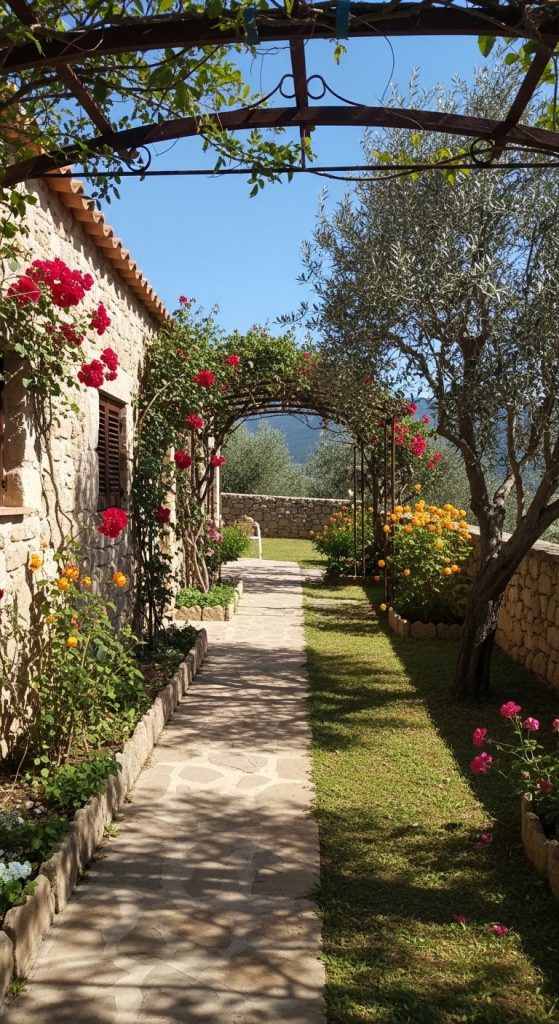
Natural stone, porcelain with a matte finish, or brushed concrete are practical choices. The table below compares common options:
| Material | Durability | Maintenance | Visual Warmth | Budget Range |
|---|---|---|---|---|
| Limestone | High | Moderate | Soft, warm | Mid to high |
| Travertine | High | Moderate | Earthy | Mid to high |
| Porcelain slab | Very high | Low | Controlled | Mid |
| Concrete | High | Low | Neutral | Low to mid |
Avoid glossy finishes, which feel out of place and become slippery in damp conditions.
Layered Planting With Structure First
Mediterranean gardens rely on strong architectural plants before softer fillers are added. Olive trees, cypress, rosemary hedges, and lavender create a framework that holds the design together year-round.
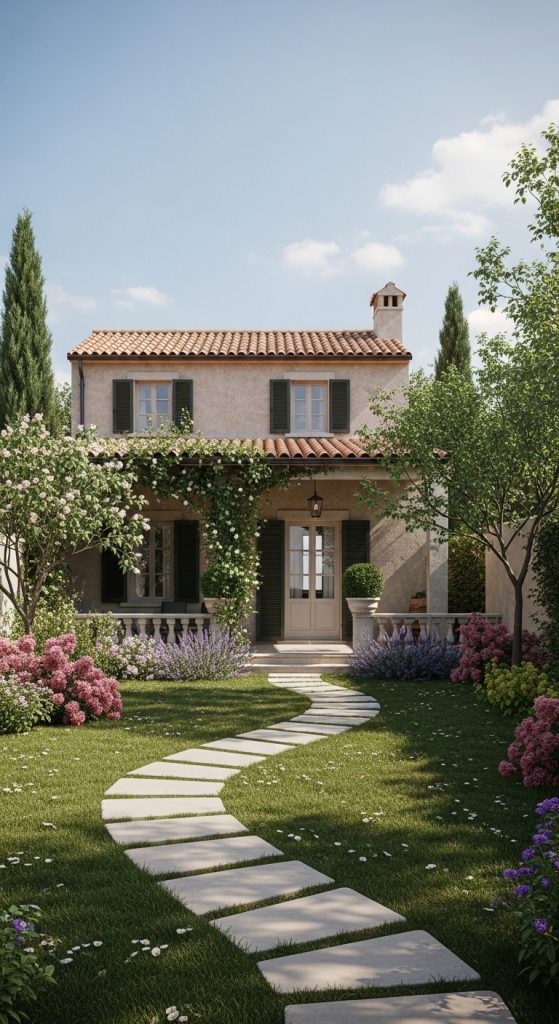
Scale is critical. A single well-placed tree often has more impact than several small specimens. In compact yards, choose dwarf varieties or large containers to control growth. Overplanting is the most frequent mistake, leading to maintenance headaches and visual confusion.
Lighting should accentuate structure at night. Uplights at the base of trees and subtle path lights enhance form without overpowering the calm mood.
Shaded Dining Spaces That Extend Living
Outdoor dining is central to Mediterranean living. The layout should consider prevailing sun angles so shade falls where it is most needed during peak hours. Pergolas, retractable awnings, or vine-covered trellises offer adaptable solutions.
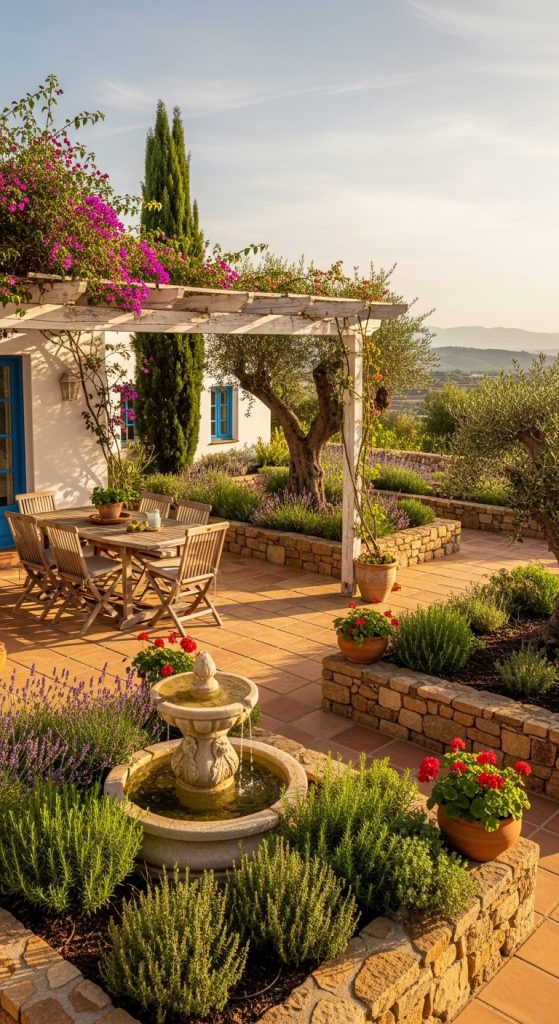
For renters, freestanding pergolas and weighted umbrellas provide shade without structural alterations.
Water Features With Restraint
Water is often used as a focal point, but restraint is essential. A simple wall fountain or basin creates soothing sound and a sense of coolness without dominating the garden.
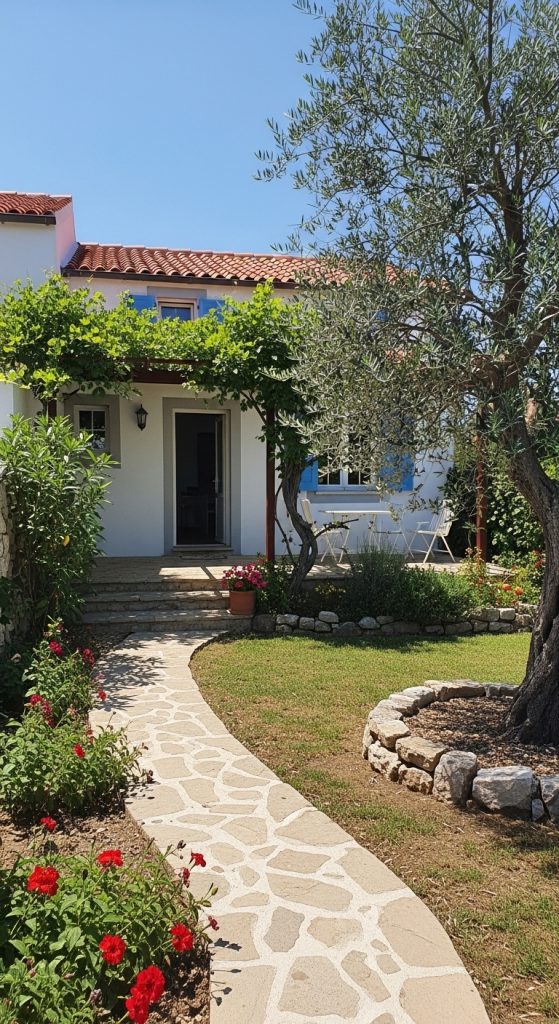
Placement should align with primary sightlines, perhaps opposite a seating area or at the end of a pathway. Materials like aged stone or patinated metal blend naturally into Mediterranean settings. Overly ornate or oversized fountains are a common error that shifts the atmosphere from tranquil to theatrical.
Maintenance access must be considered from the beginning. Pumps and plumbing should be discreet yet reachable for servicing.
Warm Earth-Toned Color Palettes
Color in Mediterranean gardens is drawn from the landscape: terracotta, sand, olive green, and chalky white. These tones reflect sunlight beautifully and remain timeless.
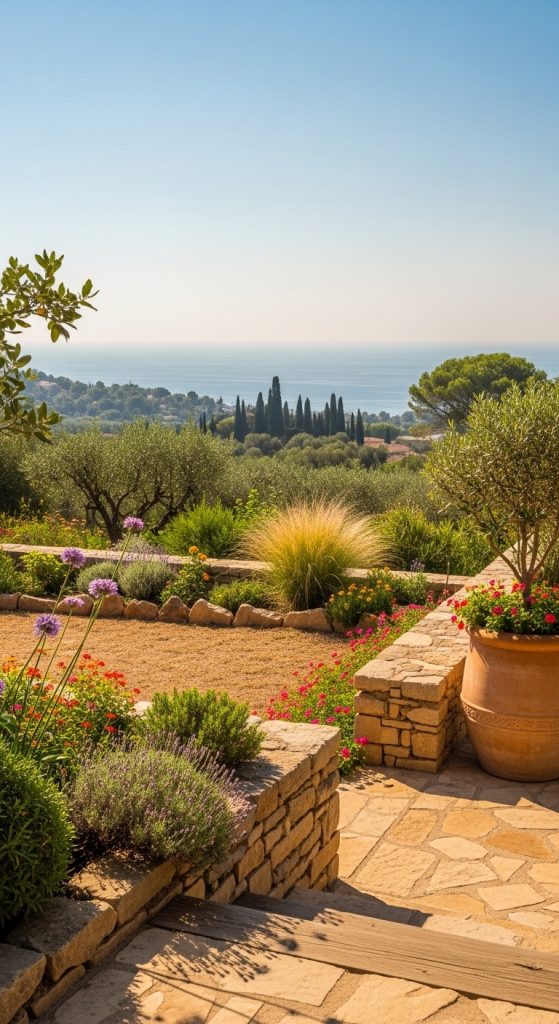
Walls painted in mineral-based limewash allow surfaces to breathe and age attractively. Bright synthetic paints often feel jarring under strong sunlight. For small yards, lighter wall colors prevent the space from feeling enclosed.
Accent colors can appear in textiles or ceramics but should be used sparingly. Too many bold hues fragment the visual calm that defines this style.
Pathways That Encourage Gentle Movement
Paths in Mediterranean gardens are rarely rigid. They invite exploration with subtle curves or changes in texture. Gravel, decomposed granite, or stone setts provide permeability and drainage.
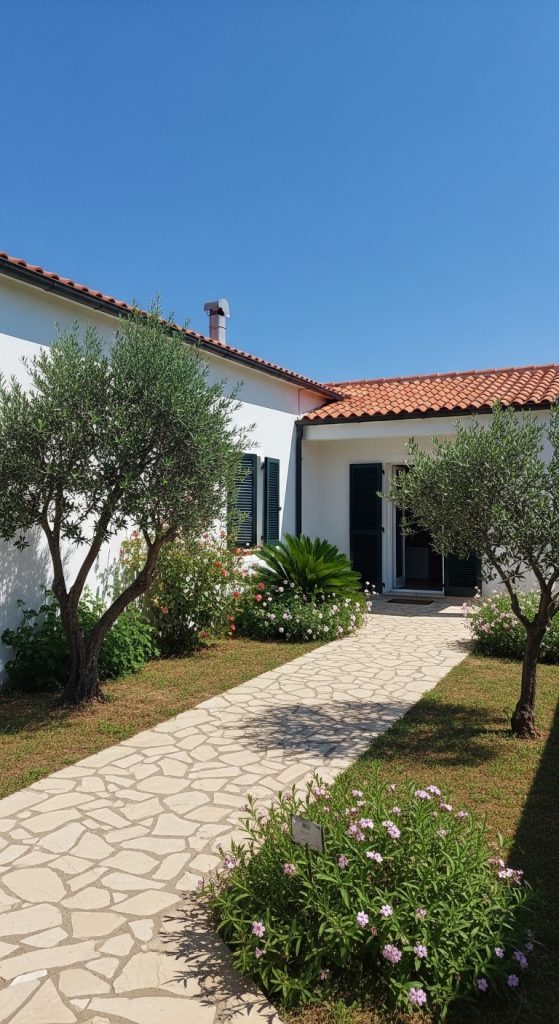
Proper edging prevents gravel migration and reduces maintenance. Steel or stone borders are durable options that maintain clean lines.
Container Gardens for Flexible Spaces
Containers play an important role, especially in urban settings. Terracotta pots with generous proportions anchor entrances and frame seating areas.
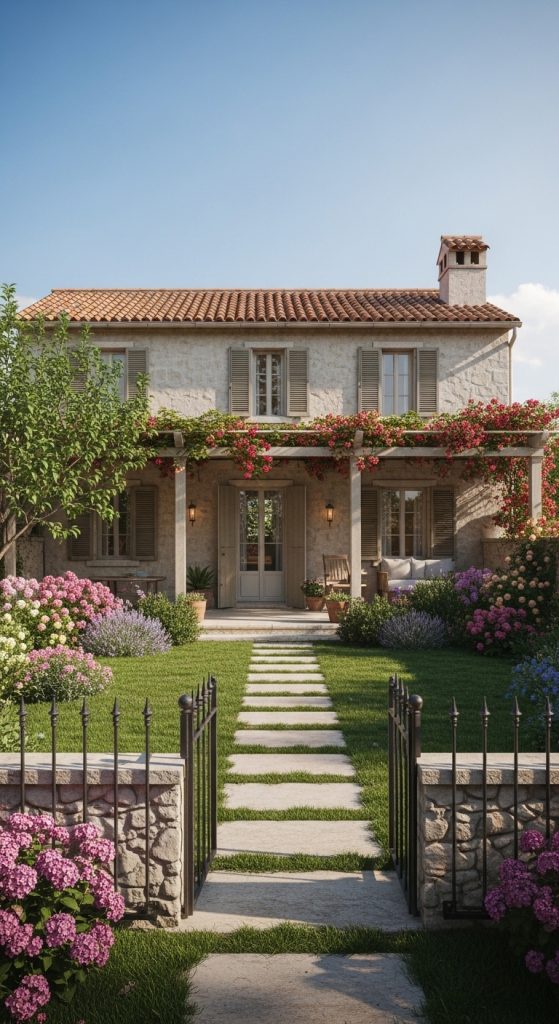
Renters benefit from container gardening because it allows personalization without permanent changes. Ensure adequate drainage and elevate pots slightly to protect underlying surfaces.
Low-Water Planting for Sustainable Living
True Mediterranean gardens respect water scarcity. Drought-tolerant species such as sage, thyme, agapanthus, and ornamental grasses reduce irrigation needs.
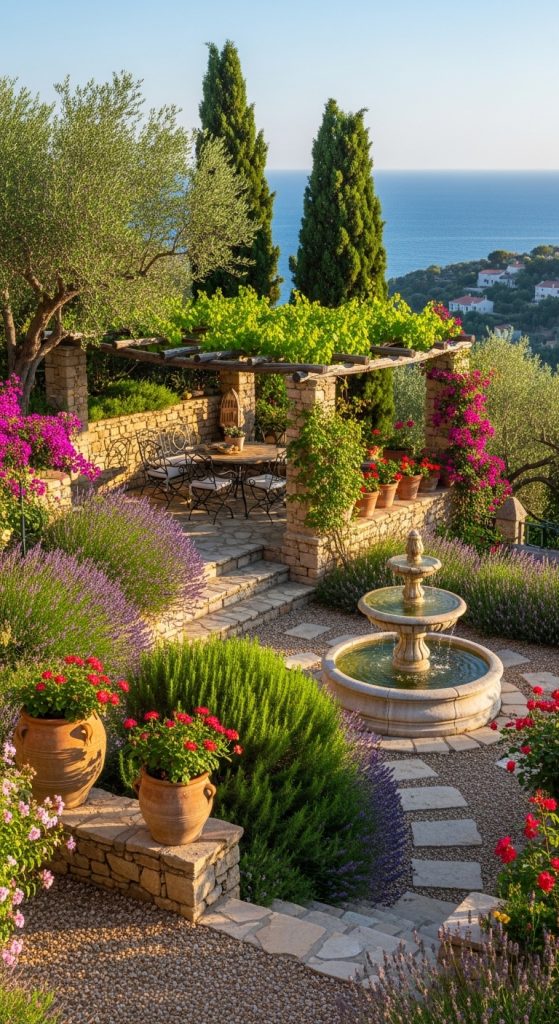
Group plants by water requirements to avoid overwatering certain areas. Installing drip irrigation provides targeted moisture while minimizing waste. The following list highlights essential principles:
- Improve soil drainage before planting
- Mulch with gravel to reduce evaporation
- Avoid high-maintenance lawns in hot climates
A common misstep is attempting to recreate lush, water-heavy landscapes that conflict with the Mediterranean ethos.
Family-Friendly Outdoor Rooms
For households with children or frequent guests, zoning becomes essential. Separate active play areas from quiet seating zones using low hedges or changes in paving texture.
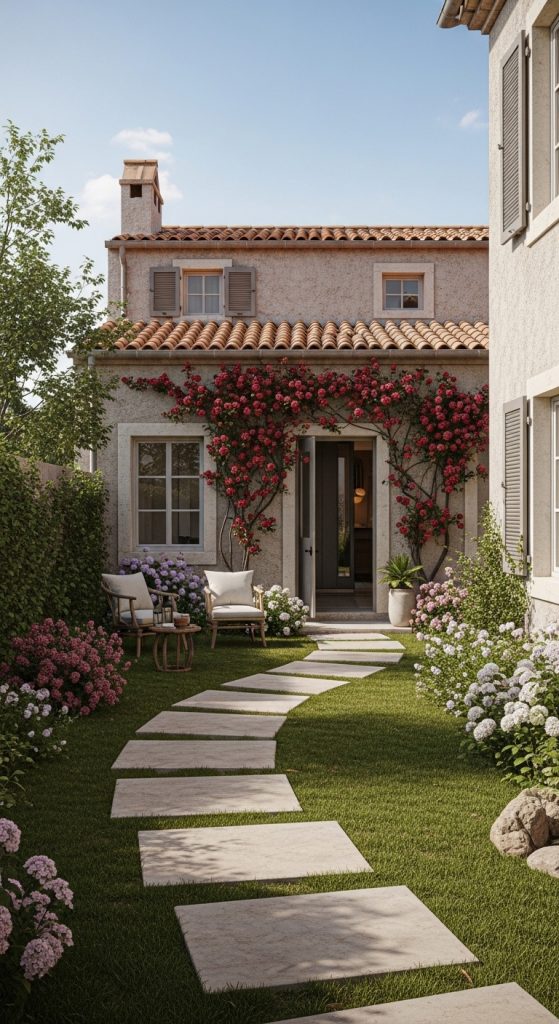
Avoid sharp-edged planters or unstable features. Mediterranean gardens can be elegant and practical simultaneously when safety is integrated from the outset.
A Timeless Approach That Ages Gracefully
Mediterranean garden ideas succeed because they accept weathering as part of beauty. Stone develops patina, wood silvers, and metal softens over time.
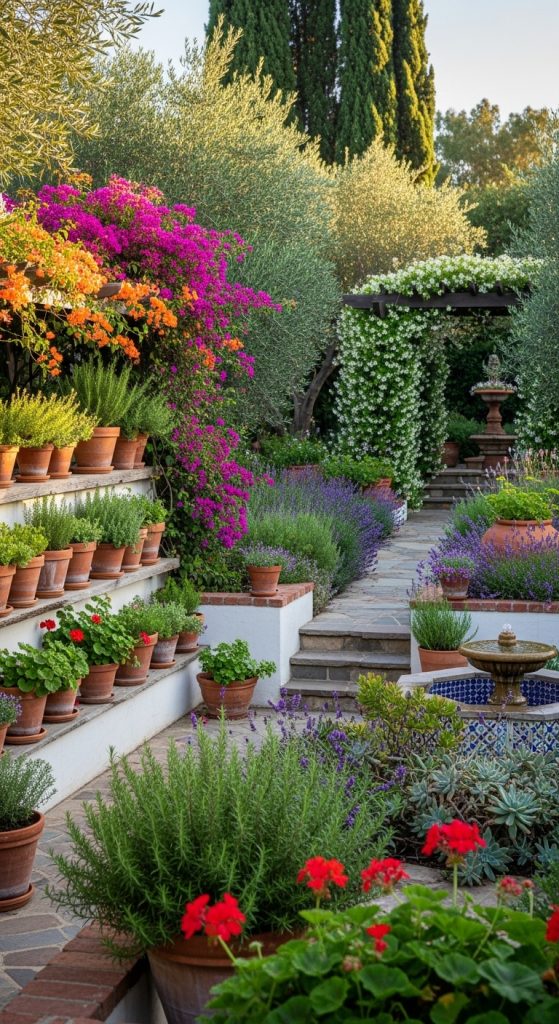
When planned with proportion, climate awareness, and daily life in mind, a Mediterranean garden becomes more than a style. It becomes an extension of the home that offers shade, scent, texture, and quiet comfort year after year.