Corner Garden Ideas That Bring Purpose and Beauty

Corners in a garden are rarely accidental. They are the quiet edges where fences meet, where patios end, where sunlight lingers a little longer or disappears too quickly. Over decades of working with real homes and lived-in landscapes, these corners have proven to be some of the most valuable square footage on a property when treated with care and intention.
A corner garden can solve practical problems. It can soften hard boundaries, hide utility fixtures, and make small yards feel complete rather than unfinished. When thoughtfully planned, it becomes an anchor instead of an afterthought.
Most homeowners overlook corners because they seem awkward. Angled walls, uneven light, and tight access make them feel difficult. In reality, those constraints create opportunities for layered planting and strong visual framing.
Structured and Architectural Corners
A structured corner garden works well when the surrounding yard already has strong lines, such as formal lawns, straight fencing, or defined patios. In these situations, the corner should reinforce geometry rather than fight it.

Use clean bed lines that mirror the fence angle, and consider raised planters or low retaining walls for clarity. Materials like brick, stone, or concrete edging create permanence and prevent soil erosion at the boundary. Keep plant forms disciplined—boxwood, clipped shrubs, and ornamental grasses maintain proportion without visual chaos.
A common mistake is introducing overly loose planting into a rigid yard. This disrupts visual order. In smaller spaces, maintain a ratio where hardscape anchors roughly one-third of the corner footprint, and planting occupies the remaining area to avoid crowding.
Soft and Naturalistic Edges
In more relaxed gardens, a corner can transition into a soft, layered planting zone. This approach works particularly well in cottage-style yards or properties with mature trees.

Layer plants by height: taller shrubs at the back corner point, medium perennials in front, and groundcovers to spill toward pathways. Curved bed lines soften the angle and make the space feel organic. Choose materials with texture—mulch, gravel, or bark—to absorb sharp shadows cast by fencing.
Homeowners often plant too densely at the outset. Plants need air circulation and room to mature. A restrained planting plan reduces maintenance and prevents the corner from becoming a tangled mass within two seasons.
Small-Space Optimized Corners
In compact yards or urban patios, every corner must serve a function. Vertical thinking becomes essential.
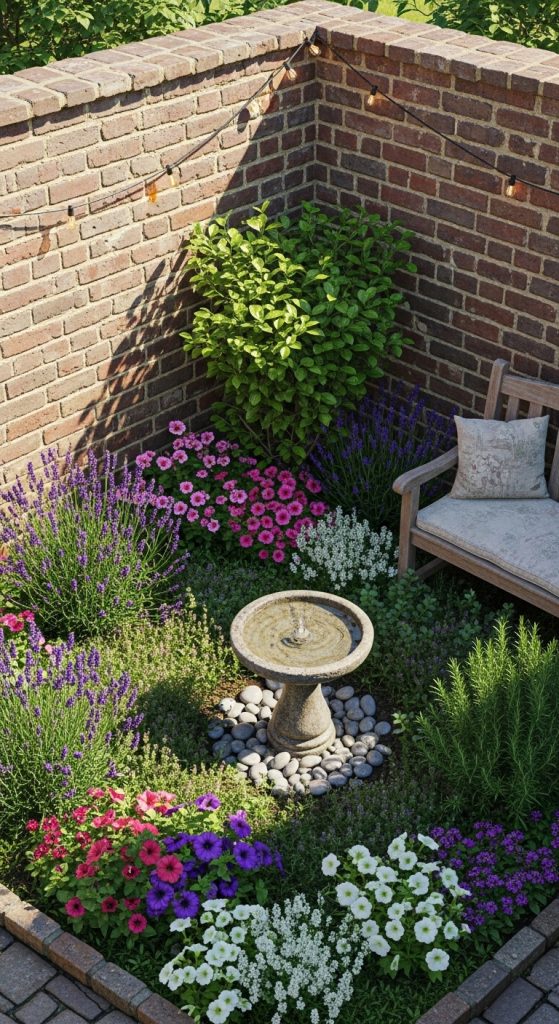
Trellises, slim pergola posts, or vertical planters allow climbing plants to draw the eye upward without sacrificing floor space. Keep structural elements narrow to maintain circulation, especially in yards under ten feet wide. Light-colored finishes help prevent the corner from feeling enclosed.
Avoid bulky seating or oversized containers in tight corners. Instead, use stackable or foldable furniture if the corner doubles as a seating nook. Proportion is critical; choose planters that are tall and narrow rather than wide and squat.
Functional Family-Friendly Corners
For families, corners can become purposeful zones—herb gardens, small play features, or sensory planting areas.

Raised beds at manageable heights allow children to participate in planting without stepping into soil. Rounded edges on planters and secure anchoring of trellises are essential for safety. Durable materials like treated timber or powder-coated metal withstand wear and weather.
Budget-Conscious Corner Transformations
Not every corner garden requires major construction. With thoughtful planning, even modest budgets can achieve lasting results.

Below is a simple comparison of common corner upgrade materials:
| Material | Cost Level | Durability | Maintenance | Best For |
|---|---|---|---|---|
| Gravel | Low | High | Low | Drainage and modern yards |
| Timber edging | Low | Moderate | Moderate | Informal gardens |
| Brick | Moderate | High | Low | Structured landscapes |
| Natural stone | Higher | Very High | Low | Permanent, classic designs |
Avoid spending heavily on decorative features before establishing plant structure. Plants provide the long-term value.
Rental-Friendly Corner Solutions
Renters often feel limited, but corners can be enhanced without permanent alterations.
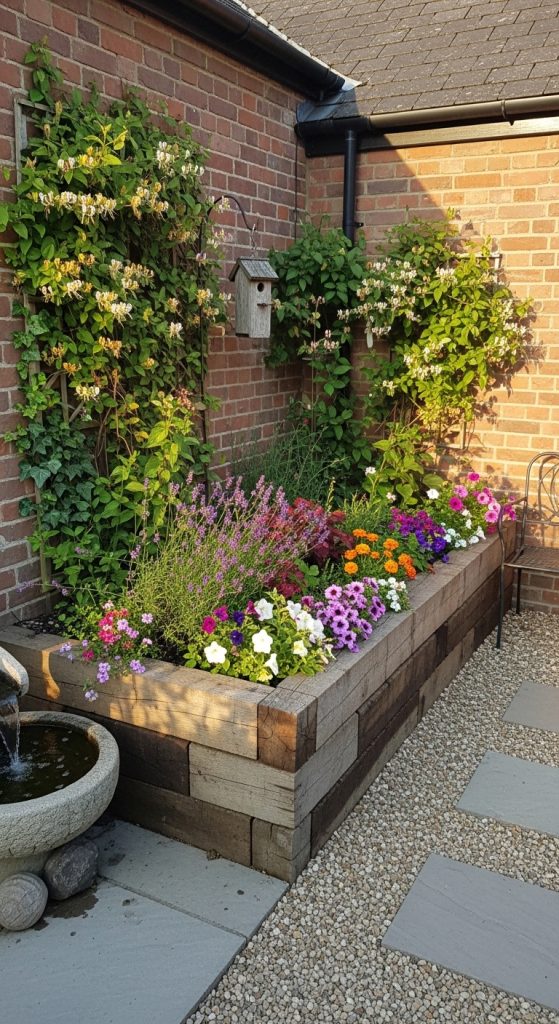
Drainage is a common oversight. Always elevate containers slightly to prevent staining surfaces. Avoid climbing plants that attach directly to fences unless permitted; opt for freestanding trellises instead.
Relaxed Seating and Retreat Corners
A corner garden can become a quiet retreat if scaled correctly. The layout must allow comfortable entry and exit without squeezing past furniture.

Lighting plays a vital role here. Low-voltage uplights at the base of shrubs create evening depth, while a simple wall-mounted fixture provides functional illumination. Avoid harsh overhead lighting that flattens texture.
Productive and Edible Corners
Corners receive varied sunlight patterns, making them suitable for targeted edible planting when carefully assessed.

Consider this quick planting suitability guide:
| Light Condition | Suitable Plants |
|---|---|
| Full Sun | Tomatoes, peppers, lavender |
| Partial Shade | Lettuce, parsley, chard |
| Mostly Shade | Mint, spinach, hosta (ornamental) |
Avoid overcrowding edible plants in corners with limited airflow. Good spacing reduces disease and simplifies maintenance.
Modern Minimal Corners
A minimalist approach emphasizes restraint and clean surfaces. This works well in contemporary homes with strong architectural lines.

The mistake here is over-accessorizing. Sculptural elements should be few and intentional. Visual calm is achieved through repetition and proportion, not decoration.
Classic and Timeless Boundaries
Some properties benefit from a traditional corner garden anchored by evergreen shrubs and seasonal flowering accents.

Avoid mixing too many historical references. A classic corner should feel cohesive. Stick to a consistent material palette and maintain clean lines through regular pruning.
Personalized Character-Driven Corners
Corners are ideal places to express personality without overwhelming the entire yard. A sculptural feature, water bowl, or distinctive plant can serve as a focal point.

A common error is overcrowding meaningful objects. Select one or two pieces and let them breathe. Simplicity often communicates intention more clearly than abundance.
Bringing Structure, Beauty, and Function Together
Corner garden ideas are most successful when they respect both spatial logic and daily life. Every decision—from plant height to paving choice—should support how the yard is used.

Above all, a corner garden should feel deliberate. It should solve practical concerns while adding beauty and comfort. With measured planning and disciplined choices, even the smallest or most awkward corner becomes a meaningful part of the home’s outdoor experience.