Japanese Garden Ideas for Calm Outdoor Living
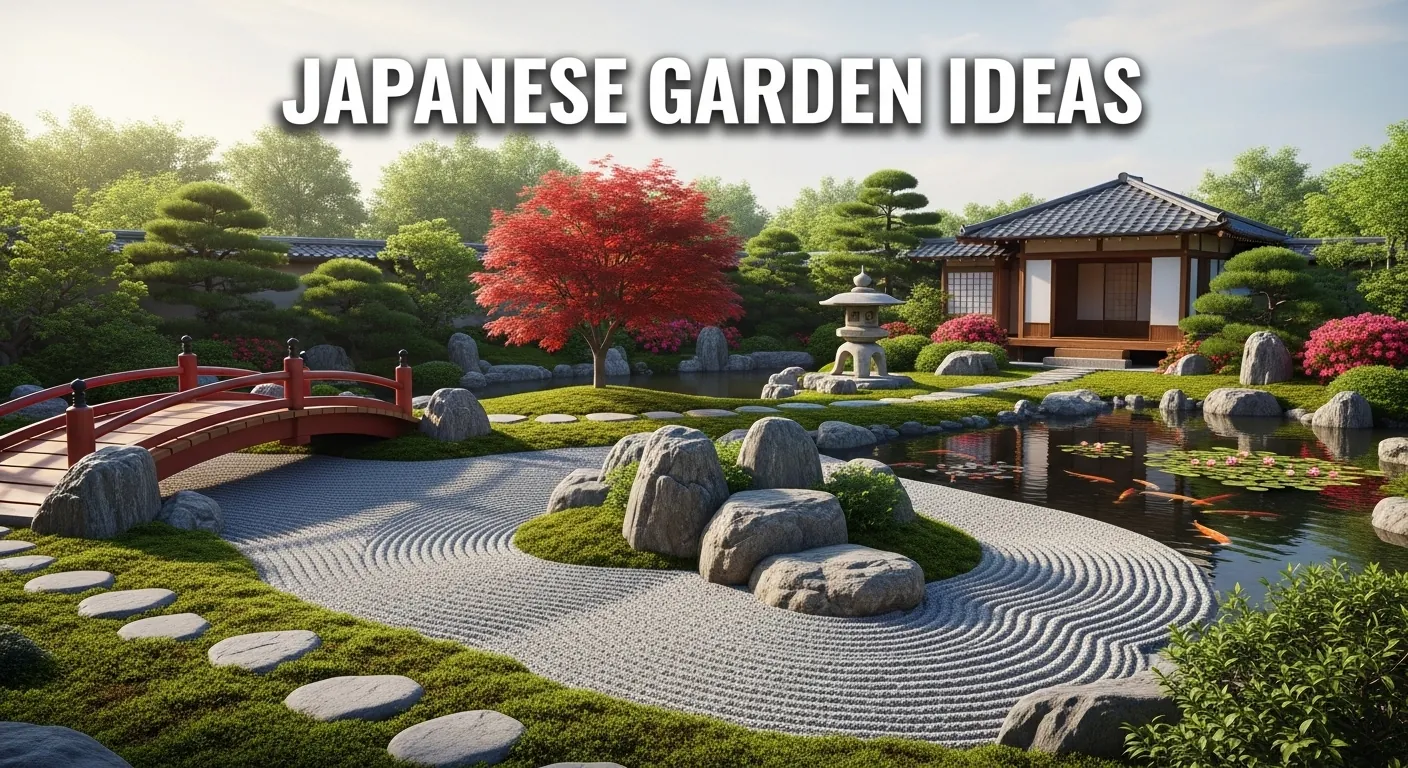
Japanese gardens have always been shaped by lived experience rather than decoration. They were created to be walked through slowly, observed quietly, and maintained with care rather than spectacle. In real homes, this approach offers something increasingly rare: a landscape that restores rather than competes for attention.
A Japanese garden is not about filling space. It is about editing it with intention so every element has purpose and restraint.
Minimal and Clean Japanese Garden Ideas
Minimalism works naturally within Japanese garden traditions because it respects space as an element in itself. Empty areas are not wasted; they allow the eye to rest and the mind to slow down.

Materials are limited and honest. Natural stone, gravel, weathered wood, and restrained planting palettes keep the space grounded. Overmixing textures is a common mistake that breaks the calm effect.
Soft lighting, if used, should be subtle and low. Harsh fixtures or bright garden lights disrupt the quiet atmosphere and reduce the garden’s meditative quality.
Small-Space Optimized Japanese Garden Ideas
Japanese gardens excel in compact spaces because they are built on suggestion rather than scale. A small courtyard can feel expansive when layers and sightlines are carefully planned.

Vertical elements such as bamboo screens or slender trees create height without crowding. This avoids the mistake of filling small gardens with too many low plants.
For tight budgets or rentals, container-based planting and movable stones allow flexibility. Even temporary setups can follow authentic principles if proportion and restraint are respected.
Timeless and Classic Japanese Garden Ideas
Timeless Japanese gardens rely on forms that have endured for centuries because they work. Stone paths, water basins, and evergreen structure plants provide year-round stability.

Materials should age gracefully. Natural stone that develops moss or wood that weathers softly adds character rather than detracting from appearance.
A common mistake is introducing modern finishes that age poorly. Glossy surfaces and artificial materials break the sense of continuity that defines classic Japanese gardens.
Budget-Conscious Japanese Garden Ideas
A meaningful Japanese garden does not depend on expensive imports or rare plants. It depends on thoughtful placement and restraint.

Planting fewer specimens and allowing them space to mature reduces long-term costs. Crowding plants leads to constant pruning and eventual replacement.
Lighting and water features can be simplified or omitted entirely. The garden remains complete when core principles are respected rather than accessories added.
Family-Friendly Japanese Garden Ideas
Japanese gardens can accommodate family life when planned with intention. Clear paths, stable stones, and open sightlines support safe movement.

Durable materials such as set stone paths and sturdy ground covers withstand regular use. Delicate gravel areas can be limited to quieter zones.
A common mistake is assuming these gardens are too fragile for families. In reality, they can teach respect for space and nature through everyday interaction.
Low-Maintenance Japanese Garden Ideas
Low maintenance does not mean neglect. Japanese gardens are designed to be cared for regularly but gently.

Hardscape elements such as stone and gravel take on visual responsibility, reducing reliance on heavy planting.
Avoid mixing too many plant types with different care needs. Simplicity in selection leads to consistency in maintenance.
Modern Japanese Garden Ideas
Modern interpretations retain core principles while simplifying forms even further. Clean lines and restrained palettes suit contemporary homes well.

Concrete, steel, and smooth stone can be used sparingly alongside traditional elements. Overuse of industrial materials, however, risks losing warmth.
Lighting should be architectural rather than decorative. Integrated fixtures that wash surfaces softly maintain atmosphere without visual clutter.
Rental-Friendly Japanese Garden Ideas
Renters can create meaningful Japanese garden spaces without permanent changes. Portable elements become essential tools.

Container trees, movable stones, and modular decking allow layouts to adapt and move. This flexibility does not diminish authenticity when proportions are respected.
Temporary screens or bamboo fencing can define space without damaging structures. These elements also improve privacy and calm.
The most common mistake is overcommitting to fixed installations. A lighter touch ensures both beauty and practicality.
Natural Material-Focused Japanese Garden Ideas
Material honesty is central to Japanese garden philosophy. Each element should look and feel natural within its setting.
Stone should appear settled rather than placed. Partially burying stones helps them feel grounded and timeless.
Wood elements benefit from weathering. Treated finishes that resist aging often look artificial over time.
Avoid mixing too many materials. Limiting the palette strengthens cohesion and reduces visual noise.
Material Comparison Table
| Material | Visual Effect | Durability | Maintenance |
|---|---|---|---|
| Natural stone | Grounded, timeless | Very high | Minimal |
| Gravel | Light, calming | High | Raking required |
| Bamboo | Soft, organic | Moderate | Periodic replacement |
| Wood | Warm, natural | Moderate | Weather protection |
Functional Everyday Japanese Garden Ideas
These gardens are meant to be lived in, not observed from a distance. Paths, seating, and transitions should support daily use.

Seating is often understated. Stone benches or simple wooden platforms blend into the landscape rather than dominating it.
A common mistake is prioritizing visual composition over usability. A garden that cannot be comfortably used loses long-term relevance.
Personalized and Meaningful Japanese Garden Ideas
The most successful Japanese gardens reflect the lives of their owners. Personal meaning does not conflict with tradition when applied thoughtfully.
Scale should always return to human experience. Oversized elements introduced for impact often disrupt intimacy.
By grounding personal choices in timeless principles, the garden becomes both authentic and deeply individual.
Japanese garden ideas endure because they respect people, time, and place. When designed with care, they offer more than beauty. They offer a way to slow down, observe, and live more attentively within the landscape.