
Hibiscus Flower Varieties for Your Garden
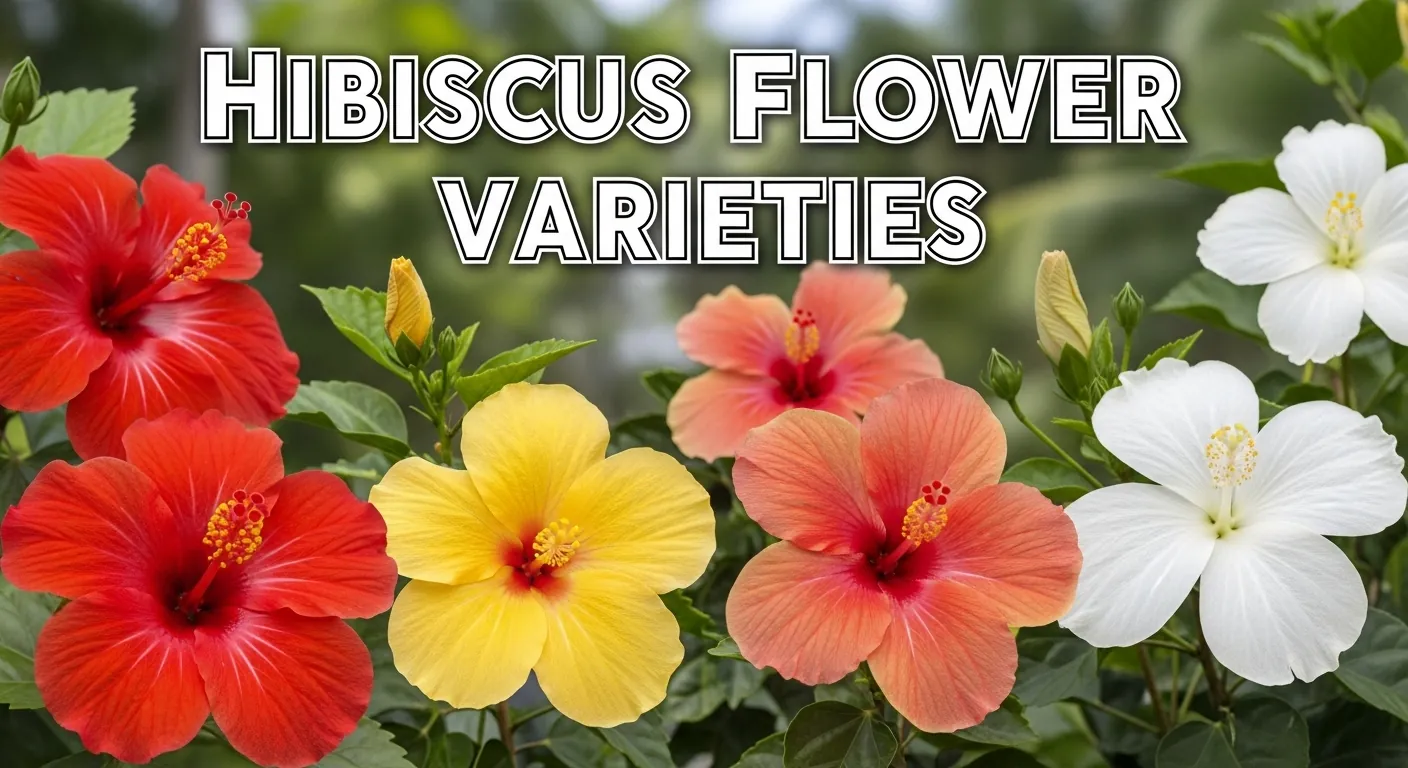
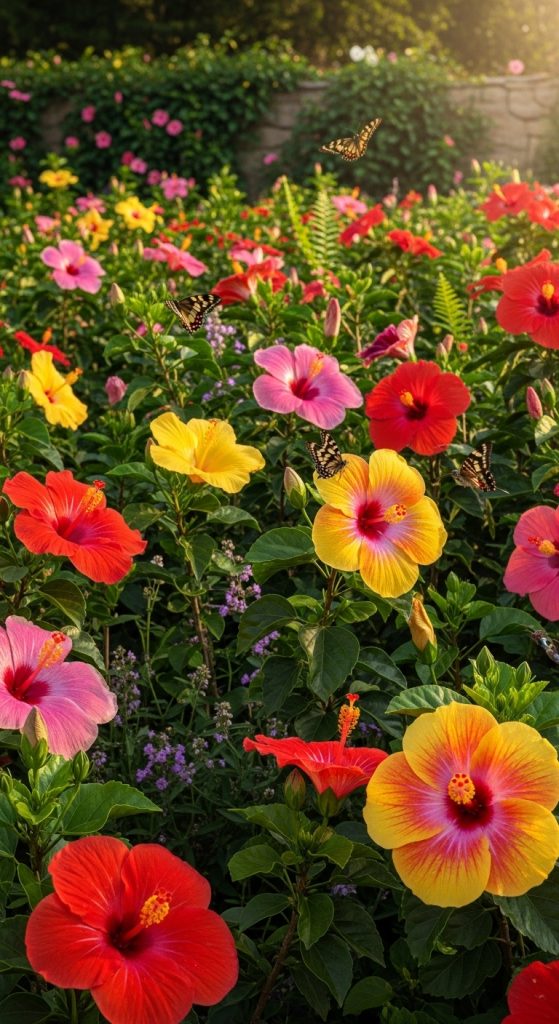
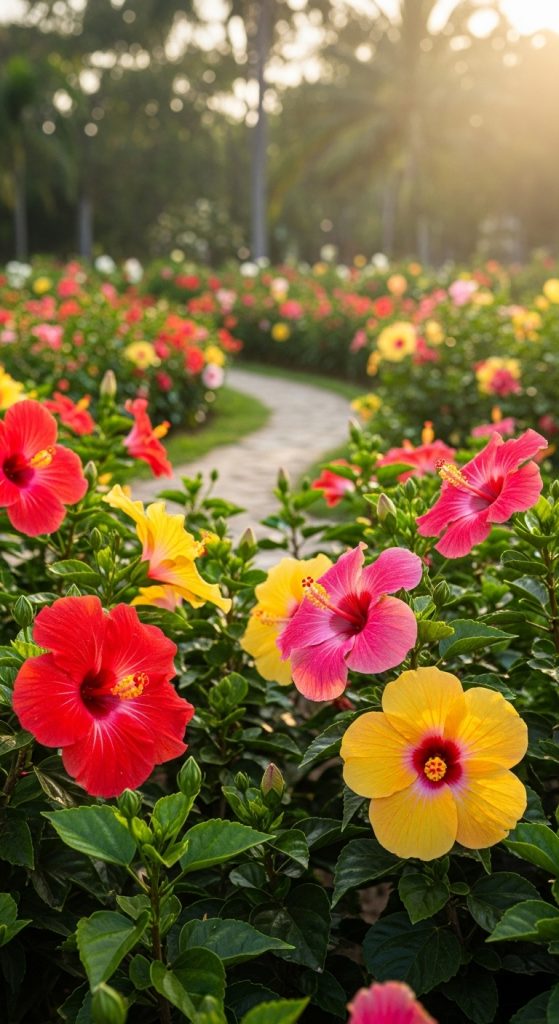
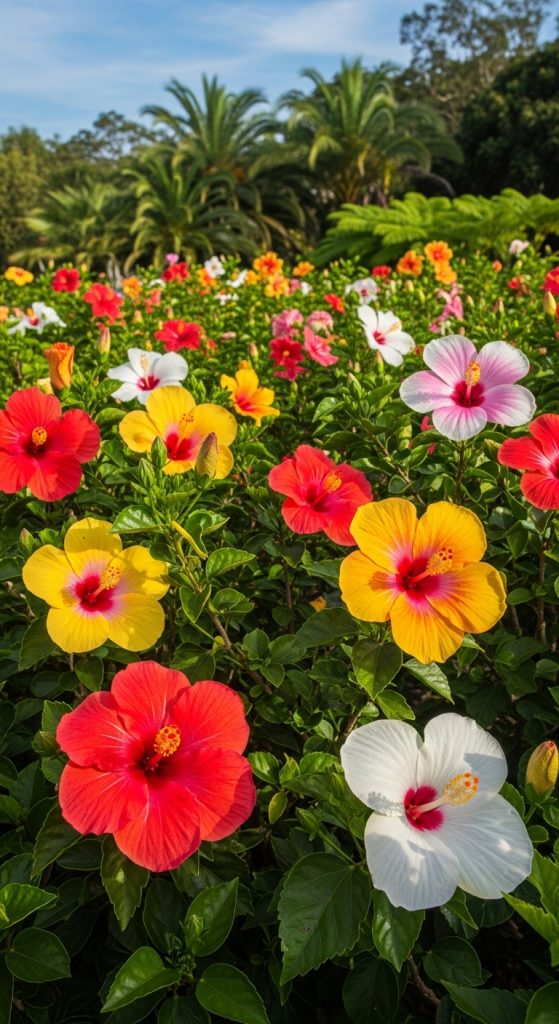
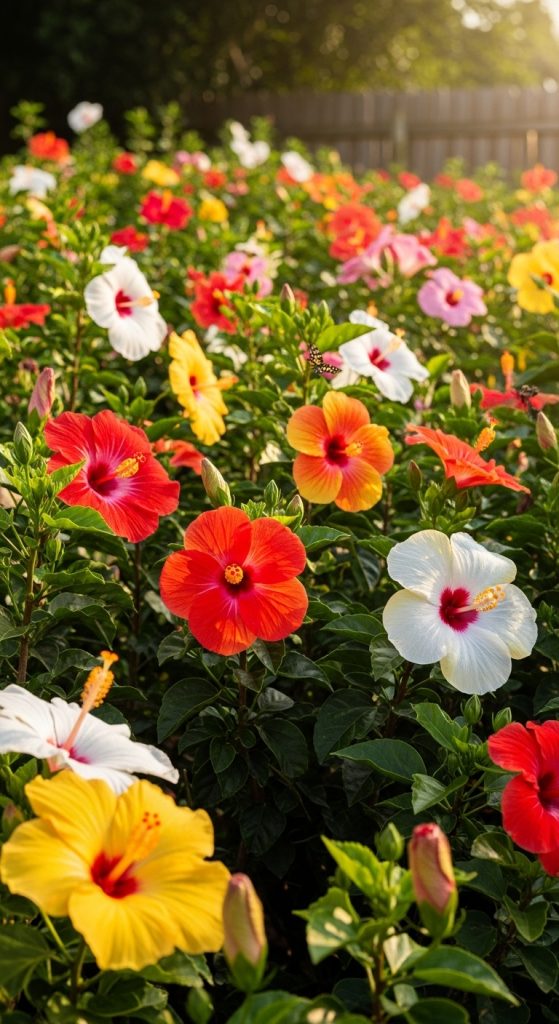
A hibiscus flower garden is a tropical paradise bursting with color and charm. These stunning blooms come in various sizes and hues, creating a lively and inviting atmosphere. With their striking petals and lush greenery, hibiscus plants not only attract attention but also invite butterflies and hummingbirds to dance among the flowers. Perfect for backyard enthusiasts and plant lovers alike, cultivating a hibiscus garden brings joy and beauty to any space.
Fertilization Strategies for Vibrant Flowers
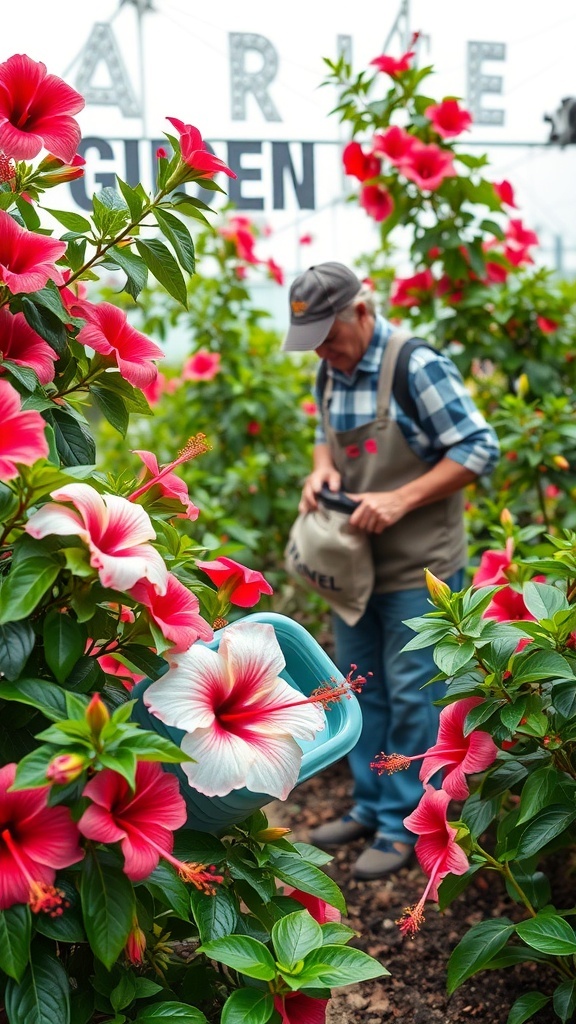
In a hibiscus flower garden, vibrant blooms are the main attraction. To keep these flowers looking their best, proper fertilization is key. The image shows a gardener tending to these beautiful hibiscus plants, surrounded by their striking colors. It’s a reminder of how much care goes into maintaining such a lovely space.
Using the right fertilizer can make a big difference. A balanced fertilizer, rich in nitrogen, phosphorus, and potassium, helps promote healthy growth. Applying it during the growing season encourages more blooms and lush foliage. Remember to follow the instructions on the fertilizer package for the best results.
Organic options, like compost or fish emulsion, can also be beneficial. They enrich the soil and provide nutrients over time. Plus, they’re great for the environment! Regularly checking the soil’s pH can help you adjust your fertilization strategy, ensuring your hibiscus plants thrive.
Watering Techniques for Optimal Blooming
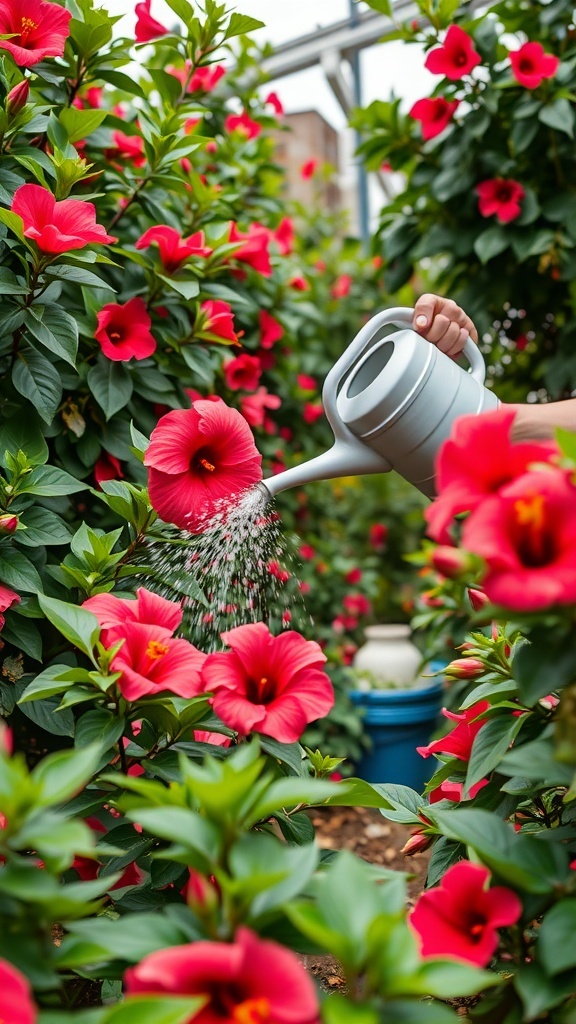
In a vibrant hibiscus flower garden, watering plays a key role in achieving those stunning blooms. The image shows a gardener gently watering the bright red hibiscus flowers, surrounded by lush green leaves. This simple act is essential for keeping the plants healthy and thriving.
When watering hibiscus, it’s best to do it early in the morning or late in the afternoon. This timing helps the water soak into the soil before the sun evaporates it. Aim for deep watering, allowing the soil to absorb moisture down to the roots. This encourages the plants to grow strong and produce beautiful flowers.
Using a watering can, like the one in the image, allows for more control over the amount of water each plant receives. It’s important to avoid overwatering, as this can lead to root rot. Checking the soil moisture before watering can help determine if the plants need a drink.
In addition to regular watering, consider using mulch around the base of the plants. Mulch helps retain moisture and keeps the soil temperature stable. This simple technique can make a big difference in the health of your hibiscus garden.
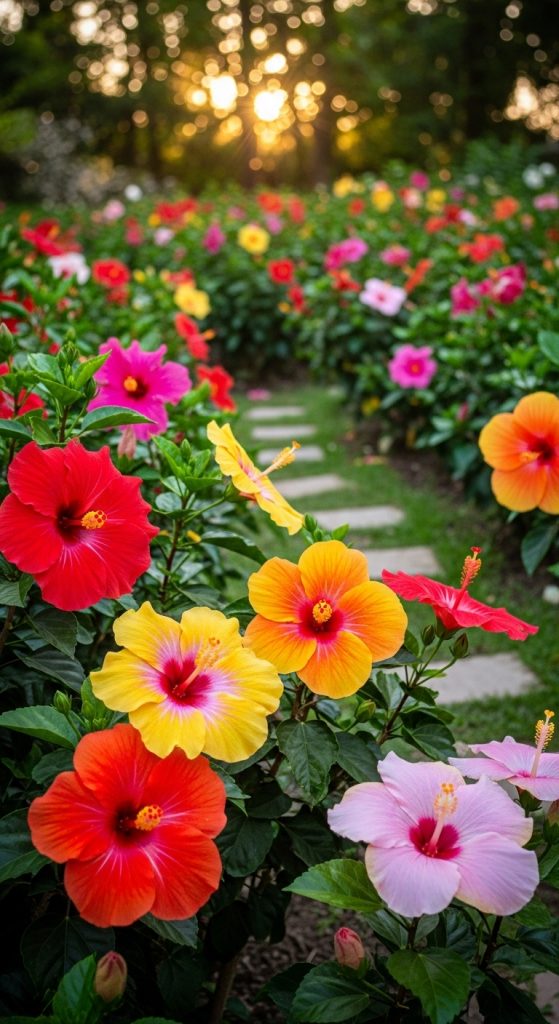
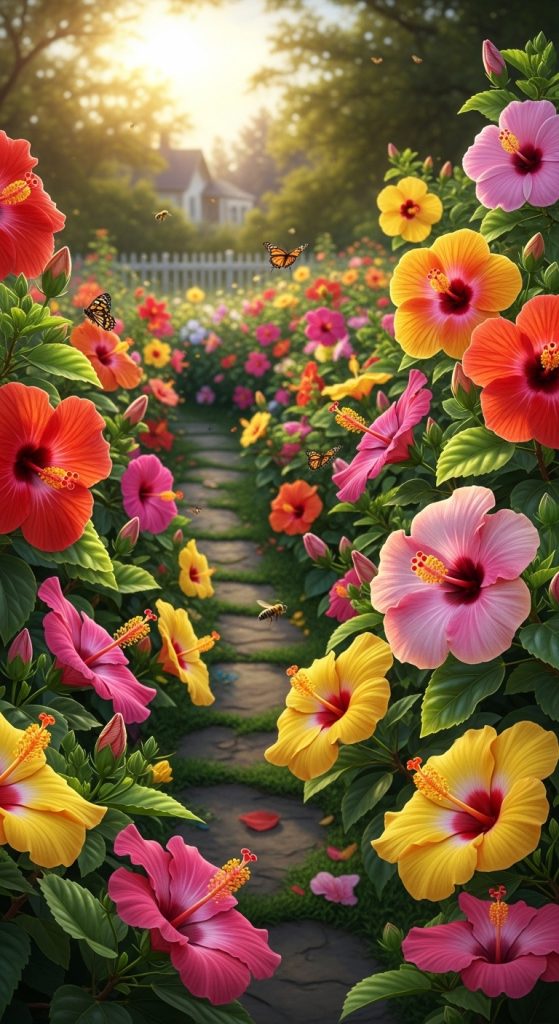
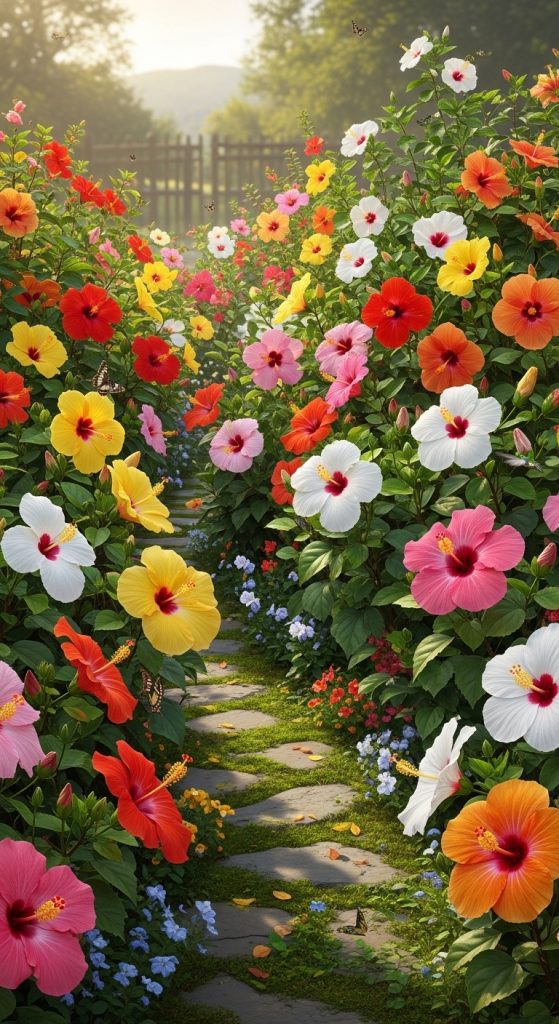
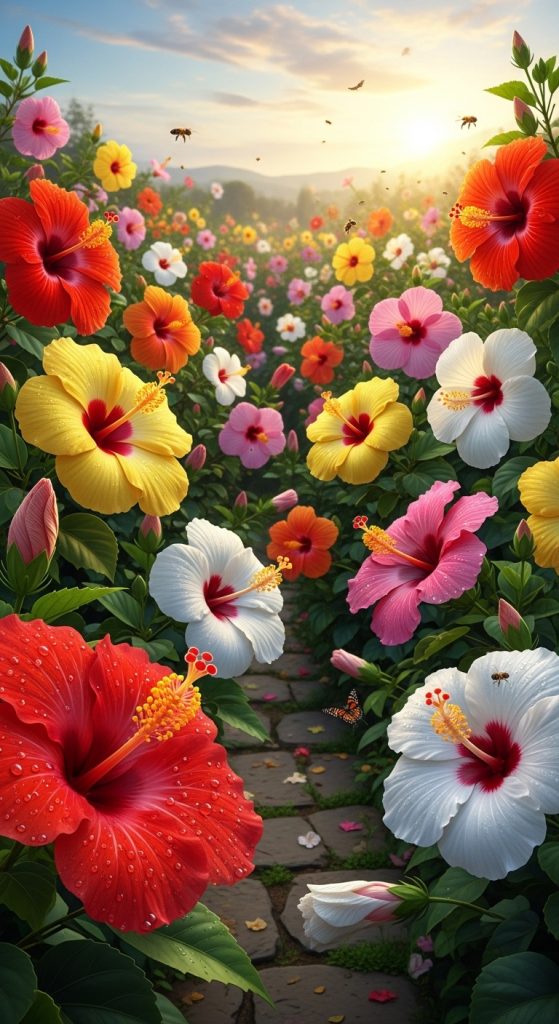
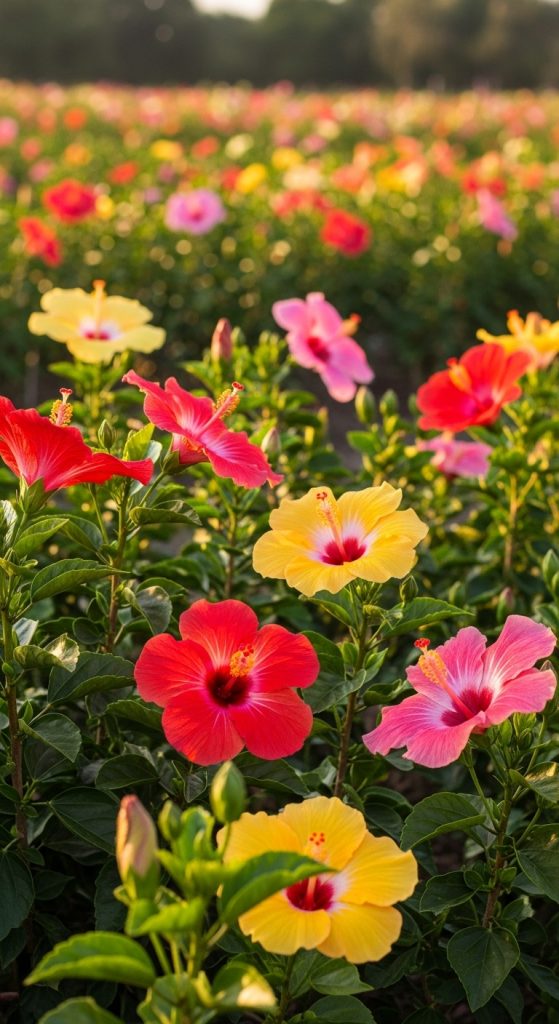
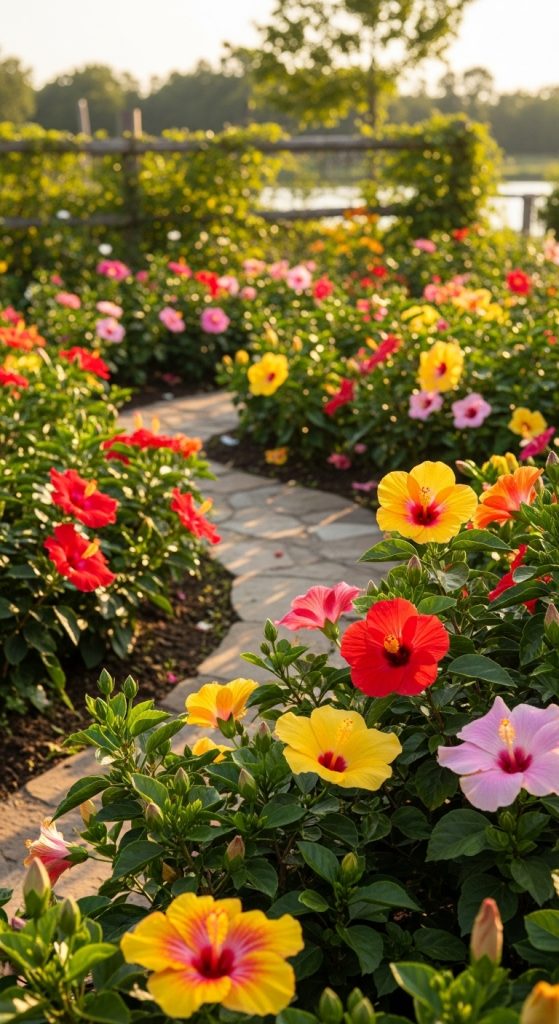
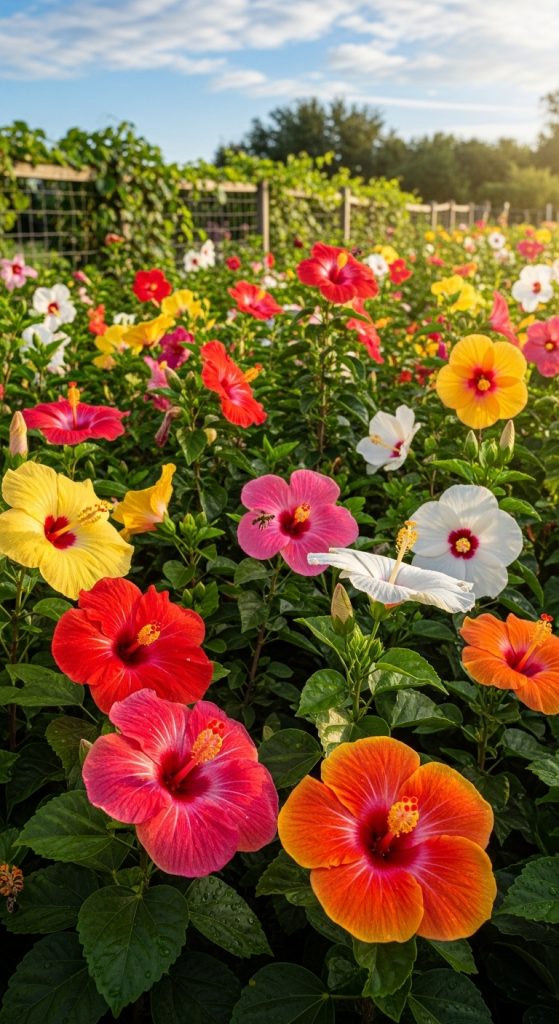
Hibiscus Flower Gallery
Pest and Disease Management for Hibiscus
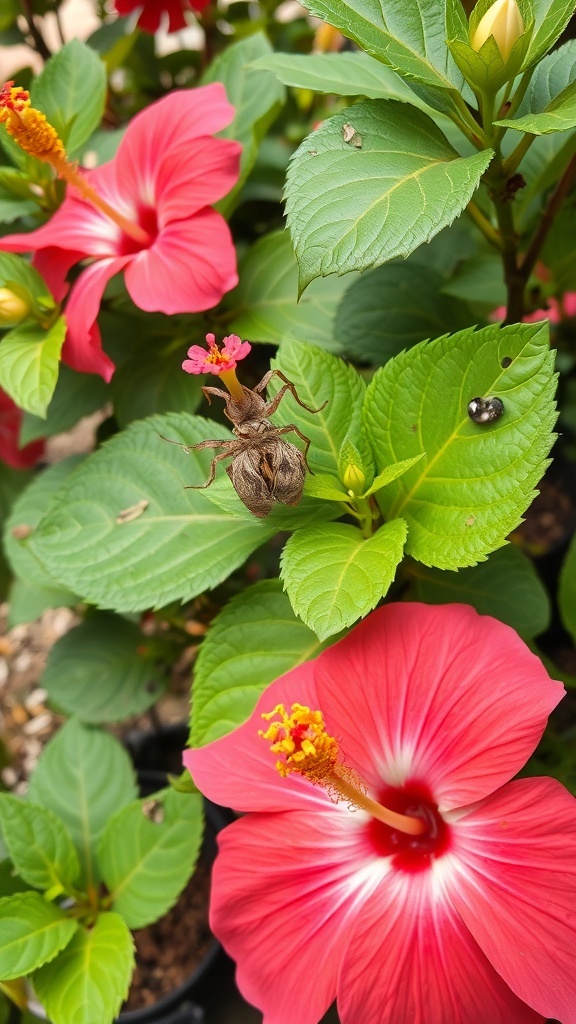
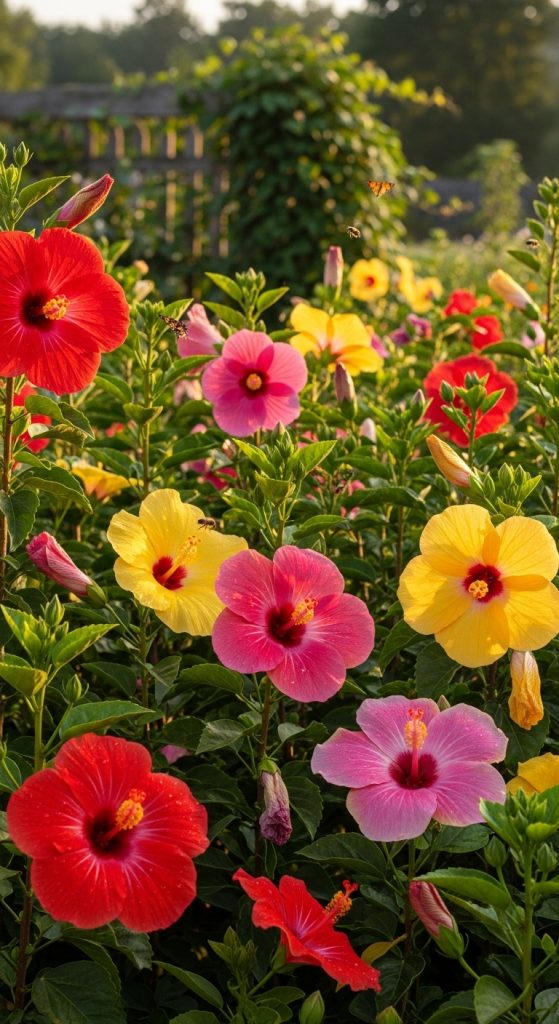
Hibiscus flowers are stunning additions to any garden, but they can attract pests and diseases that threaten their beauty. In the image, you can see vibrant pink hibiscus blooms surrounded by lush green leaves. A curious insect is perched on one of the leaves, reminding us that nature is full of life, both beautiful and challenging.
To keep your hibiscus healthy, regular inspections are key. Look for signs of pests like aphids, spider mites, or whiteflies. These tiny invaders can sap the strength of your plants. If you spot them, consider using insecticidal soap or neem oil as a natural remedy.
Fungal diseases such as powdery mildew can also be a concern. Ensure your plants have good air circulation and avoid overhead watering to minimize moisture on the leaves. If you notice any fungal growth, treating with a fungicide can help restore your plants to health.
Remember, a healthy hibiscus garden thrives on attention and care. By being proactive about pest and disease management, you can enjoy the vibrant blooms and lush foliage for seasons to come.
Choosing the Right Hibiscus Varieties
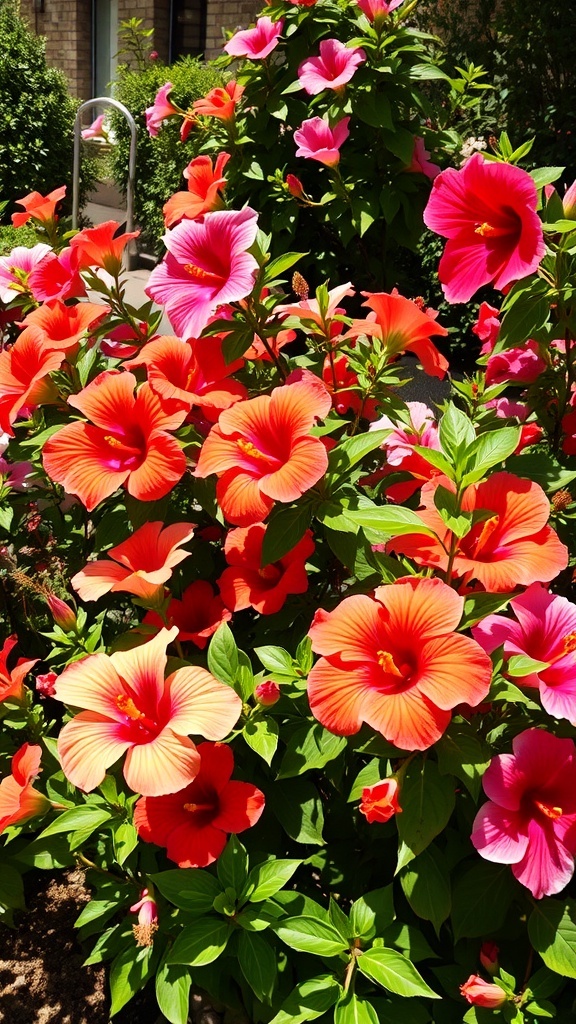
When it comes to creating a stunning hibiscus flower garden, picking the right varieties is key. The image shows a vibrant display of hibiscus flowers in shades of red and pink, which can instantly brighten up any space. These flowers are not just beautiful; they also come in various types, each with unique characteristics.
Consider the climate in your area. Some hibiscus varieties thrive in warmer regions, while others can tolerate cooler temperatures. For instance, tropical hibiscus loves the heat and produces large, showy blooms. On the other hand, hardy hibiscus can survive in colder climates and still deliver impressive flowers.
Next, think about the size of your garden. If you have limited space, dwarf varieties are perfect. They offer the same stunning blooms but in a more compact form. For larger gardens, taller varieties can create a striking backdrop.
Lastly, don’t forget about color! Hibiscus flowers come in a range of hues, from deep reds to soft pinks. Mixing different colors can create a lively and cheerful atmosphere in your garden. So, take your time choosing the right hibiscus varieties that suit your style and garden conditions.
Sunlight Requirements for Healthy Hibiscus
Hibiscus flowers are stunning, vibrant blooms that can brighten up any garden. To keep them looking their best, they need plenty of sunlight. These flowers thrive in full sun, which means they should receive at least six hours of direct sunlight each day. This exposure helps them grow strong and produce those beautiful, large blossoms that we all love.
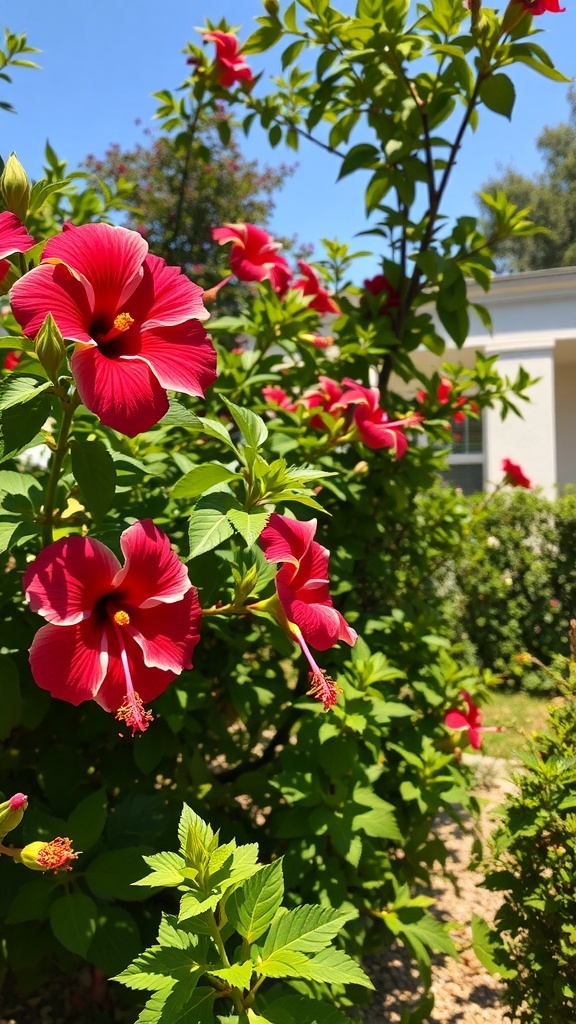
In the image, you can see a lush hibiscus garden filled with bright red flowers. The sunlight plays a big role in their health and vibrancy. When hibiscus plants get enough light, they not only bloom beautifully but also develop a robust structure. If they don’t receive enough sun, they may become leggy and produce fewer flowers.
For those planting hibiscus, consider a spot in your yard that gets ample sunlight. A south-facing area is often ideal. If you notice your hibiscus struggling, it might be time to evaluate their sun exposure. Remember, happy hibiscus means a garden full of color!
Pruning Tips for Bushy Growth
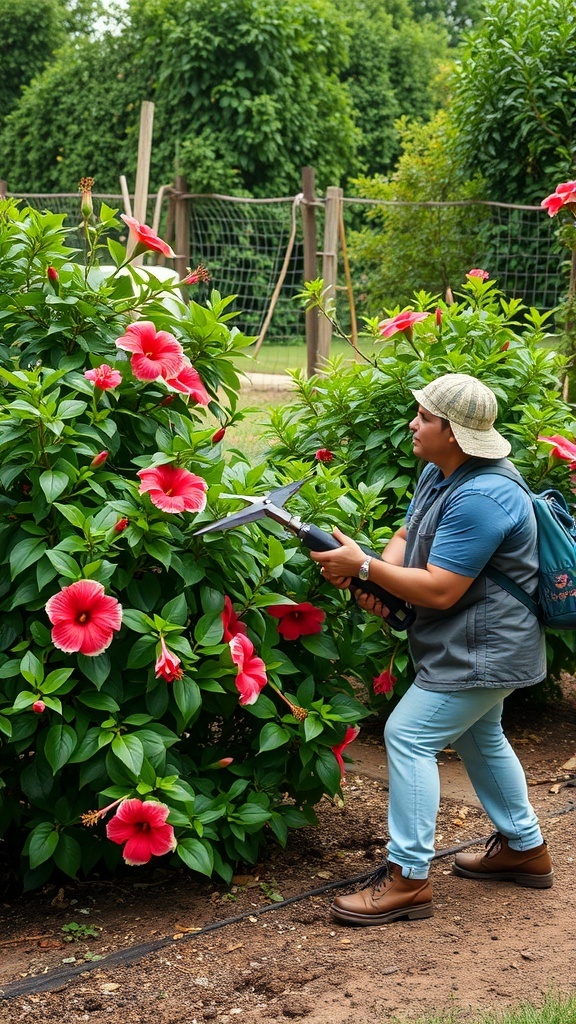
Pruning hibiscus plants is key to achieving that lush, bushy look. In the image, we see a gardener carefully trimming a vibrant hibiscus bush. The bright pink flowers pop against the rich green foliage, showcasing the beauty of a well-maintained garden.
To promote bushy growth, start by cutting back the stems. This encourages new branches to sprout, making the plant fuller. Aim to prune in early spring before the blooming season kicks off. This timing helps the plant focus its energy on new growth.
Use sharp, clean pruning shears to make precise cuts. This minimizes damage and helps the plant heal quickly. Focus on removing any dead or weak branches, as they can hinder overall growth. Don’t be afraid to cut back significantly; hibiscus plants are resilient and respond well to pruning.
After pruning, give your hibiscus some love with a balanced fertilizer. This will support healthy growth and vibrant blooms. Regular maintenance, including watering and occasional deadheading, will keep your garden looking its best.
Ideal Soil Conditions for Hibiscus Growth
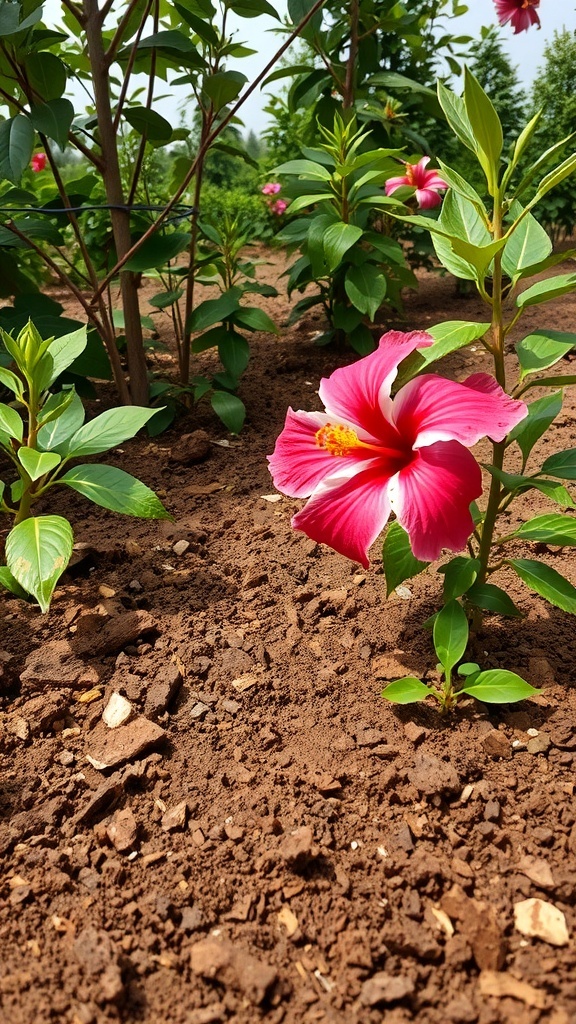
Hibiscus flowers thrive in well-draining soil that is rich in organic matter. The image showcases a vibrant hibiscus blooming among lush green leaves, highlighting the beauty of these plants in a garden setting.
For optimal growth, aim for soil that has a pH between 6.0 and 7.0. This slightly acidic to neutral range helps the plant absorb nutrients effectively. Adding compost or well-rotted manure can improve soil structure and fertility.
Ensure the soil retains moisture without becoming waterlogged. Hibiscus prefers a balance; too much water can lead to root rot, while too little can stress the plant. Mulching around the base can help retain moisture and regulate soil temperature.
Regularly checking the soil’s drainage is key. If water pools after heavy rain, consider amending the soil with sand or perlite to enhance drainage. Healthy soil leads to stunning blooms, making your hibiscus garden a true delight.
Seasonal Care for Year-Round Blooms
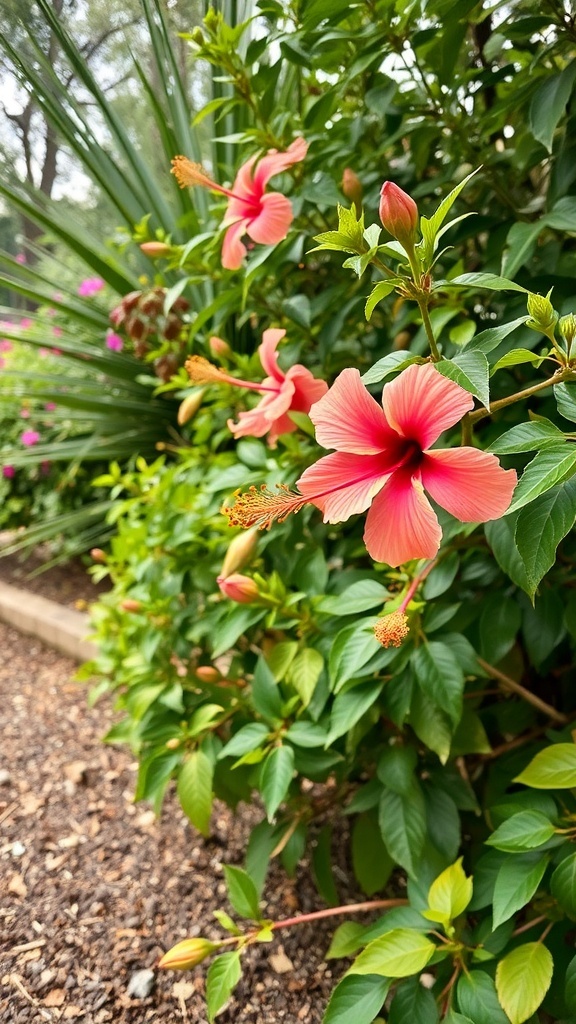
The hibiscus flower garden is a stunning sight, especially when the blooms are vibrant and full of life. These flowers come in various colors, but the bright pink ones really catch the eye. Their large, open petals create a cheerful atmosphere, making any garden feel more inviting.
To keep your hibiscus thriving throughout the seasons, regular care is key. Start by ensuring they get plenty of sunlight. Hibiscus plants love the sun and will bloom more when they receive at least six hours of direct light each day.
Watering is another important aspect. Hibiscus plants prefer moist soil, so check regularly. If the top inch of soil feels dry, it’s time to water. Be careful not to overwater, as this can lead to root rot.
Fertilizing is also essential for healthy blooms. Using a balanced fertilizer every few weeks during the growing season will help your plants produce those gorgeous flowers. Look for fertilizers specifically designed for flowering plants.
Lastly, pruning your hibiscus can encourage new growth. Trim back any dead or wilted flowers to promote fresh blooms. With a little attention and care, your hibiscus garden can be a stunning display all year long.
Companion Plants for Hibiscus Gardens
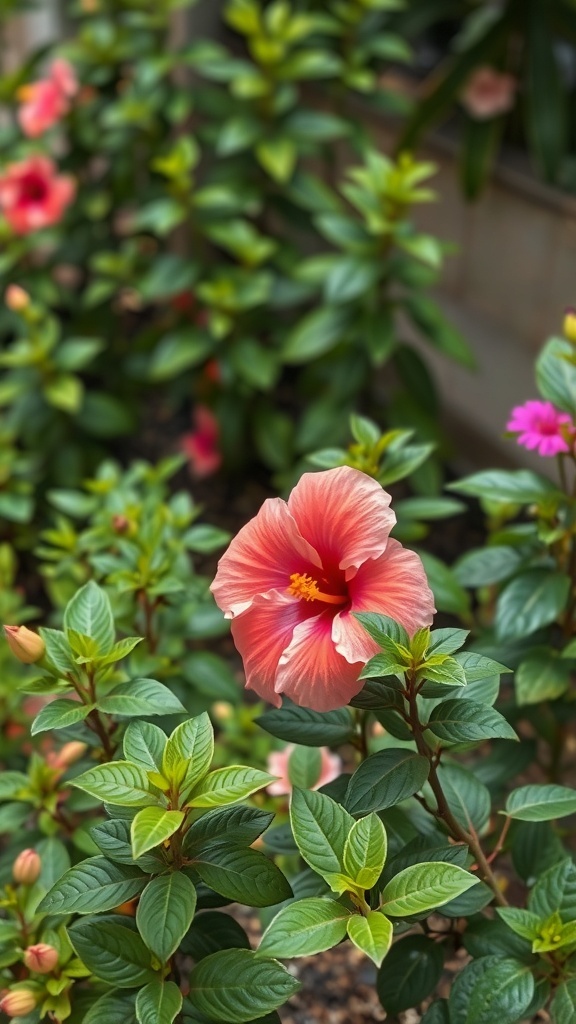
Hibiscus flowers are stunning additions to any garden, known for their vibrant colors and large blooms. To create a thriving hibiscus garden, choosing the right companion plants is key. These plants can enhance the beauty of hibiscus while also providing benefits like pest control and improved growth.
Consider planting marigolds alongside your hibiscus. Their bright yellow and orange flowers not only look great together but also help deter pests. Another great option is the salvia plant, which attracts pollinators like bees and butterflies. This can lead to a more lively garden atmosphere.
For a touch of greenery, try adding ferns or hostas. These plants thrive in similar conditions and can provide a lovely backdrop for your hibiscus. They also help retain moisture in the soil, which is beneficial for hibiscus plants.
Lastly, think about incorporating ornamental grasses. They add texture and movement to the garden, creating a dynamic look. With the right companions, your hibiscus garden will be a beautiful and harmonious space.
Creating a Hibiscus-Themed Garden Design
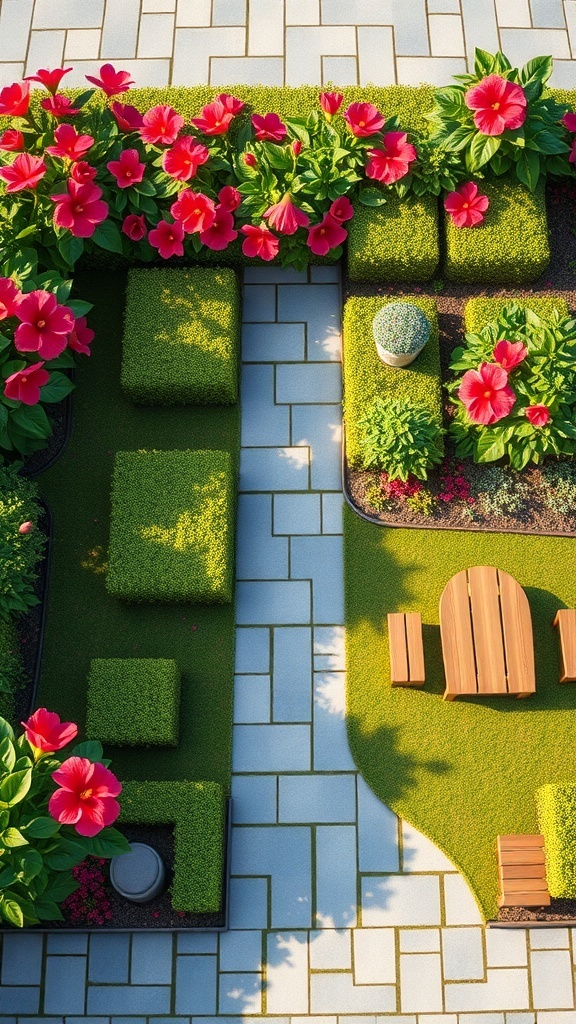
Designing a hibiscus-themed garden can be a delightful project. The vibrant colors of hibiscus flowers bring life to any outdoor space. In the image, you can see a well-structured garden layout featuring lush green hedges and bright red hibiscus blooms. This combination creates a stunning visual appeal.
The garden design includes neatly trimmed hedges that form cozy seating areas. The wooden furniture adds a warm touch, inviting you to sit and enjoy the beauty around you. Pathways made of light-colored stones guide you through the garden, making it easy to explore.
When planning your hibiscus garden, think about the arrangement of flowers and greenery. Grouping hibiscus plants together can create a bold statement. Consider adding other plants that complement their colors, enhancing the overall look.
Don’t forget about the layout. A mix of heights and textures can make your garden more interesting. The image shows how different elements come together harmoniously, making it a perfect spot for relaxation or entertaining friends.