Essential Tips for Building Raised Garden Beds
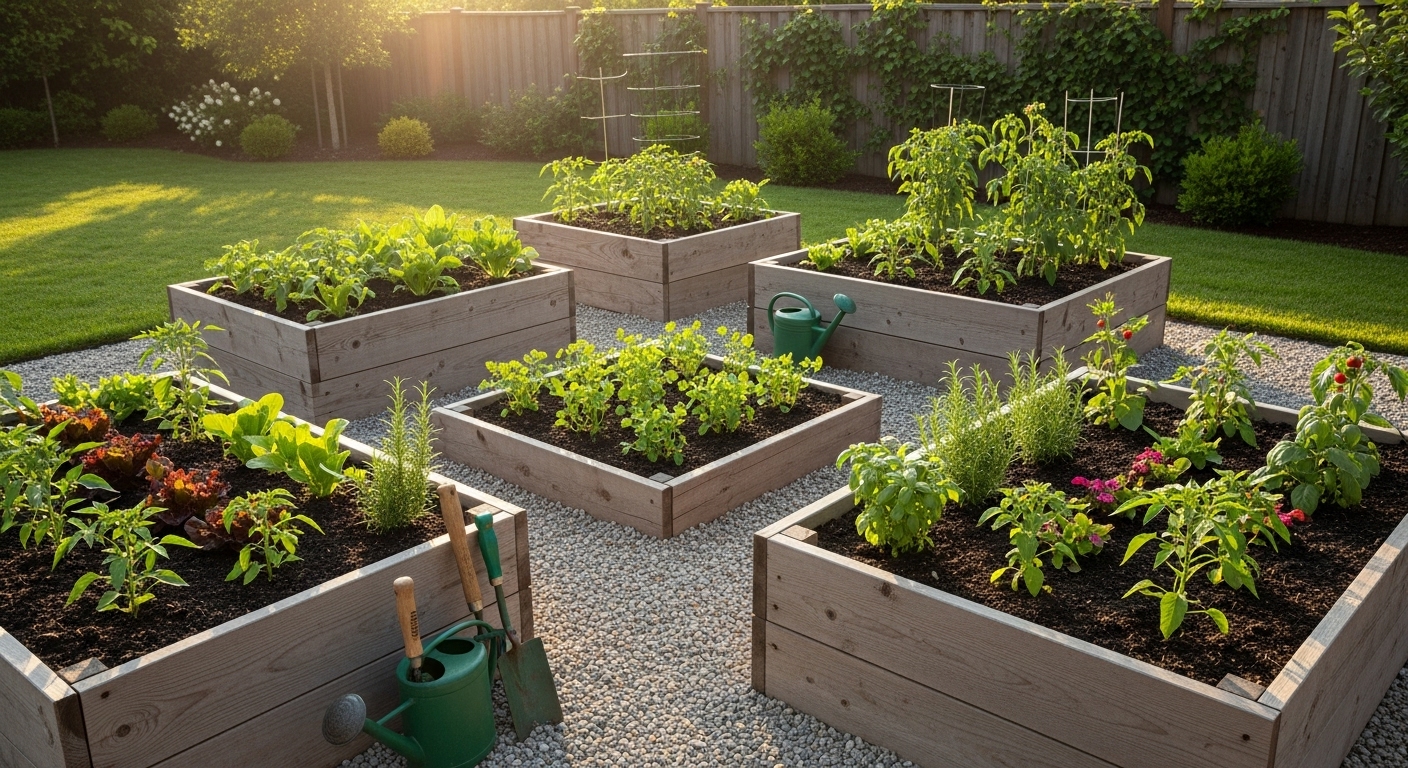
Raised garden beds are a fantastic way to grow your own plants, veggies, and herbs without the hassle of traditional gardening. They provide better drainage, improved soil quality, and are easier on your back, making gardening fun and accessible for everyone. Plus, they add a charming touch to your outdoor space!
Enhancing Aesthetics with Edging
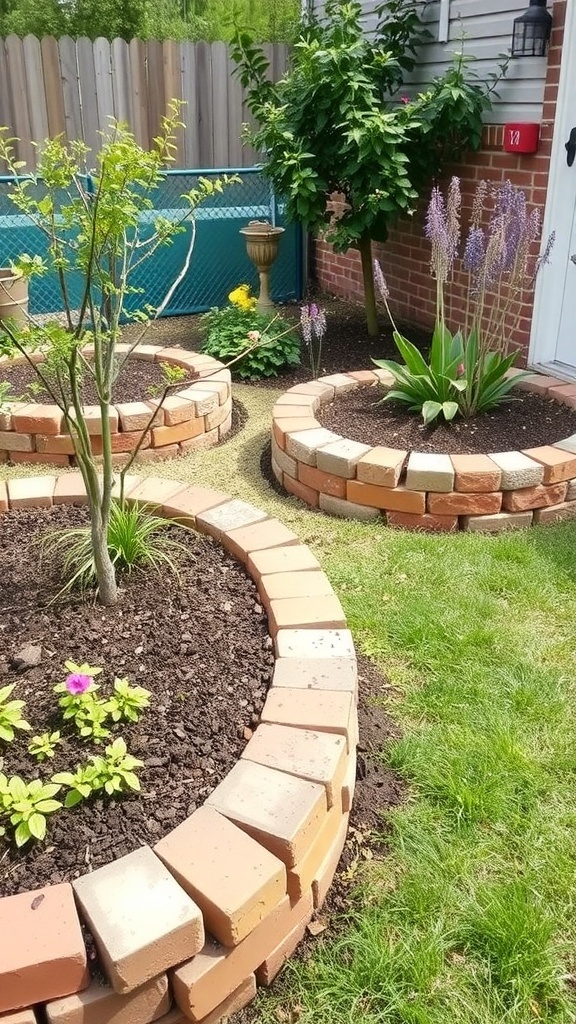
Raised garden beds can be a beautiful addition to any yard, and the right edging can really make them pop. The image shows a lovely setup with circular beds made of bricks. This not only defines the space but also adds a charming touch to the garden.
The bricks create a clean line that separates the garden from the surrounding grass. This helps keep the soil in place and makes maintenance easier. Plus, it gives a polished look that can enhance the overall appeal of your outdoor area.
In the image, you can see various plants thriving within the beds, surrounded by the sturdy brick edging. This combination of structure and greenery creates a balanced aesthetic. It invites you to spend time in the garden, enjoying the beauty of nature.
Using materials like bricks or stones for edging can also help with drainage and soil retention. This means your plants can grow healthy and strong. So, if you’re considering raised beds, think about how edging can elevate the look and function of your garden.
Seasonal Planting Strategies
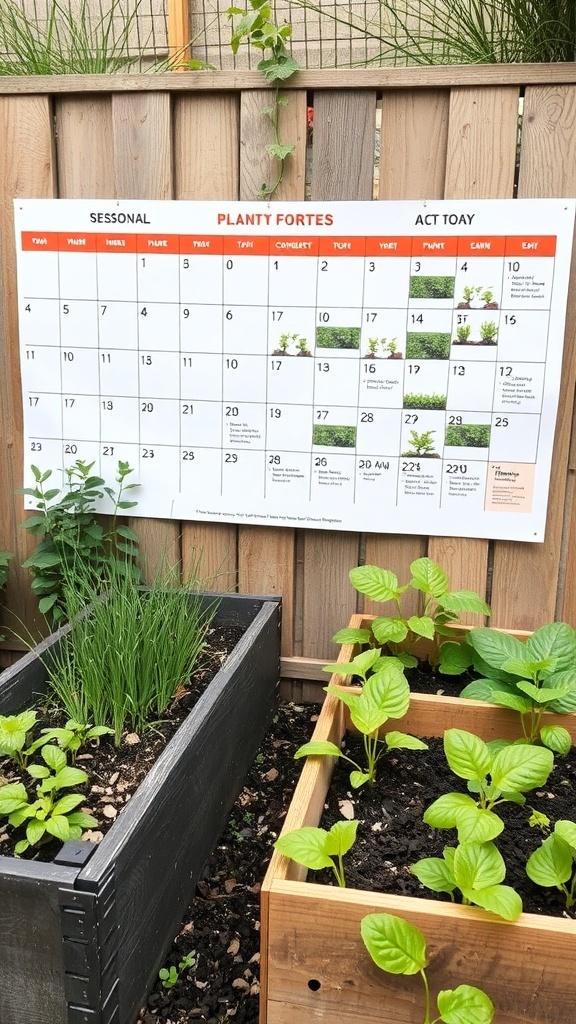
Raised garden beds are a fantastic way to grow your favorite plants. They offer better drainage and soil quality, making them ideal for various crops. In the image, you can see a planting calendar that helps guide your seasonal planting strategies.
This calendar outlines when to plant different herbs and vegetables throughout the year. It’s a handy tool for anyone looking to maximize their garden’s potential. The visual layout makes it easy to see what to plant each month, ensuring you’re always on track.
In the raised beds, you can spot some young plants, like leafy greens and herbs. These are perfect choices for early spring planting. As the season progresses, you can switch to warmer crops like tomatoes and peppers. Following the calendar helps you make the most of your growing space.
Using a seasonal planting strategy not only keeps your garden organized but also ensures a continuous harvest. By planning ahead, you can enjoy fresh produce throughout the year. So, grab your calendar and start planting!
Optimal Soil Mixtures for Growth
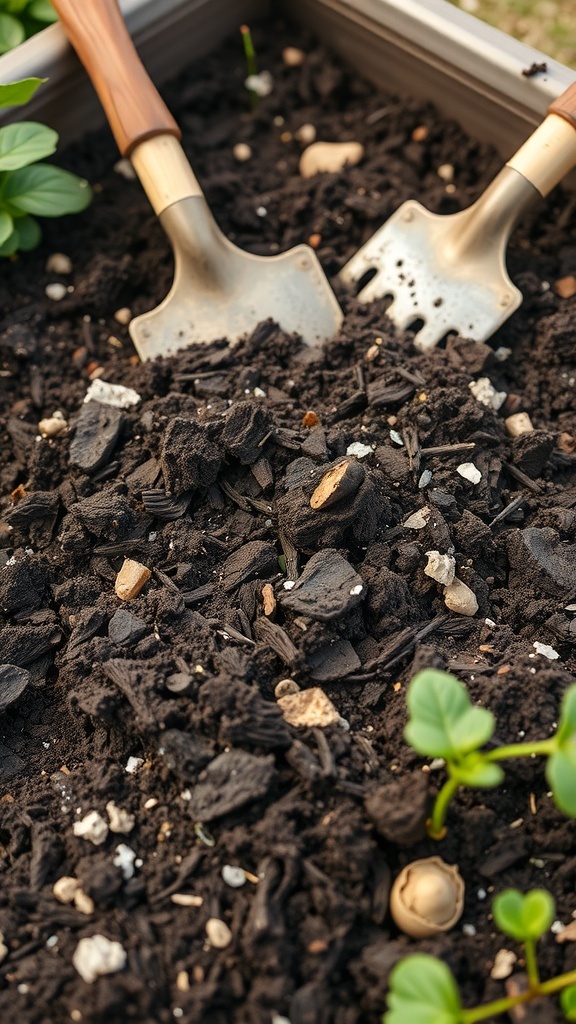
When it comes to raised garden beds, the right soil mixture is key to healthy plants. The image shows a close-up of rich, dark soil, with small shovels resting on top. This soil is likely a blend of various components, each contributing to plant growth.
A good soil mix usually includes organic matter like compost, which provides nutrients. You might also see perlite or vermiculite mixed in. These materials help with drainage and aeration, ensuring that roots have access to air and water.
In the image, you can spot some small green sprouts peeking through the soil. This indicates that the mixture is not just healthy but also supports germination. The texture looks crumbly, which is a sign of well-aerated soil.
For those starting their own raised beds, consider mixing equal parts of compost, topsoil, and a drainage material. This combination will create a balanced environment for your plants to thrive.
Watering Systems for Efficiency
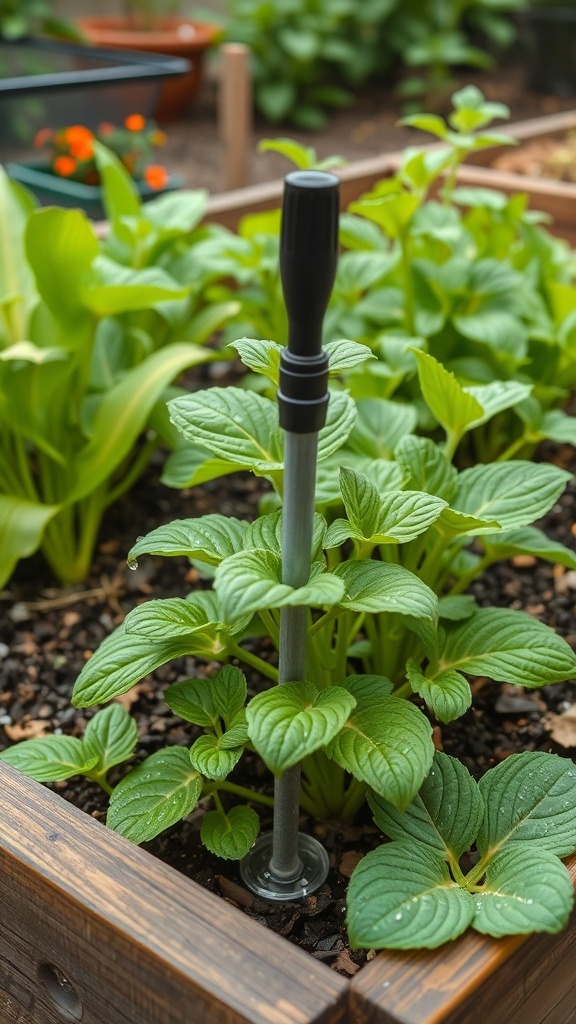
In a raised garden bed, having an efficient watering system can make all the difference. The image shows a watering tool positioned among healthy plants, highlighting the importance of proper hydration. This tool helps ensure that water reaches the roots effectively, promoting growth and vitality.
Using a system like this can save time and effort. Instead of manually watering each plant, you can set up a drip irrigation system or use a soaker hose. These methods deliver water directly to the soil, reducing waste and keeping your plants happy.
It’s also a good idea to monitor soil moisture. Tools like moisture meters can help you determine when your plants need water. This way, you avoid overwatering, which can lead to root rot and other issues.
Incorporating a watering system not only makes gardening easier but also supports sustainable practices. By using water efficiently, you contribute to a healthier environment while enjoying the fruits of your labor.
Raised Garden Beds Gallery



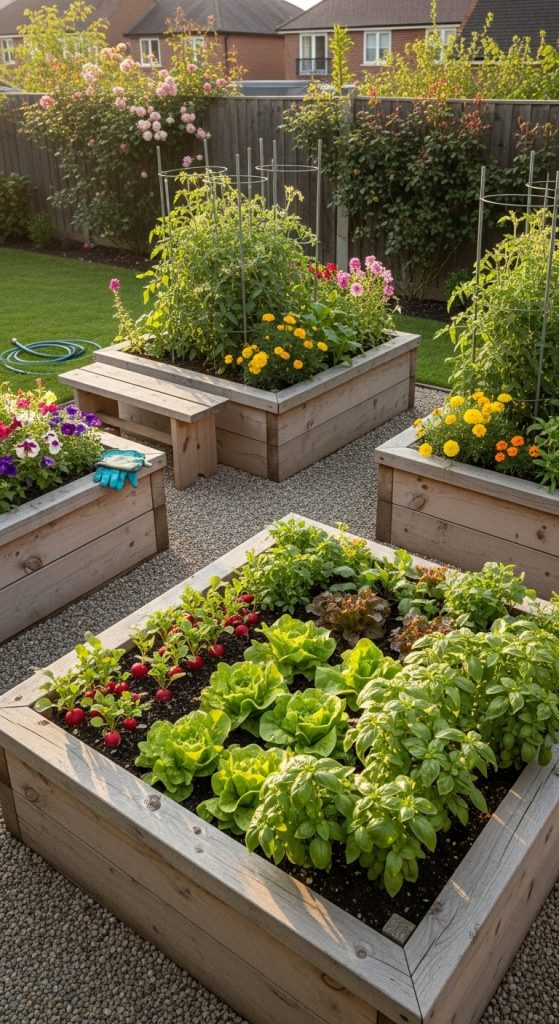
Benefits of Raised Garden Beds
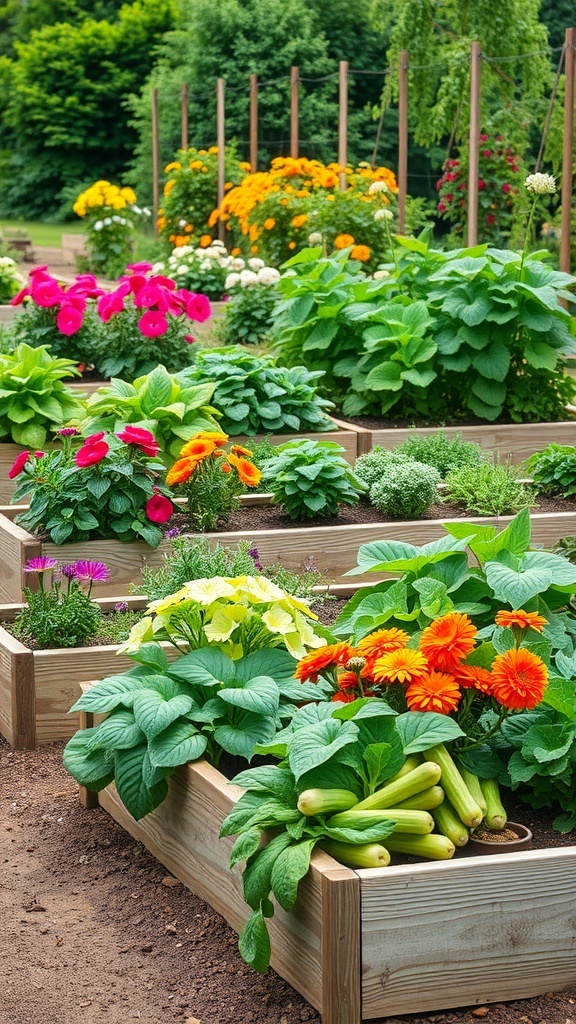
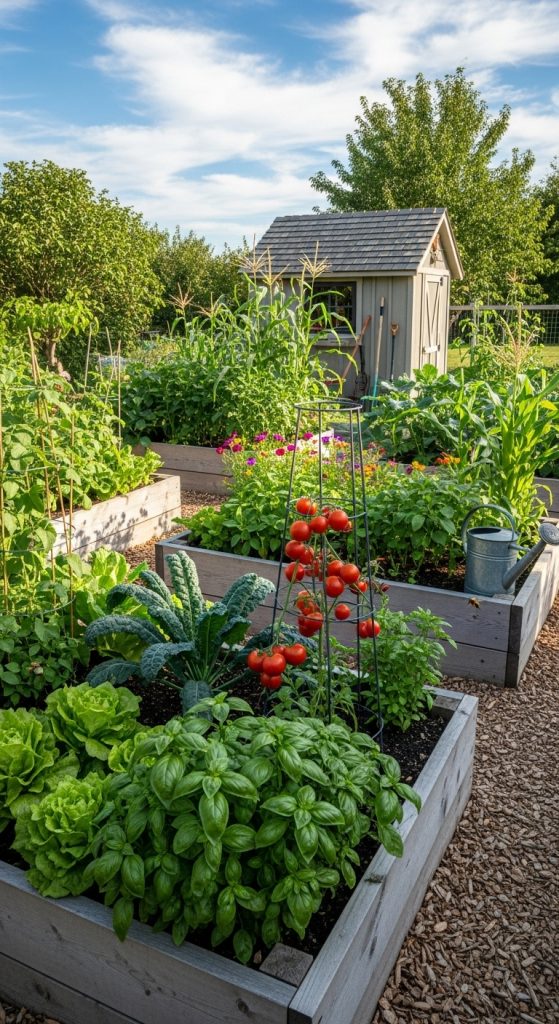
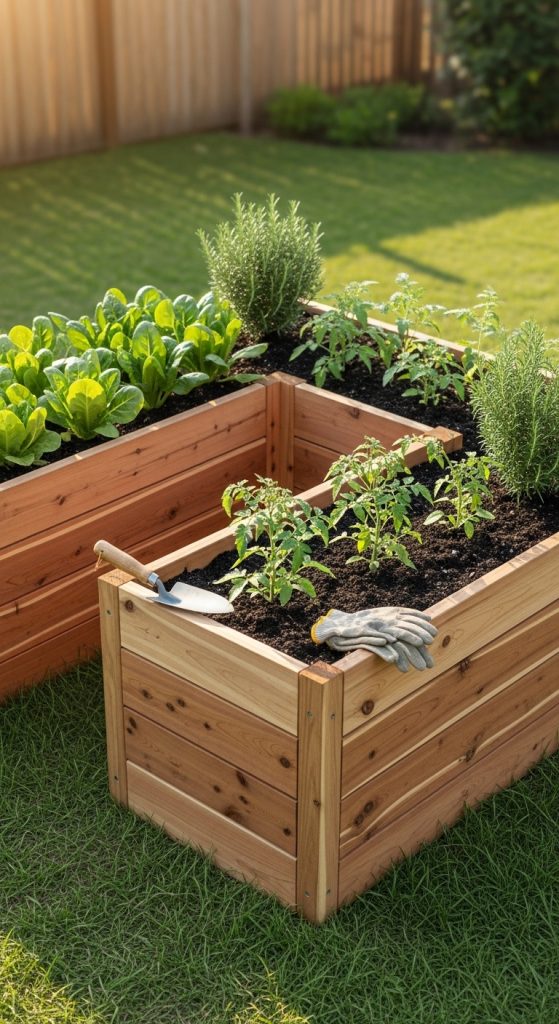
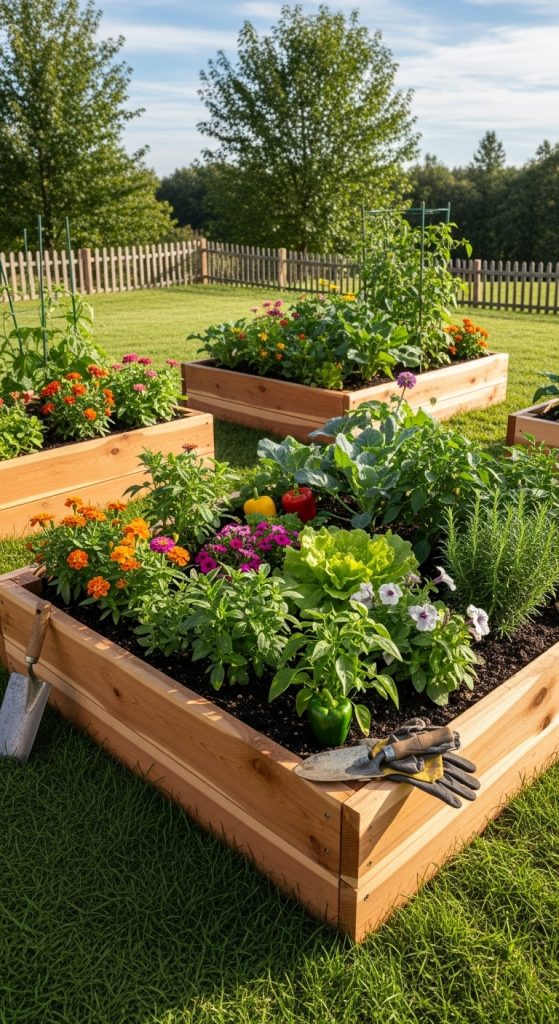
Raised garden beds offer a fantastic way to grow plants and vegetables. They are visually appealing, as seen in the image filled with vibrant flowers and lush greens. The neat structure of the beds makes the garden look organized and inviting.
One major benefit is improved soil drainage. Raised beds allow excess water to flow away, preventing root rot. This is especially helpful in areas with heavy rainfall. The soil warms up faster in spring, giving your plants a head start.
Another plus is easier access. Gardening becomes more comfortable, especially for those with mobility issues. You can tend to your plants without bending over too much, making the experience enjoyable.
Raised beds also help keep pests at bay. The elevation can deter some critters from reaching your plants. Plus, you can control the soil quality better, leading to healthier plants.
Finally, they can extend your growing season. With the right materials, you can insulate the soil, allowing you to plant earlier in spring and harvest later in fall. This means more time to enjoy your garden!
Choosing the Right Materials
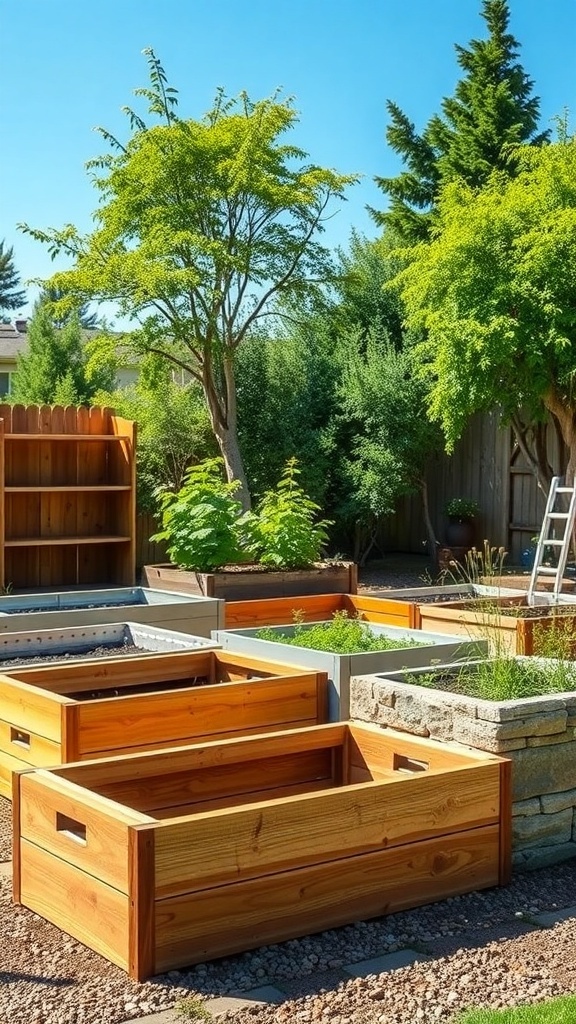
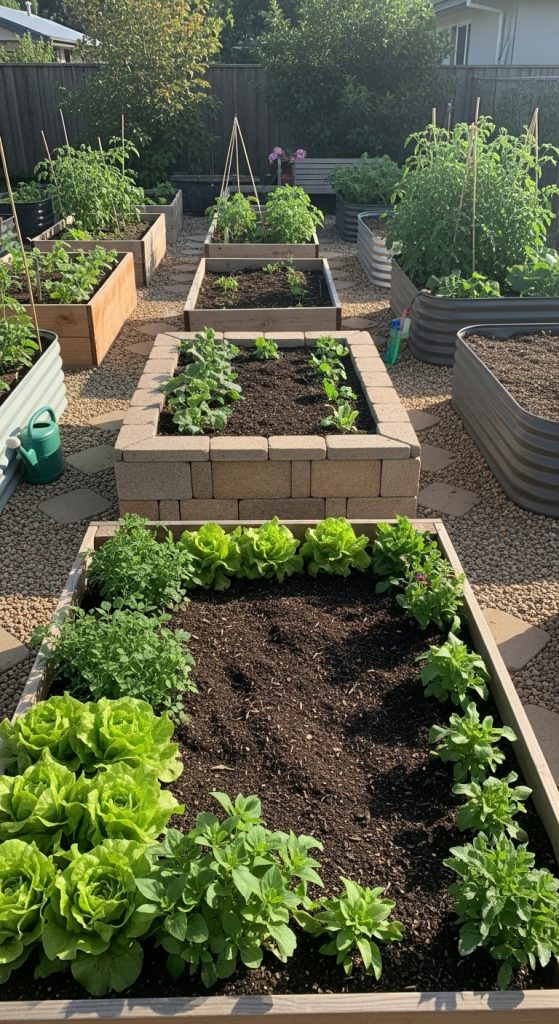
When setting up raised garden beds, the materials you choose can make a big difference. The image shows a variety of raised beds made from different materials, each with its own charm. You can see wooden beds, which are popular for their natural look, and metal ones that offer a modern touch.
Wood is often favored for its aesthetic appeal. Cedar and redwood are great choices because they resist rot and insects. If you go for wood, make sure it’s untreated to avoid chemicals leaching into your soil.
On the other hand, metal beds can be durable and stylish. They heat up quickly in the sun, which can help with early planting. Just keep in mind that they may require some insulation to protect roots from extreme heat.
Stone or concrete beds are another option, providing a sturdy and permanent solution. They can be a bit more labor-intensive to set up but offer excellent durability.
Ultimately, the choice of material should reflect your gardening style, budget, and the look you want to achieve in your garden. Each option has its benefits, so think about what works best for you!
Designing Your Garden Layout
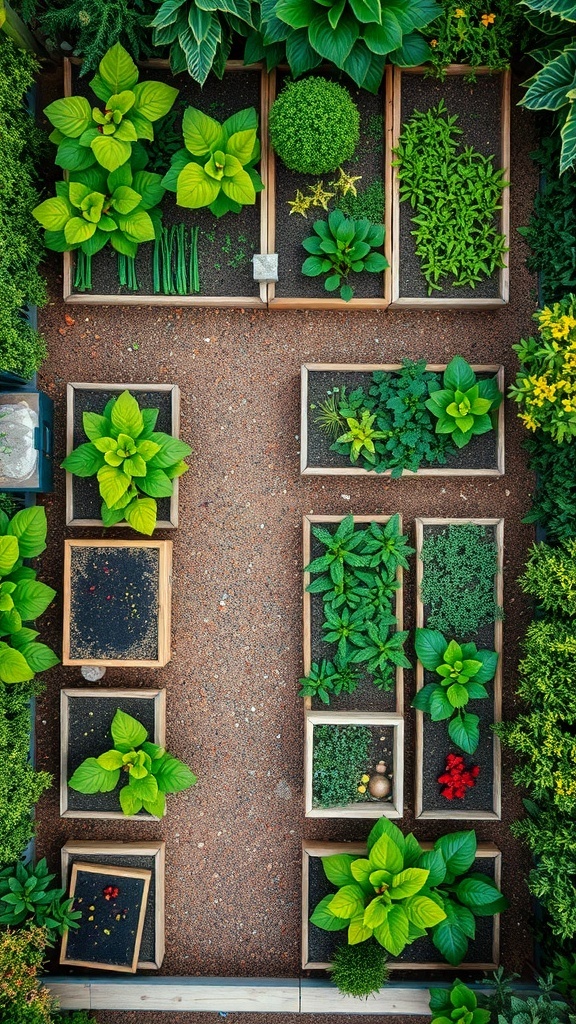
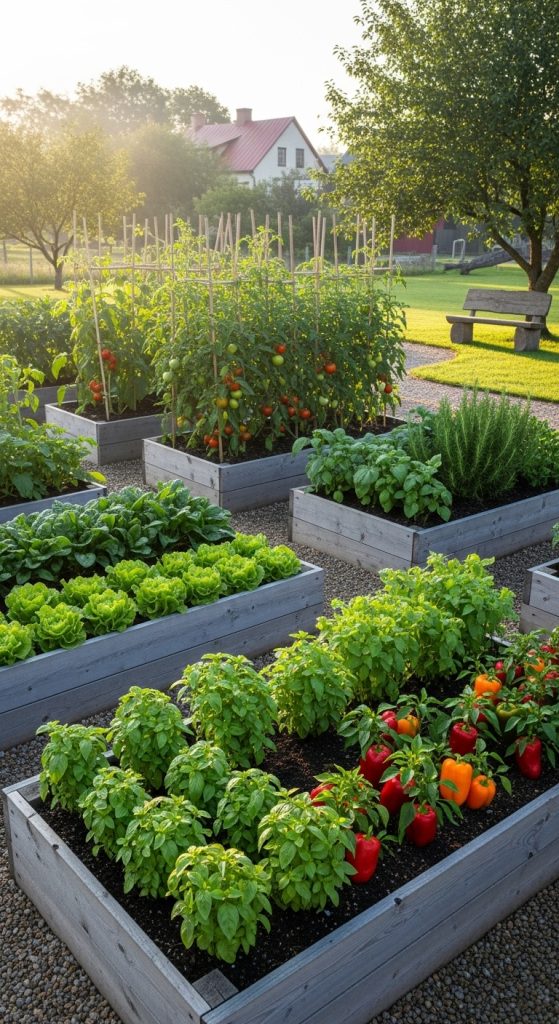
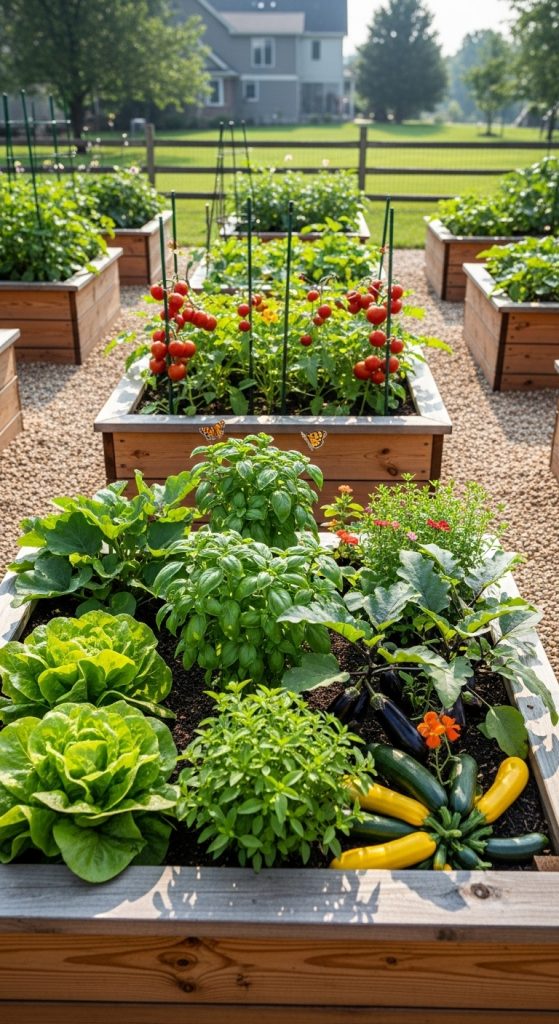
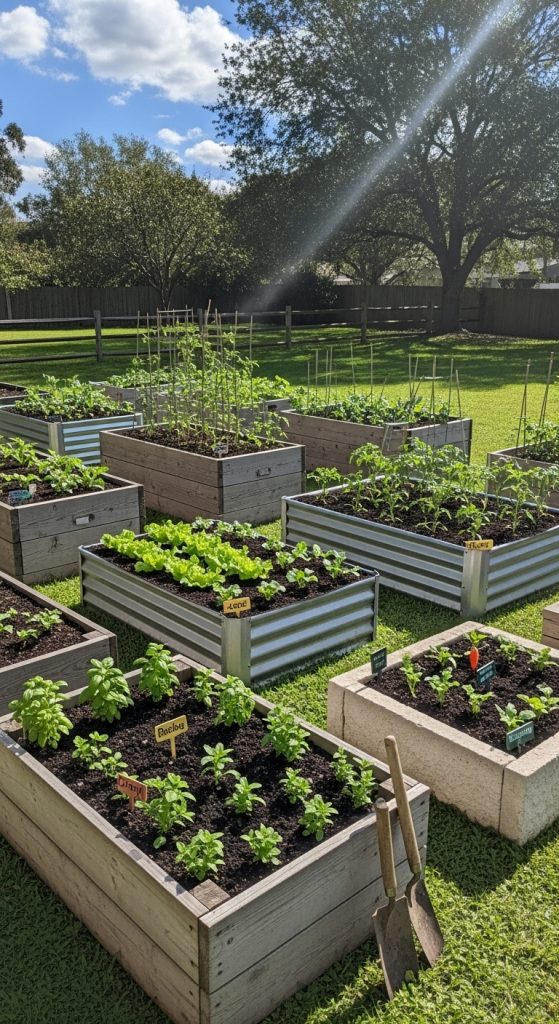
Creating a raised garden bed layout can be a fun and rewarding process. The image shows a well-organized garden with various plants in neat wooden boxes. Each bed is filled with different herbs and vegetables, making it both practical and visually appealing.
When designing your garden, think about the space you have. The layout in the image uses a grid pattern, which maximizes space and makes it easy to access each plant. This arrangement allows for good air circulation and sunlight exposure, which are key for healthy growth.
Consider the types of plants you want to grow. Grouping similar plants together can help with maintenance. For example, herbs like basil and mint can thrive in the same conditions. The image features a mix of leafy greens and herbs, showing how diverse your garden can be.
Don’t forget about pathways! The gravel paths in the image provide easy access to each bed without stepping on the soil. This keeps your garden tidy and prevents soil compaction. Think about how you will move around your garden when planning your layout.
Pest Management Techniques
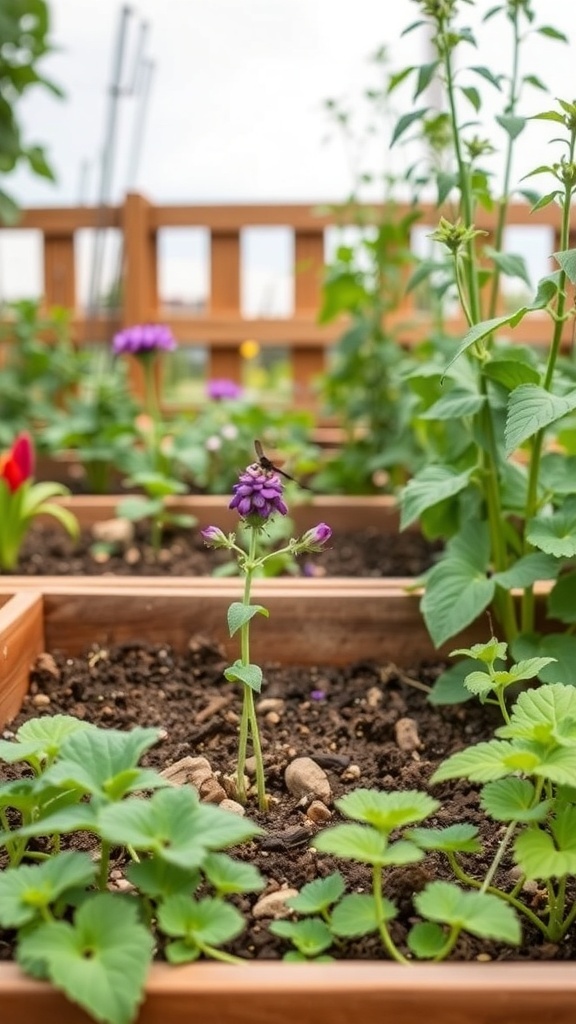
Raised garden beds are a fantastic way to grow your plants while keeping them safe from pests. The image shows a vibrant garden with various plants thriving in their wooden beds. You can see a mix of flowers and leafy greens, all enjoying the sunshine.
One effective pest management technique is to use companion planting. Certain plants can naturally repel pests when grown together. For example, marigolds are known to deter nematodes and other harmful insects. Planting them alongside your vegetables can create a natural barrier.
Another method is to introduce beneficial insects. Ladybugs and lacewings are great allies in the garden. They feed on aphids and other pests, helping to keep your plants healthy. You can attract these helpful insects by planting flowers like dill and fennel.
Physical barriers can also be a simple yet effective way to protect your garden. Using row covers or mesh can keep pests away from your plants while allowing sunlight and rain to nourish them. This is especially useful for young seedlings that are more vulnerable.
Regular monitoring is key. Check your plants often for signs of pests. Early detection can save your garden from significant damage. If you spot any unwanted visitors, consider using organic pesticides or insecticidal soaps as a last resort.
Winterizing Your Raised Beds
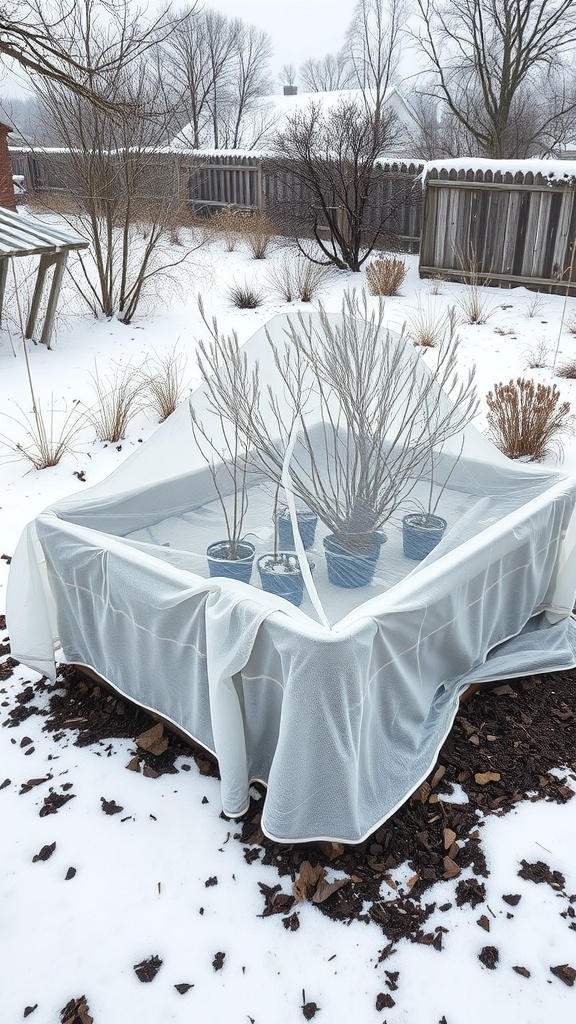
Winterizing your raised garden beds is essential for protecting your plants and soil during the cold months. In the image, we see a raised bed covered with a protective cloth, which helps shield the plants from harsh winter conditions. This simple step can make a big difference in the health of your garden come spring.
First, it’s important to clean out any dead plants or debris from your raised beds. This helps prevent pests and diseases from overwintering in your garden. After clearing out the old plants, consider adding a layer of mulch. Mulch acts as insulation, keeping the soil temperature more stable.
Next, covering your raised beds with a protective cloth, like the one shown in the image, can help trap heat and moisture. This is especially useful for tender plants that may not survive extreme cold. Make sure to secure the cloth so it doesn’t blow away in winter winds.
Lastly, if you have potted plants inside your raised bed, make sure they are also protected. You can move them to a sheltered area or wrap them in burlap for extra warmth. Taking these steps will help ensure your garden is ready to thrive when spring arrives.
Community Gardening with Raised Beds
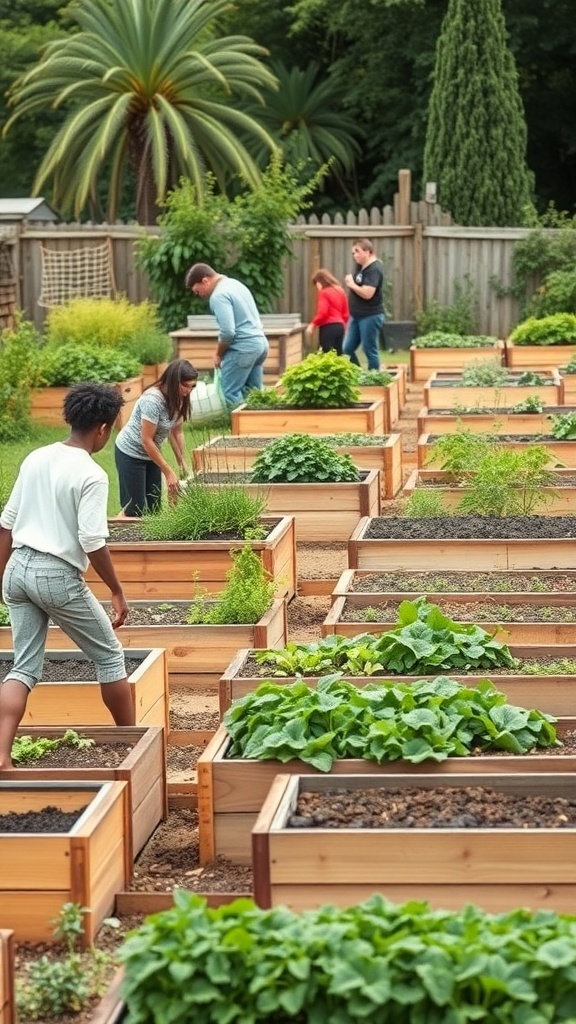
Raised garden beds are a fantastic way to bring people together. In community gardens, these beds create a shared space where neighbors can grow vegetables and herbs. The image shows a lively scene of people tending to their plants, each contributing to the garden’s success.
Working in raised beds makes gardening accessible for everyone. The elevated design reduces strain on the back and knees, making it easier for all ages to participate. You can see a diverse group of individuals engaged in various tasks, from planting to watering, showcasing the collaborative spirit of community gardening.
These beds not only enhance the garden’s aesthetics but also improve soil drainage and quality. The wooden frames in the image highlight a natural look that blends well with the greenery. This setup allows for better control over soil conditions, which is essential for healthy plants.
Community gardening with raised beds fosters connections among participants. It encourages sharing tips, recipes, and even harvests. The joy of growing food together creates lasting friendships and strengthens community bonds. Overall, raised beds are a simple yet effective way to cultivate both plants and relationships.