How to Choose a Rug for Your Living Room? The Best GUIDe
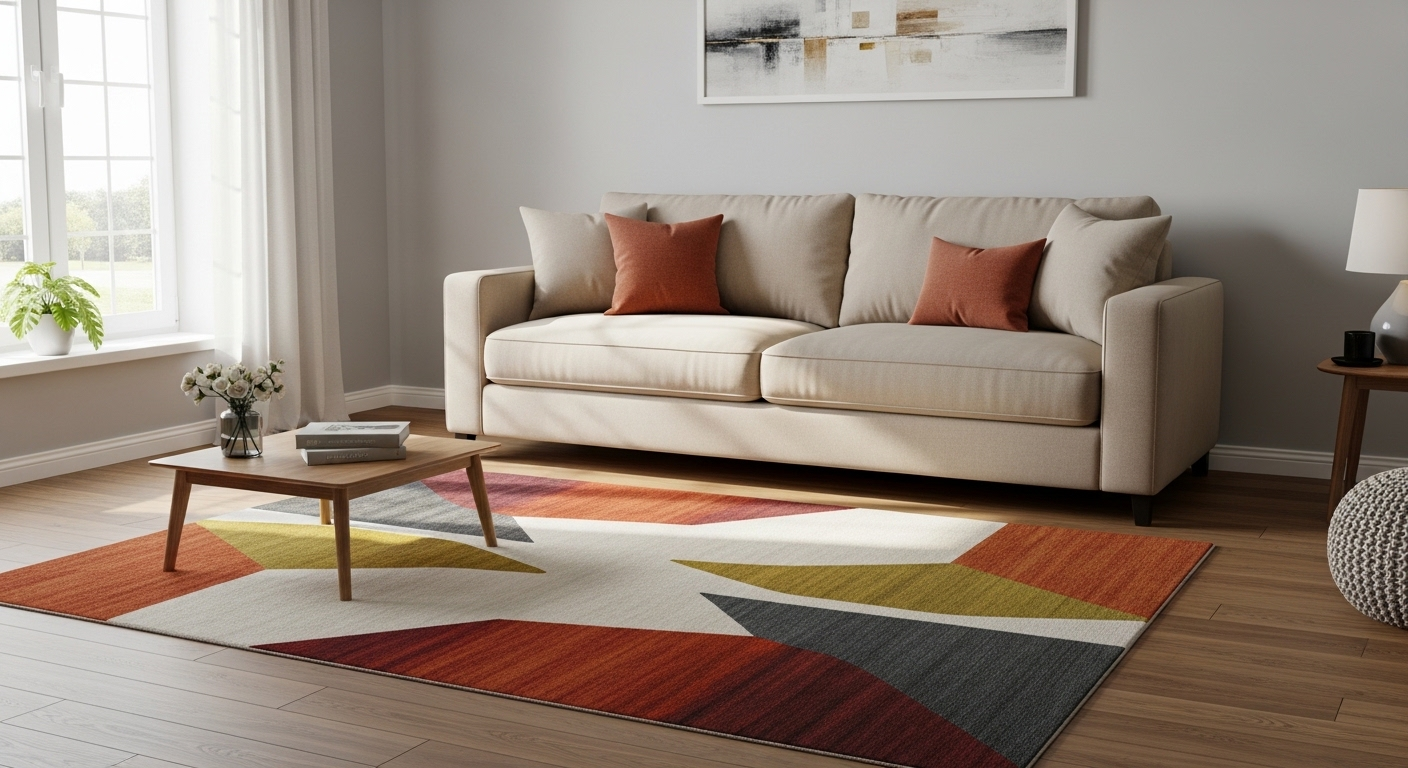
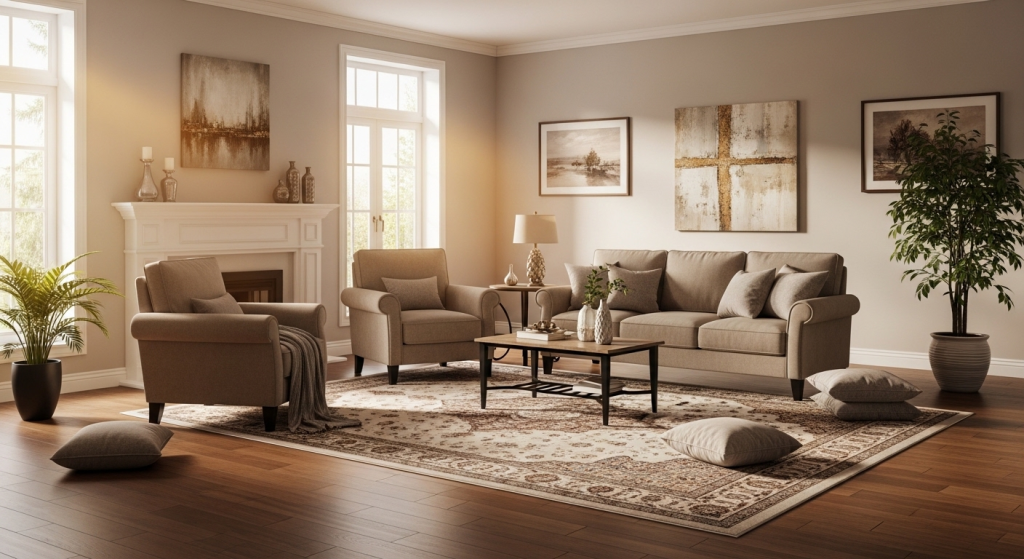
A rug does far more than cover the floor. The right area rug anchors your furniture, defines the room layout, softens acoustics, adds warmth, and completely changes how your living room feels. In many ways, the rug is the foundation of the entire space. Even expensive furniture can look disconnected if the rug size or placement is wrong.
Unfortunately, choosing a rug can feel overwhelming. There are endless materials, sizes, pile heights, colors, and price points to sort through. One wrong decision can leave your room feeling awkward, cramped, or unfinished.
This guide will walk you through exactly how to choose the right living room rug with confidence—from sizing formulas and materials to rug placement strategies and buying mistakes to avoid.
Section 1 — Size Is Everything: Exact Rug Size Formulas for Every Sofa Configuration
If there’s one rule designers agree on, it’s this: most people buy rugs that are far too small.
A properly sized rug creates cohesion and helps furniture feel connected. A rug that’s too tiny can make the entire room feel visually disconnected and smaller than it actually is.
The Golden Rule of Rug Placement
Whenever possible, at least the front legs of your seating furniture should sit on the rug. In larger rooms, placing all legs on rug creates an even more luxurious and grounded look.
Rug Size Chart by Sofa Configuration
| Sofa Configuration | Minimum Rug Size | Ideal Rug Size | Best Rug Placement |
|---|---|---|---|
| Apartment loveseat | 5×8 | 6×9 | Front legs on rug |
| Standard 3-seat sofa | 8×10 | 9×12 | Front or all legs on rug |
| Sofa + 2 chairs | 8×10 | 9×12 | Front legs anchored |
| Sectional sofa | 9×12 | 10×14 | All major furniture touching rug |
| Large open living room | 10×14 | 12×15 | Full furniture grouping anchored |
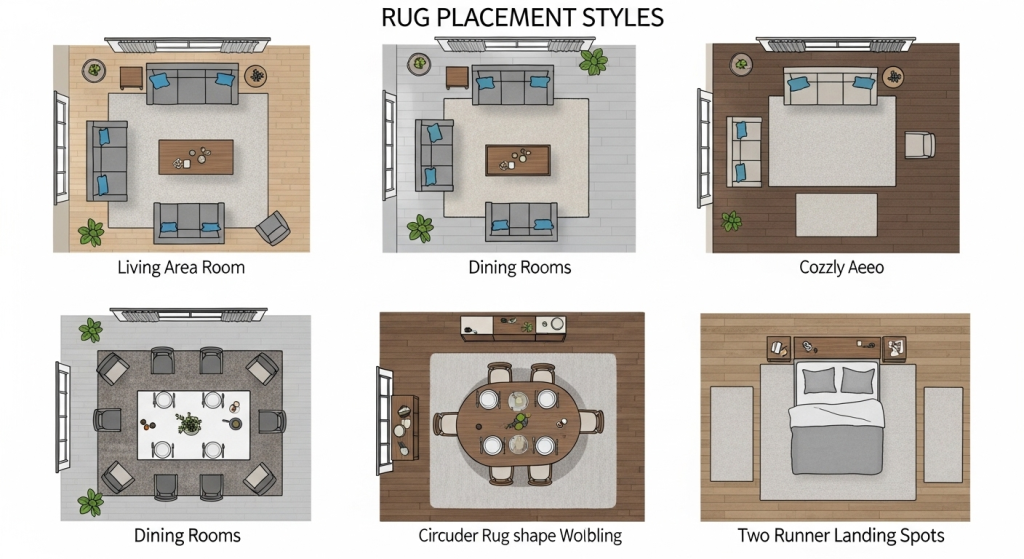
Rug Placement Styles
Floating Rug
A floating rug sits in the middle of the room without touching furniture legs. This often makes the room feel disconnected and undersized.
Avoid this look unless you’re styling a very small accent area.
Front Legs on Rug
This is the most common designer-approved arrangement. The front legs of sofas and chairs rest on the rug while the back legs remain off.
This creates balance while keeping costs manageable.
All Legs on Rug
This arrangement feels the most luxurious and cohesive. It works especially well in larger living rooms.
Section 2 — Material Breakdown: Choosing the Right Rug Material
The material of your rug affects durability, softness, maintenance, and price.
Wool Rugs
Pros
- Extremely durable
- Naturally stain-resistant
- Soft underfoot
- Long-lasting
Cons
- More expensive
- May shed initially
Best For
Busy family living rooms and long-term investment pieces.
Wool rugs are often considered the gold standard because they combine comfort and durability beautifully.
Jute & Sisal Rugs
Pros
- Natural texture
- Affordable
- Adds warmth and organic style
Cons
- Rough texture
- Harder to clean
- Can stain easily
Best For
Casual living rooms and layered coastal or organic-style spaces.
Jute rugs bring incredible texture but are not ideal for homes with pets or frequent spills.
Polypropylene / Synthetic Rugs
Pros
- Budget-friendly
- Stain-resistant
- Easy to clean
Cons
- Less luxurious feel
- Shorter lifespan
Best For
Homes with kids, pets, or high-traffic living rooms.
Synthetic rugs have improved dramatically in recent years and can mimic expensive wool styles surprisingly well.
Cotton Rugs
Pros
- Lightweight
- Affordable
- Easy to wash
Cons
- Less durable
- Can wrinkle or shift
Best For
Small apartments or casual layered looks.
Cotton rugs work well in relaxed spaces but may wear faster in heavily used rooms.
Viscose & Silk-Look Rugs
Pros
- Beautiful sheen
- Luxurious appearance
Cons
- Delicate fibers
- Difficult to clean
- Sensitive to moisture
Best For
Low-traffic formal living rooms.
These rugs create stunning elegance but require careful maintenance.
Section 3 — Pile Height: Low vs. High Pile
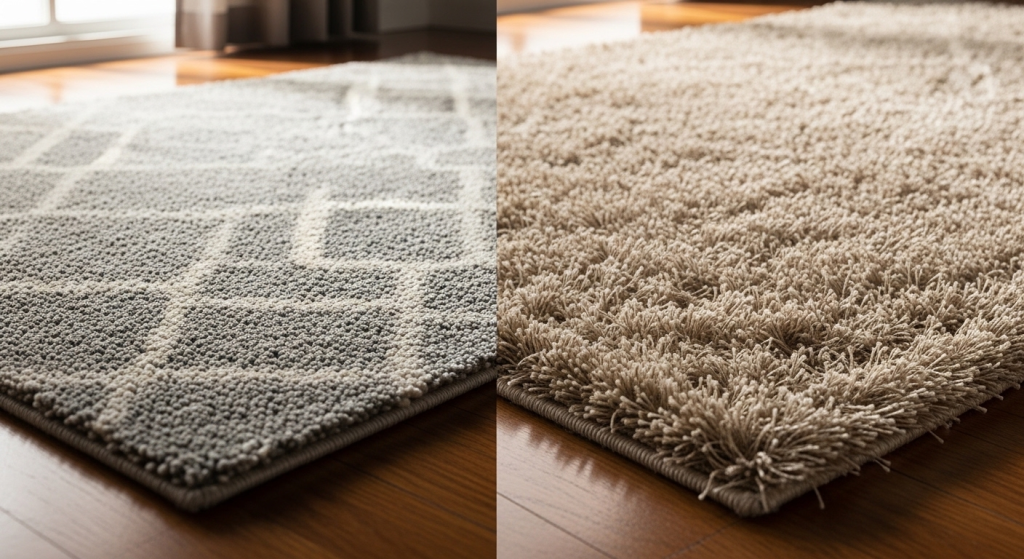
Pile height affects both appearance and practicality.
Low-Pile Rugs
Low-pile rugs are easier to clean and better for high-traffic areas.
They work especially well under coffee tables because furniture sits evenly on them.
Best For
- Busy households
- Pet owners
- Modern interiors
- Dining areas connected to living rooms
High-Pile Rugs
High-pile rugs feel plush and cozy underfoot.
However, they trap more dust and can be harder to vacuum.
Best For
- Cozy living rooms
- Low-traffic spaces
- Relaxed lounge areas
If you love softness but want practicality, consider a medium-pile rug as a compromise.
Section 4 — Pattern & Color: How to Match or Contrast With Furniture
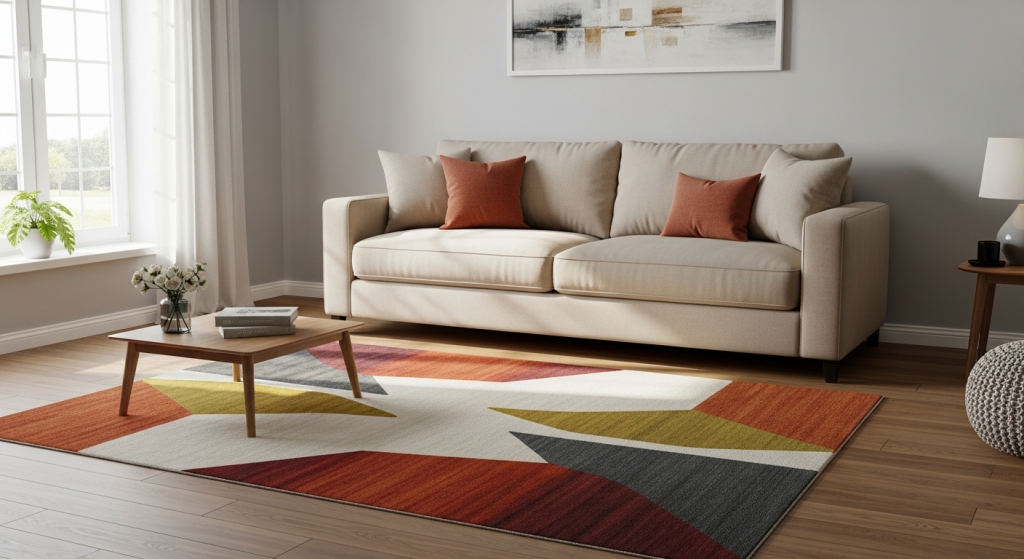
The rug should support the room rather than compete with it.
If Your Furniture Is Neutral
You can safely introduce bold patterns or richer colors through the rug.
A patterned rug adds personality while preventing beige rooms from feeling flat.
If Your Furniture Is Colorful
Choose a simpler rug with subtle patterns or muted tones to avoid visual overload.
Matching vs. Contrasting
Matching tones create a calm, cohesive atmosphere.
Contrasting colors create energy and visual interest.
Consider Natural Light
Dark rugs can make small dim rooms feel heavier, while lighter rugs create openness.
Pattern Scale Matters
Large-scale patterns work best in bigger rooms.
Small busy patterns can feel cluttered in compact spaces.
Section 5 — Shape: Rectangle vs. Round vs. Runner
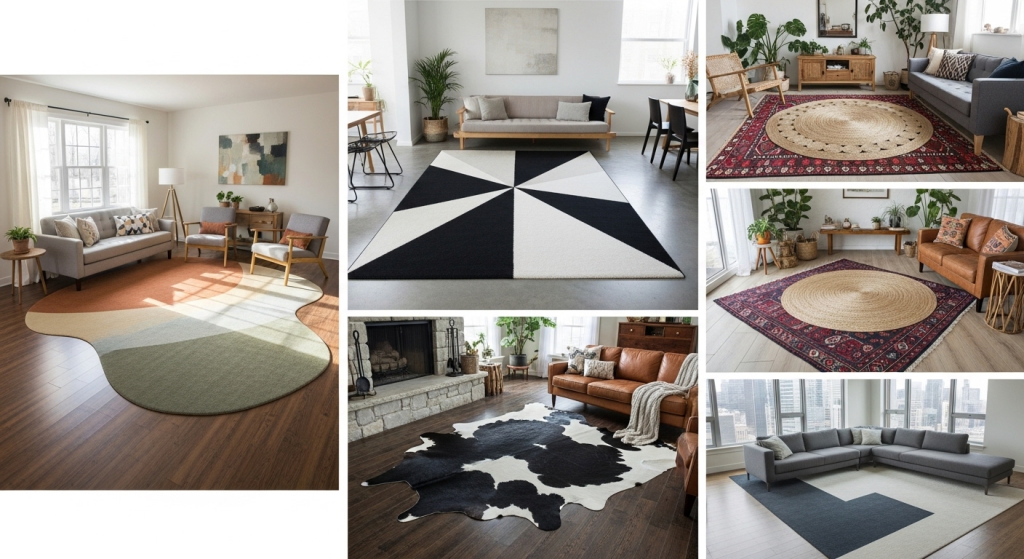
Rectangular Rugs
The most common and versatile option.
Best for traditional living room layouts.
Round Rugs
Round rugs soften angular furniture arrangements.
They work beautifully under round coffee tables or in small conversation corners.
Runner Rugs
Runners are ideal for narrow spaces or connecting zones in open-plan homes.
They can also soften long rectangular living rooms.
Section 6 — Budget Tiers: What to Expect
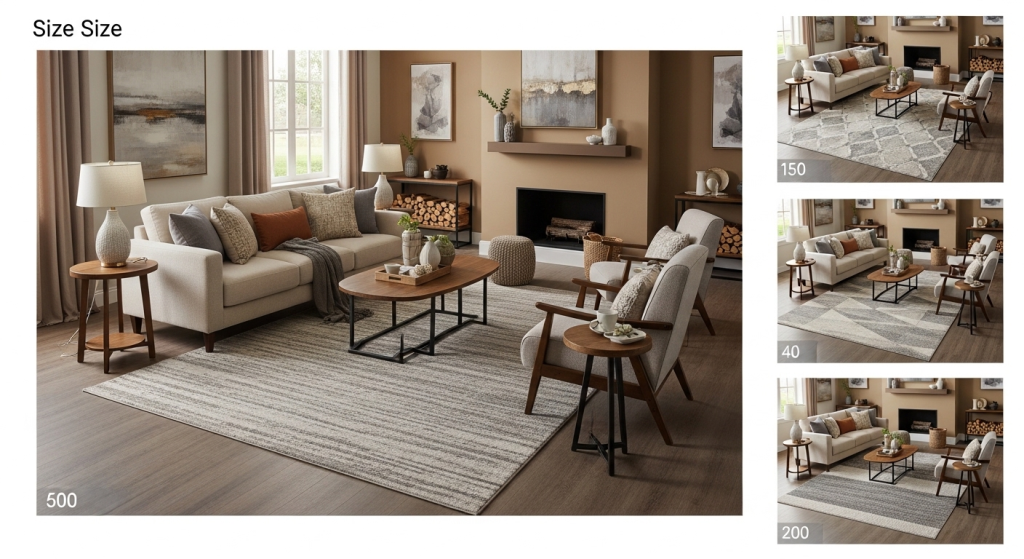
Around $50
At this price point, expect smaller synthetic rugs or thin cotton styles.
Best for temporary solutions or small apartments.
Around $200
This range offers better quality synthetic rugs and some entry-level wool blends.
You’ll find more stylish options and improved durability.
Around $500
Here you begin seeing high-quality wool rugs and larger designer-inspired pieces.
Excellent balance between quality and affordability.
$1000+
Luxury handcrafted wool and premium natural fiber rugs dominate this category.
These rugs can last for decades with proper care.
Red Flags When Buying a Rug Online
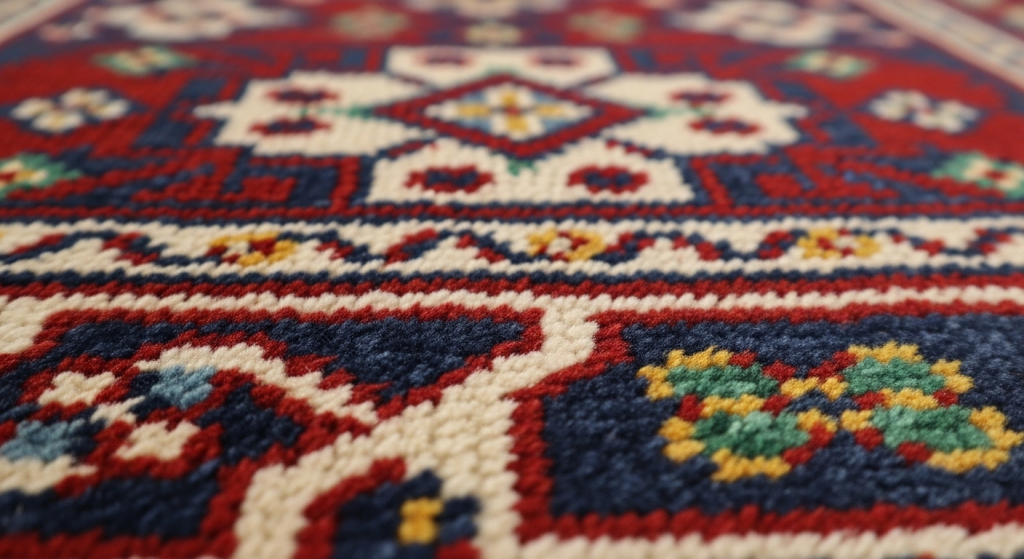
1. Missing Close-Up Photos
You need texture detail images to judge quality accurately.
2. No Material Information
Always check exact fiber composition.
3. Unrealistic Pricing
Extremely cheap oversized rugs may indicate poor durability.
4. No Return Policy
Never buy large rugs online without checking return terms.
5. Inconsistent Customer Photos
Real customer images often reveal true colors better than studio photography.
Care & Maintenance Tips by Material
Wool
Vacuum regularly using gentle suction.
Blot spills immediately instead of scrubbing.
Jute & Sisal
Keep dry whenever possible.
Avoid placing in moisture-prone areas.
Synthetic Rugs
Most can handle spot cleaning with mild soap and water.
Excellent for easy maintenance.
Cotton Rugs
Check whether they’re machine washable.
Rotate regularly to reduce wear.
Viscose Rugs
Avoid water-heavy cleaning methods.
Professional cleaning is often safest.
Don’t Skip the Rug Pad
A quality rug pad prevents slipping, protects flooring, and extends the life of the rug.
It also adds softness underfoot and improves stability.
FAQ
What size rug should go under a 3-seat sofa?
For a standard 3-seat sofa, choose at least an 8×10 rug. A 9×12 rug often looks even better if the room allows.
Should all furniture legs sit on the rug?
Ideally yes in larger rooms, but at minimum the front legs should rest on the rug for visual cohesion.
What rug material is best for homes with pets?
Synthetic polypropylene rugs are excellent because they resist stains and clean easily.
Are light-colored rugs a bad idea for living rooms?
Not necessarily. Many modern stain-resistant rugs perform well even in busy households.
How often should you replace a living room rug?
A high-quality rug can last 10–20 years or longer depending on material and maintenance.
Conclusion
Choosing the right rug becomes much easier once you understand the basics of size, material, placement, and functionality. The best rug isn’t just the prettiest one—it’s the one that supports how your living room looks, feels, and functions every day.
Start by getting the size right first. From there, think about your lifestyle, maintenance needs, and the atmosphere you want to create. Whether you invest in a luxurious wool statement piece or a practical family-friendly synthetic rug, the right choice can completely transform your living room.
A well-chosen rug doesn’t just decorate a room—it brings the entire space together.