How to Decorate a Small Living Room: Expert Strategies to Make Every Inch Count

A small living room can feel limiting at first glance. Tight walkways, bulky furniture, and a lack of storage often make the space feel crowded rather than comfortable. Yet some of the most beautiful, inviting homes in the world feature compact living areas that feel open, elegant, and thoughtfully designed.
The difference isn’t square footage. It’s strategy.
When a small living room is designed intentionally, it can feel brighter, larger, more functional, and more stylish than many oversized spaces. Every decision—from furniture scale to color choices, layout planning, lighting, and storage—works together to create a room that feels balanced instead of cramped.
This guide will walk you through professional design principles, practical layout techniques, smart furniture choices, and styling strategies that transform small living rooms into spaces that feel spacious, comfortable, and visually refined. Whether you live in an apartment, a compact home, or simply want to make better use of a modest living area, you’ll learn how to maximize both function and beauty without sacrificing comfort or personality.
Understanding Small Living Room Design: Foundations That Matter
What Defines a Small Living Room?
A small living room typically ranges from about 80 to 180 square feet, though the exact size matters less than how the space functions. A room feels small when it must handle multiple roles—lounging, entertaining, storage, sometimes even work or dining.
The challenge isn’t just limited space. It’s competing needs.
Why Thoughtful Design Matters
Poor planning leads to common problems:
- Blocked walkways
- Oversized furniture overwhelming the room
- Visual clutter
- Insufficient lighting
- Lack of storage
- A cramped or closed-in feeling
Strategic design solves these issues by focusing on:
- Proper scale and proportion
- Visual openness
- Multi-functionality
- Efficient storage
- Clear traffic flow
Who This Guide Is For
This approach works best for:
- Apartment and condo dwellers
- Small home owners
- Studio layouts
- Anyone looking to maximize comfort in limited space
It may be less relevant if you:
- Prefer oversized sectionals and heavy traditional furniture
- Want a maximalist, layered aesthetic with extensive collections
- Have very large, open-plan living areas
Common Misconceptions About Small Living Rooms
| Myth | Reality |
|---|---|
| Small rooms need tiny furniture only | Properly scaled pieces work better than undersized ones |
| Dark colors should always be avoided | Deep tones can add depth and sophistication when used correctly |
| More storage means more furniture | Hidden and vertical storage is more effective |
| Minimal decor is the only option | Thoughtful layering creates warmth without clutter |

Step One: Plan the Layout Before Buying Anything
A well-planned layout is the foundation of a successful small living room.
Measure and Map
Before purchasing furniture:
- Measure wall lengths, window placement, and door swings.
- Sketch the room or use a simple layout app.
- Identify natural pathways through the space.
Establish a Focal Point
Every living room needs visual direction. Common focal points include:
- A window with natural light
- A TV or media unit
- A fireplace
- A statement artwork or accent wall
Arrange seating to face or complement this focal point.
Maintain Clear Traffic Flow
Aim for:
- At least 24–30 inches for walkways
- Furniture that doesn’t block entry points
- Floating layouts when walls are limited
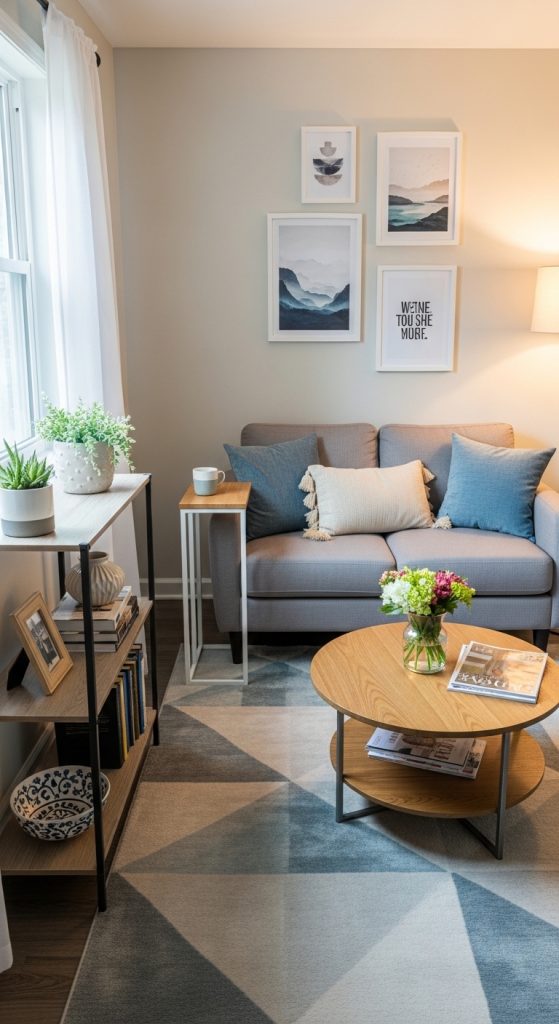
Pro Tip: Pulling furniture slightly away from walls can actually make the room feel larger by creating visual depth.
Choosing the Right Furniture: Scale, Function, and Flexibility
Focus on Proportion, Not Size Alone
Oversized pieces dominate a small space, but extremely small furniture can feel awkward and uncomfortable.
Look for:
- Slim arms and legs
- Low-profile backs
- Raised furniture that shows floor space
Best Sofa Options for Small Living Rooms
| Type | Benefits | Best For |
|---|---|---|
| Apartment sofa | Compact but comfortable | Narrow rooms |
| Loveseat | Saves space while seating two | Small households |
| Modular sofa | Flexible arrangement | Multi-use rooms |
| Armless sofa | Visually lighter | Tight layouts |
Multi-Functional Furniture Ideas
- Storage ottomans
- Nesting tables
- Lift-top coffee tables
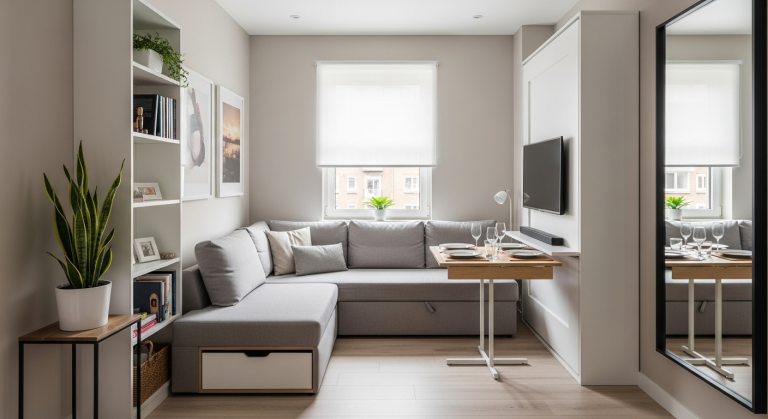
- Sleeper sofas
- Console tables behind sofas
These pieces reduce clutter while increasing usability.
Smart Storage Solutions That Don’t Crowd the Room
Clutter is the fastest way to make a small living room feel smaller.
Go Vertical
Use wall space instead of floor space:
- Floating shelves
- Tall bookcases
- Wall-mounted cabinets
- Vertical media units
Hidden Storage Options
- Benches with storage
- Ottomans with compartments
- Coffee tables with drawers
- Baskets under consoles
Storage Planning Checklist
- Keep everyday items within reach
- Store seasonal or rarely used items out of sight
- Limit visible decor to a few curated pieces
- Maintain open surfaces whenever possible
Color Strategies That Expand the Space
Color plays a powerful psychological role in how large a room feels.
Light vs. Dark: What Actually Works
| Approach | Effect | When to Use |
|---|---|---|
| Light neutrals | Reflect light, airy feel | Most small rooms |
| Monochromatic palette | Visual continuity | Modern or minimal spaces |
| Dark accent wall | Adds depth and contrast | Rooms with good lighting |
| Tone-on-tone layers | Sophisticated and cohesive | Small but styled rooms |
Best Color Techniques
- Paint walls, trim, and ceiling similar tones to blur boundaries
- Use light-colored upholstery
- Add depth through texture rather than strong color contrast
Lighting: The Secret to a Bigger Feel
Poor lighting makes small rooms feel closed and flat.
Layer Your Lighting
Use three levels:
- Ambient (ceiling light)
- Task (reading lamps)
- Accent (wall sconces, LED strips)
Space-Saving Lighting Options
- Wall-mounted sconces instead of table lamps
- Floor lamps with slim bases
- Pendant lights to free surface space
Natural light should remain unobstructed whenever possible.

Using Mirrors and Visual Tricks
Mirrors are one of the most effective small-space tools.
How to Use Mirrors Strategically
- Place opposite windows to reflect light
- Use large mirrors rather than several small ones
- Lean a full-length mirror against a wall for casual elegance
Other Visual Expansion Tricks
- Furniture with exposed legs
- Glass or acrylic tables
- Vertical artwork to raise the eye line
- Rugs that define zones without breaking visual flow
Comparison: Minimalist vs. Layered Small Living Rooms
| Feature | Minimalist Approach | Layered Approach | Best For |
|---|---|---|---|
| Decor quantity | Limited | Curated but varied | Personal style preference |
| Color palette | Neutral, simple | Textured neutrals or soft contrast | Cozy aesthetic lovers |
| Visual effect | Clean and airy | Warm and inviting | Lifestyle-driven choice |
| Maintenance | Easy | Moderate | Busy households |
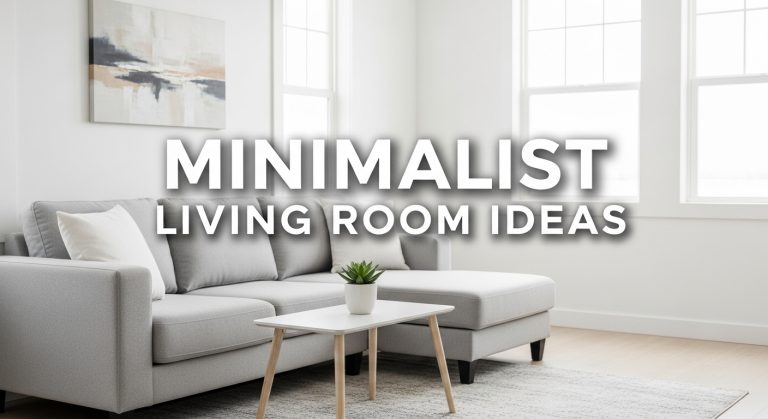
Design Insight: Small rooms don’t require minimalism—they require intentional layering.
Step-by-Step Implementation Framework
Step One: Declutter Completely
Remove everything that doesn’t serve a function or add beauty.
Step Two: Choose a Color Direction
Select a cohesive palette before adding furniture or decor.
Step Three: Place the Largest Furniture First
Start with the sofa, then add secondary pieces.
Step Four: Define Zones
Use rugs, lighting, or furniture placement to organize the space.
Step Five: Add Vertical Elements
Shelving, tall plants, or artwork draw the eye upward.
Step Six: Style in Layers
Add textiles, lighting, and decor gradually.
Common Mistakes to Avoid
- Buying oversized sectionals that dominate the room
- Pushing all furniture against the walls
- Using too many small decor items
- Blocking natural light with heavy curtains
- Ignoring scale when choosing artwork
- Overfilling the space with storage furniture
- Using too many contrasting colors
Each of these mistakes reduces visual breathing room.
Expert Tips for a Professionally Designed Look
- Use one large rug instead of several small ones to unify the space.
- Hang curtains higher and wider than the window to create the illusion of height.
- Choose a sofa in a similar tone to the wall for a seamless look.
- Limit decorative accessories to odd-numbered groupings.
- Incorporate texture—linen, wood, woven materials—to add richness without visual clutter.
- Leave intentional empty space. Negative space is a design tool, not wasted space.
Advanced Insight: Designers often aim for about 70–80% visual fill in small rooms. Anything beyond that begins to feel crowded.
Styling Elements That Make a Big Impact
Textiles
- Light, breathable curtains
- Layered throw pillows (2–4 max)
- A textured area rug
Greenery
- Tall, narrow plants in corners
- Hanging planters
- Small tabletop greenery
Plants add life without taking up much visual weight.
Artwork
- One large statement piece instead of multiple small frames
- Vertical arrangements to emphasize height
Real-Life Layout Example
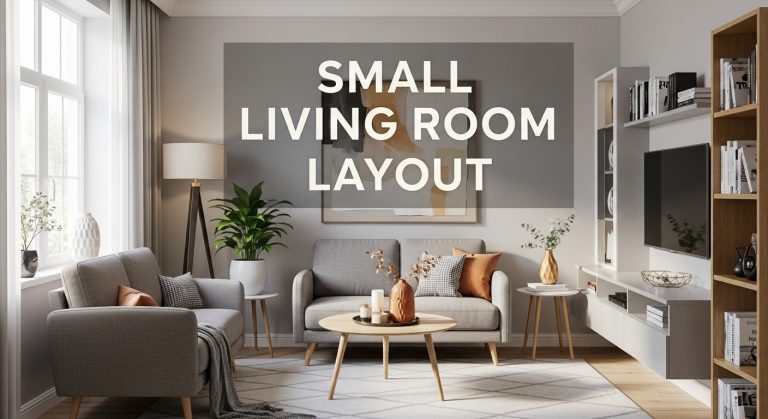
Scenario: 10×12 ft living room
- Apartment-size sofa along the longest wall
- Round coffee table for easier movement
- Wall-mounted TV
- Floating shelves instead of a media console
- Floor lamp in the corner
- Large mirror opposite the window
Result: Open walkways, clear focal point, balanced visual weight.