How to Style Open Shelves in the Kitchen?
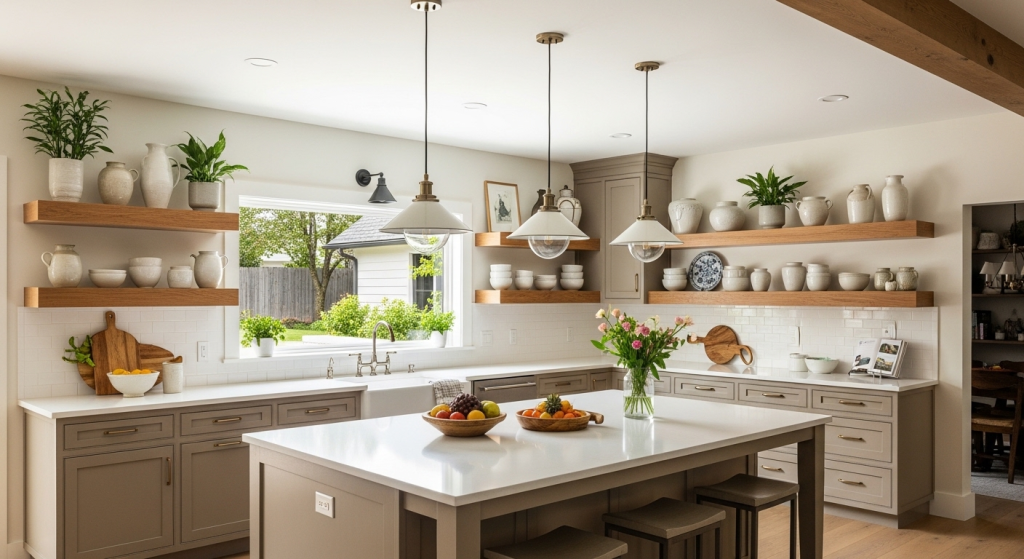
Open shelving can completely transform a kitchen. Done well, it makes a space feel airy, curated, and full of personality. It turns everyday dishes into decor, adds warmth to modern kitchens, and creates that effortlessly styled look you see in designer homes and Pinterest-worthy kitchens.
But open shelves can also go wrong fast. Without intention, they start looking cluttered, dusty, or chaotic instead of stylish. That’s why so many homeowners feel nervous about trying them in their own kitchen.
The good news is that beautifully styled shelves aren’t about owning expensive decor. They’re about balance, editing, texture, and thoughtful layering. Once you understand a few foundational styling principles, your shelves can feel collected, functional, and incredibly beautiful without looking overdone.
In this guide, you’ll learn exactly how to style kitchen shelves with confidence—including practical styling formulas, designer tricks, and 18 inspiring ideas that feel intentional instead of messy.
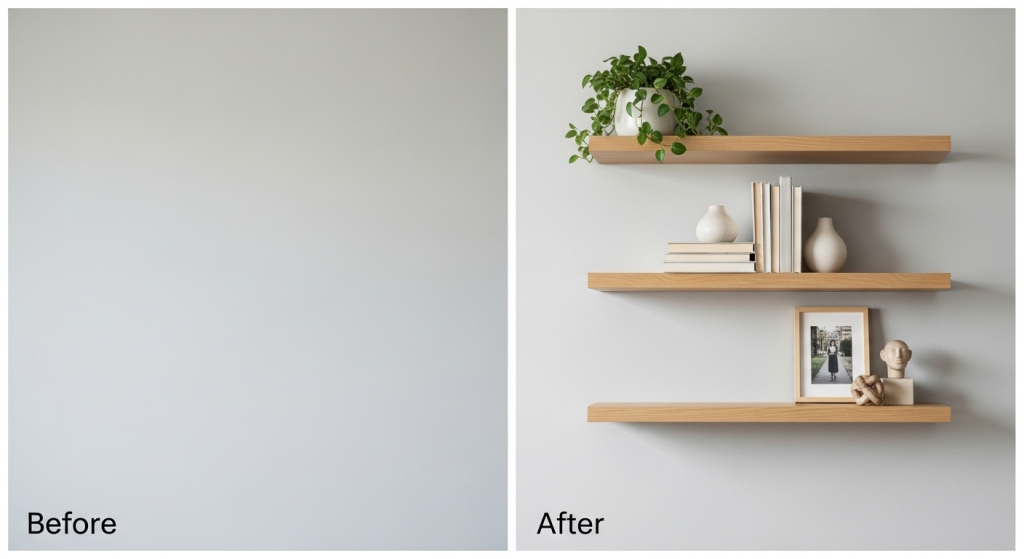
The 3 Rules of Styled Shelving
Before adding a single plate or plant, you need a foundation. These three rules are what separate intentional styling from visual clutter.
Rule 1: Leave Breathing Room
One of the biggest mistakes people make with floating shelves is overcrowding them. Empty space matters just as much as the objects themselves.
When every inch is filled, your eye has nowhere to rest. Leaving intentional gaps creates a calmer, more elevated look.
A good rule is to style shelves to about 60–70% fullness instead of completely packing them.
Rule 2: Mix Heights, Shapes, and Textures
Beautiful shelves rely on contrast. If every item is the same height, color, or material, the shelves feel flat and repetitive.
Mix tall cutting boards with stacked bowls, soft greenery, smooth ceramics, and glassware to create visual movement.
Layering different textures is what gives a styled shelfie depth and personality.
Rule 3: Combine Beauty With Function
The best kitchen shelves are both practical and beautiful.
Instead of displaying random decorative objects that serve no purpose, style with items you genuinely use daily—like mugs, bowls, olive oil bottles, or wooden utensils.
This balance keeps the kitchen feeling authentic rather than staged.
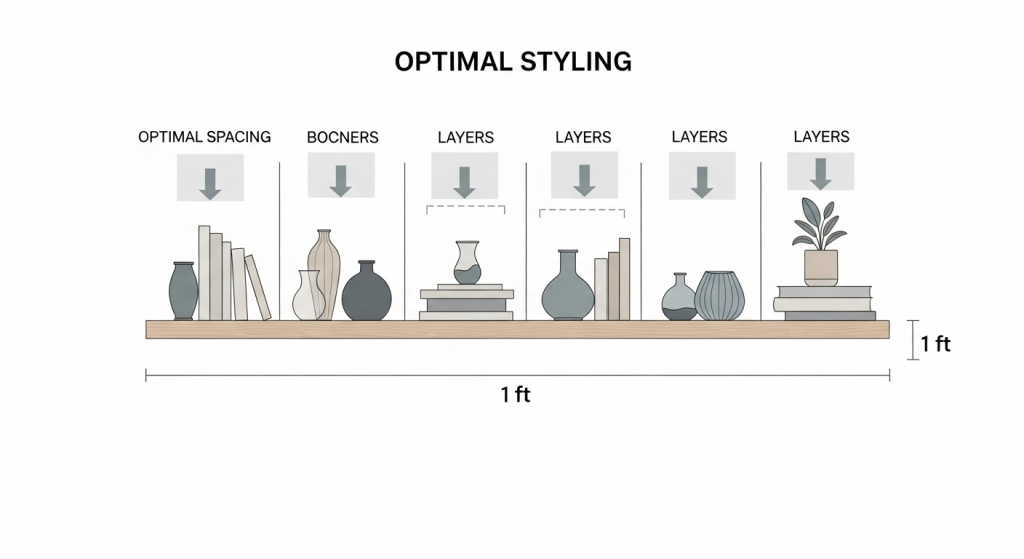
18 Styling Ideas for Open Kitchen Shelves
The Minimalist Edit
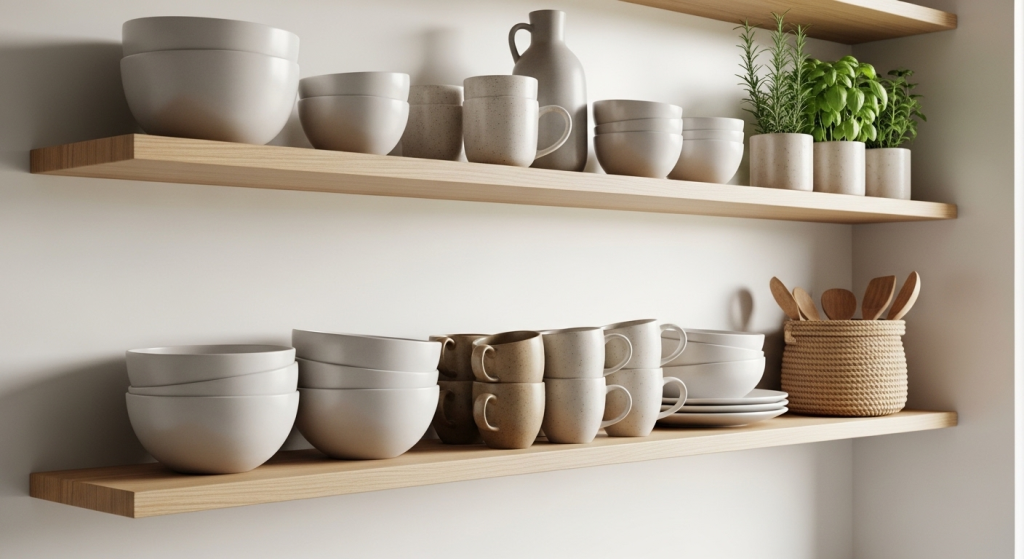
1. Neutral Ceramic Layers
Stack soft-toned ceramic bowls and plates in calming neutral shades for a clean, cohesive look.
Limit the palette to whites, warm beige tones, and soft grays to prevent visual noise.
Add one small vase for softness.
What to use: Ceramic bowls, matte plates, small neutral vase
2. The All-White Shelf
An all-white arrangement creates instant visual calm in an open concept kitchen.
Different textures keep it interesting even without color variation.
Mix glossy and matte finishes for subtle depth.
What to use: White mugs, white dishes, textured pottery
3. One Color Family Styling
Choose one tone—like sage green or warm terracotta—and repeat it throughout the shelves.
This creates a curated designer feel without looking busy.
What to use: Tonal ceramics, matching glassware, small decor accents
4. Sculptural Simplicity
Use fewer objects but choose pieces with strong shapes.
A large curved vase beside stacked dishes feels artistic without overcrowding the shelf.
What to use: Sculptural vase, stacked bowls, minimal decor objects
5. Symmetrical Shelf Styling
Symmetry instantly creates calmness and order.
Try balancing matching stacks or similar-height objects on opposite sides of the shelf.
What to use: Matching jars, paired vases, evenly stacked dishes
Collected & Curated
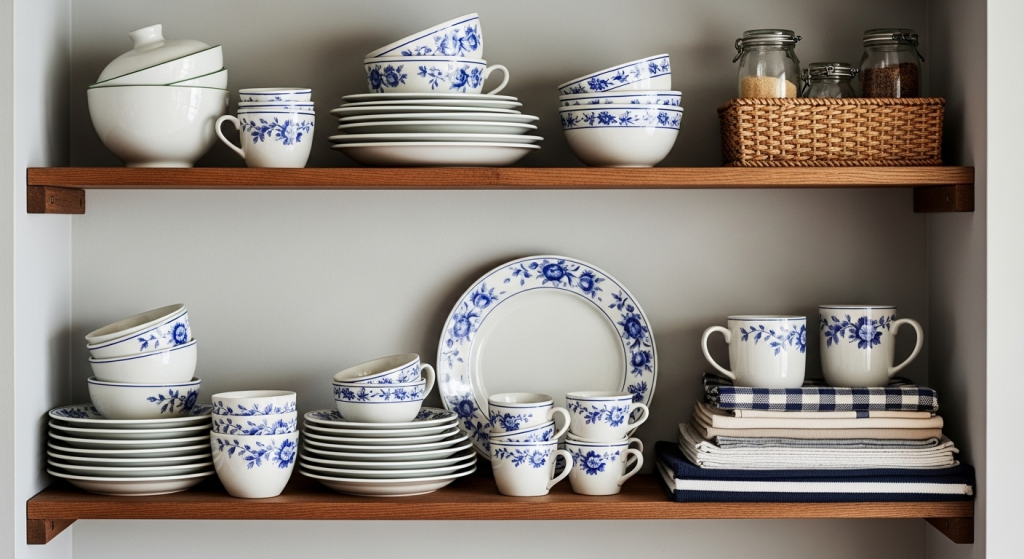
6. Vintage Market Mix
Blend collected vintage finds with everyday kitchen essentials.
This creates warmth and personality while avoiding a showroom-perfect look.
What to use: Vintage pitchers, antique bowls, brass accents
7. Layered Cutting Boards
Wood cutting boards instantly warm up shelves and add vertical variation.
Layer different sizes behind dishes for depth.
What to use: Wooden cutting boards, bread boards, marble boards
8. Cookbook Corner
A few beautiful cookbooks can add color and personality to kitchen shelves.
Keep the stack small to avoid heaviness.
What to use: Neutral cookbooks, ceramic bowl, candle
9. Collected Glass Bottles
Glass bottles catch light beautifully and add softness.
Use varying heights for a relaxed collected look.
What to use: Amber bottles, clear glass jars, vintage glassware
10. Mixed Metals & Ceramics
Combining warm metals with handmade pottery creates rich visual texture.
The contrast feels layered and curated.
What to use: Brass candle holders, ceramic pitchers, copper accents
Practical + Pretty
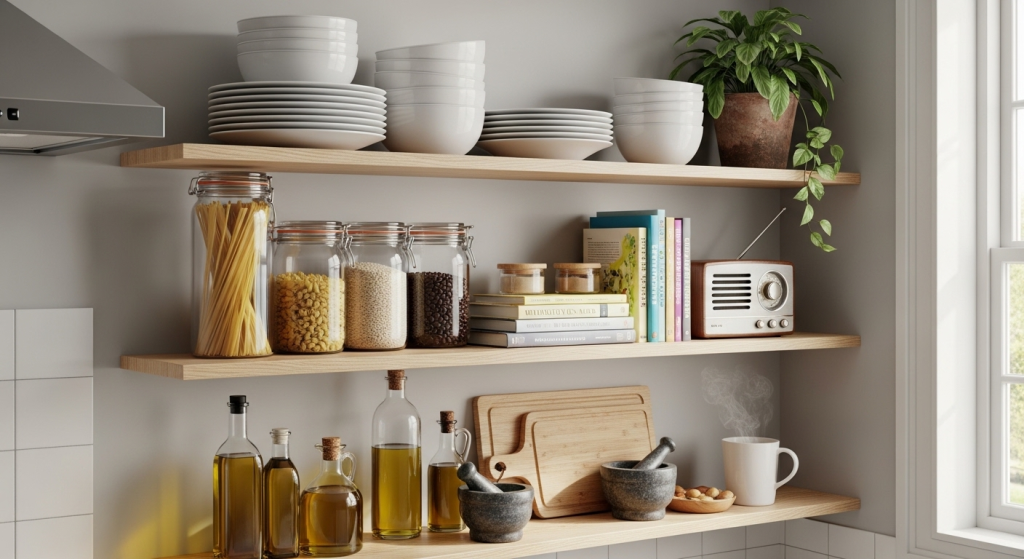
11. Everyday Dish Display
Store your daily dishes on shelves in organized stacks.
Keeping colors cohesive prevents the look from becoming chaotic.
What to use: Matching plates, bowls, mugs
12. Pantry Jar Styling
Clear pantry jars create both organization and beauty.
Uniform containers instantly make shelves feel intentional.
What to use: Glass jars, pasta, rice, wooden lids
13. Coffee Station Shelves
Turn one section into a mini coffee bar setup.
This keeps daily essentials accessible while looking stylish.
What to use: Mugs, coffee canisters, espresso cups
14. Olive Oil & Cooking Essentials
Beautiful cooking staples can double as decor.
Decant oils and utensils into attractive containers.
What to use: Olive oil bottles, salt cellar, wooden utensils
15. Functional Basket Storage
Small baskets hide visual clutter while adding texture.
They’re perfect for storing less attractive essentials.
What to use: Woven baskets, linen napkins, tea supplies
Seasonal Styling
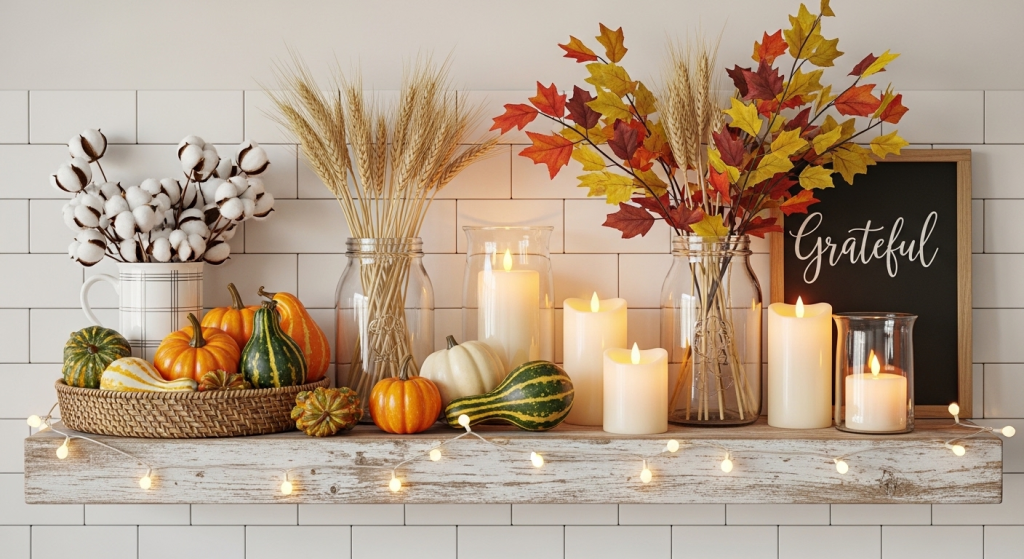
16. Spring Greenery Refresh
Fresh greenery instantly brightens shelves.
Even one trailing plant softens hard kitchen surfaces.
What to use: Pothos plant, eucalyptus stems, ceramic planter
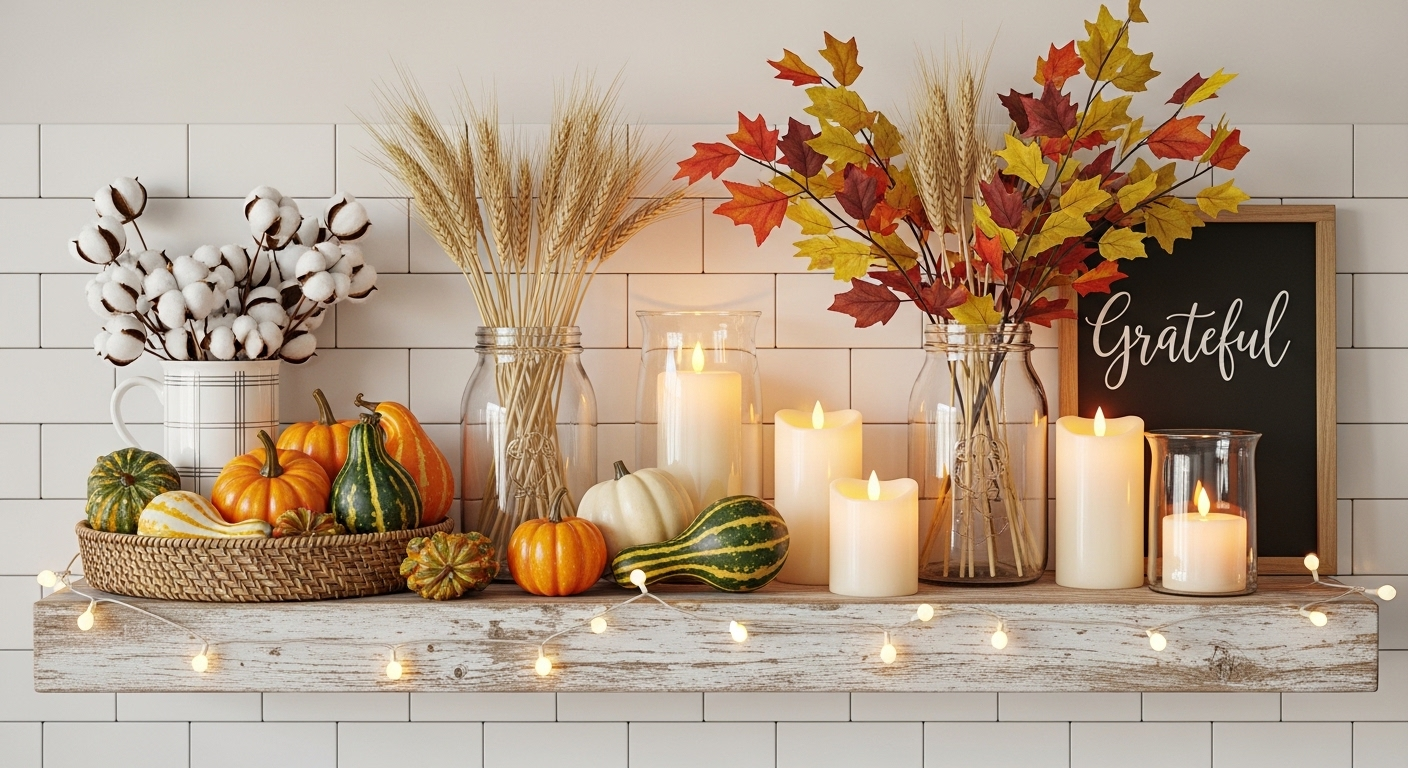
17. Autumn Warmth
Layer warm earthy tones during fall months for cozy seasonal styling.
Wood and amber glass work beautifully here.
What to use: Amber bottles, mini pumpkins, wood accents
18. Holiday Minimalism
Keep seasonal decor simple instead of overcrowding shelves.
Small touches feel elegant and intentional.
What to use: Tiny wreaths, neutral ornaments, candle holders
Section 3 — What NOT to Put on Open Shelves
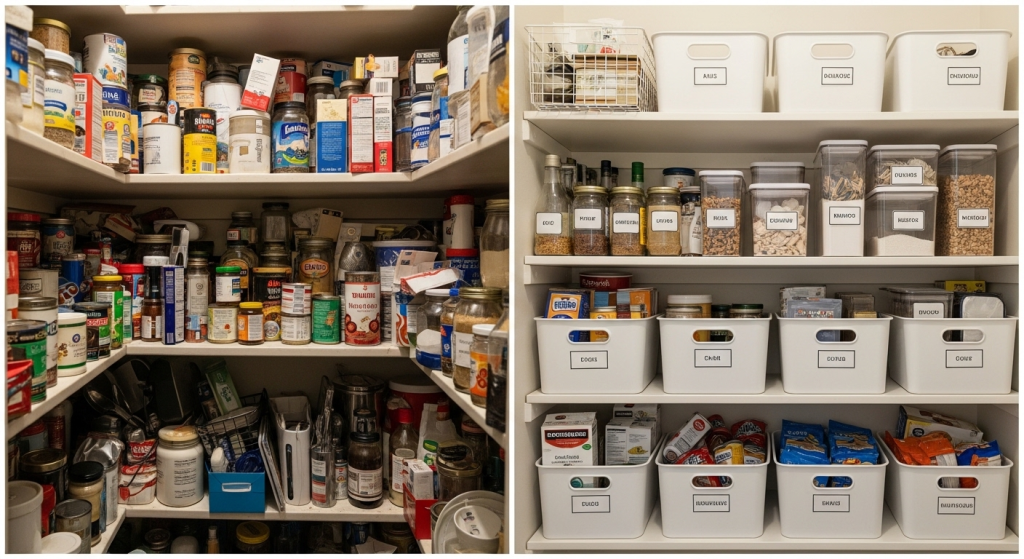
1. Plastic Containers
Plastic packaging instantly makes shelves feel messy and unfinished.
2. Mismatched Cheap Mugs
Too many random mugs create visual clutter quickly.
3. Bulky Appliances
Large appliances overwhelm shelves visually.
4. Expired Pantry Items
Open shelving should feel fresh and intentional—not like overflow storage.
5. Too Many Tiny Decor Objects
Small cluttered accessories create chaos instead of style.
The Remove-Everything-and-Start-Over Method
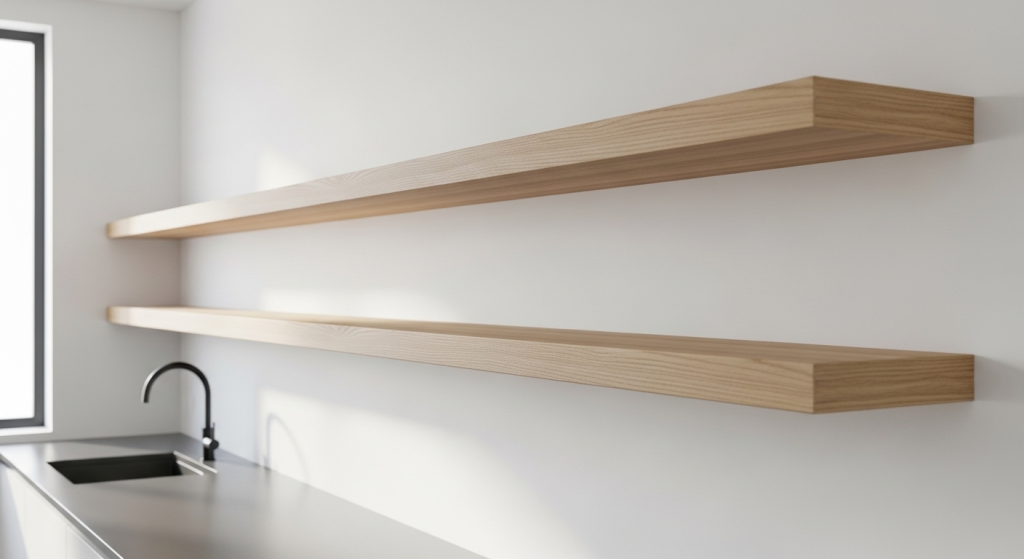
If your shelves feel cluttered, the best solution is often a complete reset.
Step 1: Remove Everything
Start with completely empty shelves.
This helps you see the space clearly again.
Step 2: Group Similar Items Together
Create categories like ceramics, glassware, wood pieces, and greenery.
Step 3: Choose a Color Direction
Limit your palette for a more cohesive look.
Step 4: Start With Larger Anchor Pieces
Place taller or bulkier items first.
Step 5: Layer Smaller Pieces Around Them
Add smaller objects gradually while preserving empty space.
Step 6: Step Back Frequently
View the shelves from across the room to check balance.
Product Types That Always Look Beautiful on Open Shelves
Ceramics
Handmade ceramics add warmth, texture, and softness.
Look for organic shapes and matte finishes.
Cutting Boards
Wood cutting boards add natural warmth and vertical layering.
Oversized boards make especially strong visual anchors.
Plants
Greenery softens shelves and adds life to kitchens.
Trailing plants work particularly well.
Glassware
Glass reflects light beautifully and keeps shelves feeling airy.
Look for interesting shapes and subtle texture.
FAQ
How do you keep open kitchen shelves from looking cluttered?
Limit the number of items displayed, stick to a cohesive color palette, and leave intentional empty space between objects.
Are open shelves practical in kitchens?
Yes, especially for frequently used items. The key is balancing functionality with thoughtful organization.
What color looks best for open shelf styling?
Neutral palettes tend to look most timeless, but earthy tones and soft greens also work beautifully.
How often should you restyle kitchen shelves?
A light refresh every season helps shelves feel intentional and prevents visual fatigue.
Conclusion
Beautiful open kitchen shelves aren’t about perfection—they’re about thoughtful balance. When styled intentionally, they can make your kitchen feel warmer, lighter, and far more personal. The secret is learning how to combine practical everyday items with texture, layering, and visual breathing room.
Start small. Edit aggressively. Focus on pieces you genuinely love and use. Once you understand the rhythm of shelf styling, your kitchen shelves will stop feeling intimidating and start becoming one of the most beautiful features in your home.