Urban Gardening Solutions That Bring Lasting Beauty and Function to City Living

Urban gardening solutions are not a luxury; they are a response to how people live in cities. Over decades of working with townhouses, apartments, and compact homes, I have seen how even a modest planting area can change the rhythm of daily life. A few square feet of green space can soften concrete surroundings and reconnect households with seasonal change.
Urban gardening is less about decoration and more about stewardship. Soil depth, drainage, sunlight patterns, and maintenance routines matter far more than novelty. When these fundamentals are respected, small gardens thrive for years rather than a single season.
Small-Space Optimized Urban Gardening Solutions
Compact urban settings demand efficiency in both layout and proportion. The most effective approach begins by mapping circulation paths and sightlines before placing a single planter. Containers should never block door swings, emergency exits, or natural movement across a balcony or terrace.

Materials should be lightweight yet durable. Powder-coated steel, fiberglass, and high-density resin resist weather without adding unnecessary load to balconies. Avoid overly heavy stone containers unless structural capacity has been confirmed, as excessive weight is a common and costly mistake.
Budget-Conscious Urban Gardening Solutions
A meaningful garden does not require expensive installations. Many of the most successful urban gardens are built gradually, with investment focused on soil quality and proper drainage rather than decorative accessories.

When allocating budget, prioritize the following:
- High-quality potting mix suited to container gardening
- Durable containers that resist cracking
- Reliable watering tools or simple drip systems
- Perennial plants that return year after year
Avoid spending heavily on fragile décor that deteriorates quickly outdoors. Longevity and ease of replacement should guide purchasing decisions.
Balcony-Focused Urban Gardening Solutions
Balconies present both opportunity and challenge. They are often exposed to wind and fluctuating temperatures, which can stress plants and dry soil rapidly. Windbreak strategies such as lattice panels or tempered glass screens reduce plant damage without blocking light.
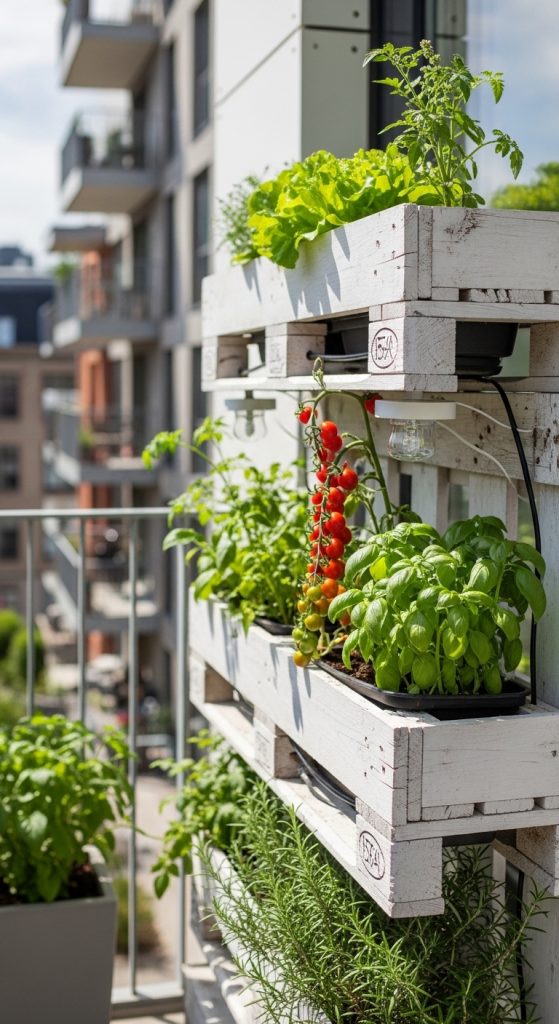
Water management is frequently overlooked. Saucers or integrated reservoirs prevent runoff that can disturb neighbors below. Drip irrigation kits with timers are practical for busy households and reduce the risk of overwatering.
Rooftop Urban Gardening Solutions
Rooftop gardens require careful structural and environmental consideration. Before installing raised beds or heavy containers, confirm load-bearing capacity with a qualified professional. Soil is heavier than many homeowners realize, especially when saturated.

Sun exposure on rooftops is typically intense. Heat-reflective paving and light-colored containers help moderate root temperature. Installing shade sails or pergolas provides relief during peak summer months while extending usability.
Wind is another defining factor. Secure anchoring of trellises and tall plants is non-negotiable. Selecting compact varieties with strong stems reduces maintenance and risk of breakage.
Indoor Urban Gardening Solutions
For apartments without outdoor access, indoor gardening offers meaningful alternatives. Window orientation determines plant selection. South-facing windows support fruiting herbs and vegetables, while north-facing windows favor shade-tolerant foliage.

Artificial grow lights provide supplemental support in low-light conditions. When installed, they should emit a full spectrum and be positioned at appropriate distances to prevent leaf scorch. Timers ensure consistent exposure without daily adjustment.
Overwatering is the most frequent indoor gardening mistake. Containers must include drainage trays, and soil should be allowed to dry slightly between waterings depending on plant type.
Family-Friendly Urban Gardening Solutions
Urban gardens can be educational spaces for children when safety and accessibility are thoughtfully addressed. Raised planters at comfortable heights allow young gardeners to participate without climbing or leaning over railings.

Edible plantings such as herbs, cherry tomatoes, and leafy greens offer quick rewards and encourage engagement. Position these near kitchen access to simplify harvesting and reinforce daily use.
A common oversight is creating overly complex planting schemes that require constant attention. Families benefit from hardy species that tolerate occasional missed watering or pruning.
Rental-Friendly Urban Gardening Solutions
Renters often assume they must forgo meaningful garden improvements. In reality, modular and freestanding systems allow transformation without permanent alteration to walls or flooring.

When attaching items to balcony railings or walls, use non-invasive clamps rather than drilling. Always review lease agreements and building guidelines before installation.
Portable drip systems that connect to indoor faucets offer irrigation without structural changes. The key is reversibility; everything should be removable without trace.
Minimal and Clean Urban Gardening Solutions
A restrained aesthetic often works best in dense environments. Fewer plant varieties, repeated rhythmically, create cohesion and visual calm against busy city backdrops.

Lighting in minimalist gardens should be subtle. Low-profile LED strip lights beneath planters add gentle illumination without cluttering the scene. Overly decorative fixtures can disrupt simplicity.
Mistakes arise when minimalism becomes sterile. Introducing varied leaf textures within a controlled color palette maintains interest without visual overload.
Productive and Edible Urban Gardening Solutions
Urban gardens frequently serve dual purposes as both relaxation spaces and food sources. Raised beds or deep containers support vegetables when soil depth reaches at least twelve inches for most crops.

The table below compares common edible options for urban settings:
| Plant Type | Minimum Sunlight | Container Depth | Maintenance Level |
|---|---|---|---|
| Leafy Greens | Partial to full | 6–8 inches | Low |
| Herbs | Full sun | 8–10 inches | Low |
| Cherry Tomatoes | Full sun | 12–18 inches | Moderate |
| Dwarf Peppers | Full sun | 12 inches | Moderate |
Proper fertilization and consistent watering are essential for productive harvests. Neglecting soil nutrients is a common error that leads to disappointing yields.
Timeless and Classic Urban Gardening Solutions
Classic garden principles translate beautifully to urban environments. Symmetry, balanced proportions, and repetition provide structure even in small footprints.

Avoid overly ornate plantings that compete with architectural details. A city garden should complement its surroundings, not overwhelm them.
Personalized and Character-Driven Urban Gardening Solutions
Urban gardens become most meaningful when they reflect the household’s identity. This might include cultivating plants tied to cultural heritage or arranging seating areas for evening gatherings.

Personalization must remain disciplined. Introducing too many decorative objects can quickly create clutter in limited spaces. Choose a few meaningful pieces and allow greenery to remain the focal point.
Urban gardening solutions succeed when they balance aspiration with realism. They respect structural limits, environmental conditions, and the rhythms of daily life. With careful planning and restrained execution, even the smallest city space can support growth, nourishment, and quiet restoration for years to come.