Drawer Organization Ideas you’ll love
Let’s be honest for a moment: how many times have you meticulously organized a drawer, felt incredibly proud for a few days, only to watch it gradually revert to its messy state?
I’ve certainly experienced this countless times. There’s the “junk” drawer that transforms into a bottomless pit within a week, the kitchen utensil drawer where everything seems to migrate, and the bathroom drawer that’s somehow overflowing yet impossible to find anything in.
However, I’ve come to realize something important: effective drawer organization isn’t about achieving flawless perfection or owning those picture-perfect matching containers (though they can be nice). It’s really about establishing practical systems that genuinely align with your daily life. And yes, sometimes that means accepting a bit of structured disarray.


Kitchen Drawers
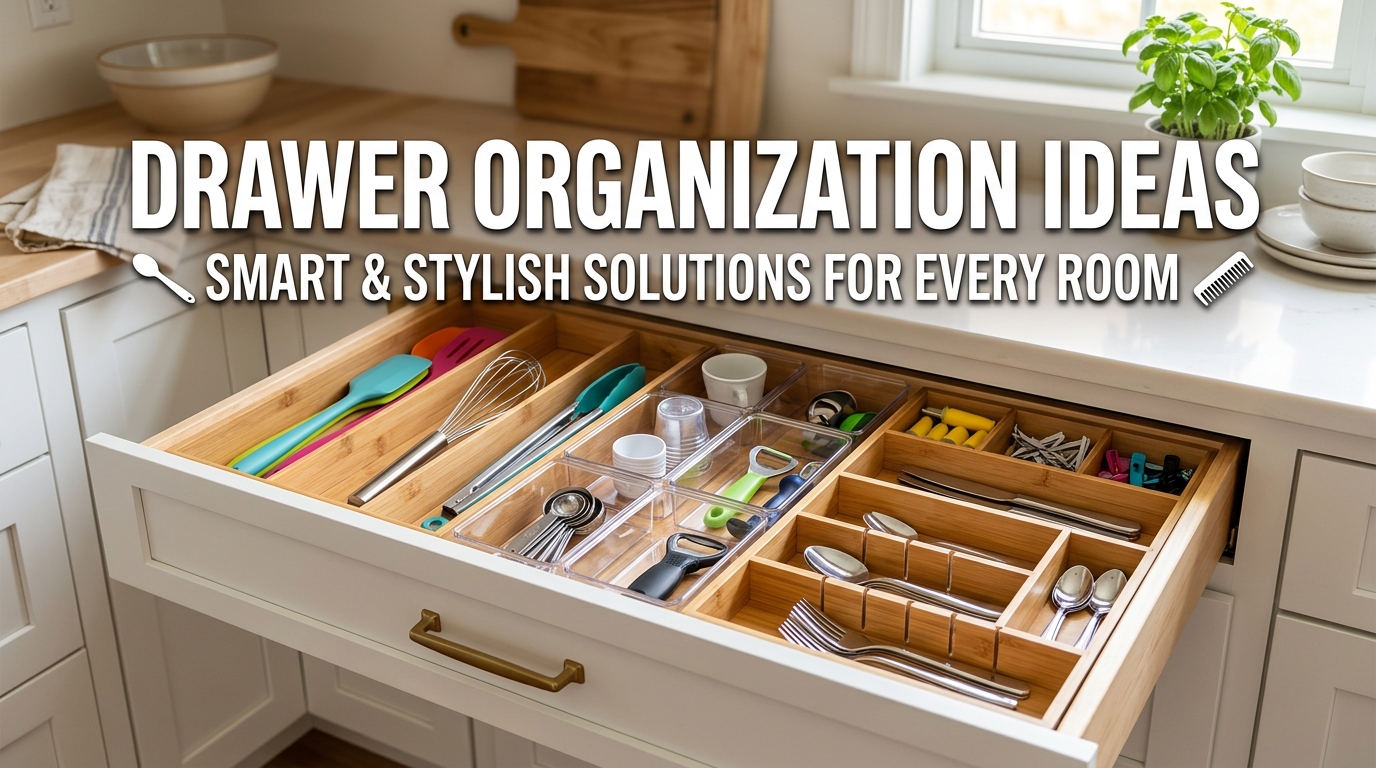
The Utensil Drawer Upgrade Say goodbye to those flimsy plastic dividers that never quite fit. Instead, opt for an adjustable bamboo organizer or use individual small bins to create custom compartments. Arrange your utensils by their purpose – keep all your stirring tools together, and all your cutting implements in another section. It’s a total game-changer.
The Junk Drawer That’s Not Really Junk It’s okay to have a drawer for miscellaneous items, but make it purposeful. Use small boxes or containers to keep things like batteries, twist ties, rubber bands, and pens neatly contained. You can even add labels if you’re feeling extra organized. The main goal is to manage the clutter effectively.
Spice Drawer Instead of Cabinet If you have a deep drawer available, arrange your spices lying flat with the labels facing upwards. This way, you can easily see everything without having to play a precarious game of Jenga with your spice jars. For even more structure, consider adding a tiered insert.
The Baking Zone Designate one drawer specifically for all your baking essentials – measuring cups, cookie cutters, piping bags, and sprinkles. Utilize drawer dividers to keep everything neatly separated. This means no more rummaging through multiple cabinets just to find the vanilla extract.
Tupperware Sanity Pair lids with their corresponding containers and store them vertically using tension rods or file organizers. Alternatively, you could take a more drastic approach and only keep containers that have attached lids. Your future self will definitely appreciate the effort.


Bathroom Drawers
Makeup by Category Use clear acrylic dividers to sort your lipsticks, eye makeup, face products, and brushes. If it suits your preference, you could also organize by color family. Adding velvet drawer liners will help prevent items from shifting around.
Skincare Station Separate your morning routine products from your evening routine items. Utilize small bins for serums, moisturizers, and various treatments. Keep your daily essentials easily accessible at the front, with less frequently used products stored towards the back.
Hair Tool Taming Place heat-resistant silicone mats inside the drawer and secure cords with Velcro ties. Another option is to mount a basket on the inside of a cabinet door, bypassing the drawer entirely for these items.
The Medicine Cabinet Drawer Use clear containers, clearly labeled by category: pain relievers, cold and flu remedies, first aid supplies, and vitamins. Position items so expiration dates are visible, making it simple to check what needs to be replaced.
Sample Situation Create a dedicated “travel” section for all those hotel samples, miniature products, and travel-sized containers. This way, everything you need for a trip is conveniently located in one spot.

Bedroom Drawers
The Sock Solution Instead of rolling your socks into balls (which can stretch the elastic), fold them in half. Then, stand them upright in neat rows. This allows you to see every pair at a glance and keeps them perfectly organized.
Underwear Drawer Dividers Honeycomb-style dividers or small individual boxes create specific slots for each item. This not only looks incredibly satisfying but also ensures everything stays folded and prevents you from having to dig around every morning.
Bra Storage Avoid stacking bras, as this can cause them to lose their shape. Instead, lay them flat in a single layer or clip them to a hanger inside the drawer. Use dividers to prevent the cups from getting crushed.
T-shirt Filing System Fold your t-shirts using the KonMari method and arrange them vertically. This way, you can see all your shirts, nothing gets wrinkled at the bottom, and it’s much easier to pick out what you want to wear.
Jewelry Drawer Magic Velvet drawer inserts with various compartments are excellent for preventing necklaces from tangling and keeping earring pairs together. For a DIY option, consider using ice cube trays lined with felt.


Office/Desk Drawers
The Pen Collector’s Dream Utilize a cutlery organizer to keep your pens, pencils, highlighters, and markers neatly separated. Make it a habit to test all pens monthly and discard any that no longer work – life’s too short for unreliable writing tools.
Cable Management Toilet paper rolls, cut in half, make excellent holders for coiled cables. Label each roll to easily identify the cable inside. Alternatively, a bento-style organizer with individual compartments works wonders.
Sticky Note Central A small, stepped organizer allows you to view all your sticky note colors at once. You can also use the steps to store paper clips, binder clips, and other small office essentials.
The Action Drawer Keep your most frequently used items in the top drawer: current notebooks, your everyday pens, today’s to-do list, and stamps. Anything you need regularly should be the easiest to access.
Paper Organization Place magazine holders on their side within deep drawers to create a vertical filing system. Categorize your papers into sections like “bills to pay,” “items to file,” and “current projects.”

image credit by bestoforganizing on Instagram
Closet Drawers
Seasonal Rotation Store your current season’s clothing in the top drawers, and off-season items in the bottom ones. Simply swap them out when the seasons change, so you won’t be searching for sweaters in the middle of summer.
Accessory Central Dedicate one drawer to accessories like scarves (rolled), belts (coiled or hung on drawer-mounted hooks), and hats. Use dividers to keep these categories neatly separated.
Workout Clothes Sort your athletic wear by activity: yoga, running, gym, or loungewear. This makes it easy to grab a complete outfit without any thought. Add a small bin for clean hair ties and headbands.
Delicate Drawer Lingerie, silk garments, and other delicate items should have their own drawer with soft dividers. This prevents heavier items from crushing them.
The Donation Station Keep a small box at the back of one drawer for clothes you’re unsure about. If you haven’t worn an item in three months, it goes into this box. Once the box is full, it’s time to donate its contents.

Kids’ Room Drawers
Picture Labels For young children who are still learning to read, attach pictures to the drawer fronts or dividers. A picture of socks goes on the sock drawer, a shirt picture on the shirt drawer. This empowers them to put away their own clothes.
Low Drawer Priority Place their most frequently used items in the lowest drawers, within easy reach. Reserve higher drawers for seasonal clothing or items they use less often.
The Toy Rotation Use drawer organizers to sort small toys by type. Rotate which toys are accessible on a weekly basis to keep things engaging without overwhelming them with too many options.
Art Supply Station Shallow drawers are ideal for organizing art supplies. Use small containers for crayons, markers, colored pencils, and stickers. This keeps everything visible and readily available.
School Memory Drawer Designate one drawer for saving artwork, certificates, and important papers from school. Review it once a year and only keep the truly meaningful items. Their future selves will be grateful for not having to sift through dozens of identical worksheets.

Clever Organizer Ideas
Drawer Pegboards Install a pegboard at the bottom of your drawers and use pegs to create customized layouts. This is perfect for tools, craft supplies, or anything that requires specific spacing.
Expandable Bamboo Dividers These handy dividers adjust to fit any drawer width, providing instant organization. Plus, they offer a much more aesthetically pleasing look than plastic options.
Acrylic Stackable Trays Transparent trays allow you to make the most of vertical space in deep drawers without sacrificing visibility of your items.
Velvet Liners More than just a luxurious touch, velvet liners actually prevent items from sliding around. They’re especially useful for jewelry and other small, delicate objects.
Tension Rods Position tension rods vertically to create slots for items like baking sheets, cutting boards, or even neatly folded t-shirts. It’s a remarkably simple yet highly effective solution.
Ice Cube Trays These are excellent for organizing tiny items such as earrings, pushpins, beads, buttons, or bobby pins. Chances are, you already have some on hand.
Spice Jar Organizers Those tiered spice organizers aren’t just for spices! They also work wonderfully for nail polish, essential oils, or any other small bottles you need to keep tidy.
Magazine Holders Place magazine holders on their side within drawers to establish vertical filing systems for notebooks, tablets, or even folded sweaters.

Maintenance Strategies
The One In, One Out Rule Every time you introduce a new item into a drawer, make sure to remove an old one. This prevents overcrowding and helps maintain order.
Weekly Quick Tidy Dedicate just 60 seconds each week to return everything to its designated spot. This quick habit is far easier than undertaking a complete reorganization every few months.
Quarterly Deep Clean Take everything out of the drawer, wipe it down thoroughly, re-evaluate what you truly use, and then put everything back in an organized fashion. Treat this like any other important appointment on your calendar.
The 80/20 Principle Aim to fill your drawers to about 80% capacity. That remaining 20% of empty space makes a significant difference in keeping things organized and accessible.
Label Everything Even if you live alone, labels are incredibly helpful. Your future self won’t necessarily recall the system your current self put in place. Labels ensure consistency and accountability.

Room-Specific Tips
Kitchen Organize items by the tasks they’re used for (e.g., baking, cooking, serving) rather than just by item type. This approach significantly speeds up meal preparation.
Bathroom Keep duplicate items to a minimum. There’s no need for seven half-used bottles of lotion. Finish one before opening a new one.
Bedroom The clothes you wear most often should be the easiest to access. Don’t let that formal dress you wear once a year occupy prime real estate.
Office Separate your “active” items from your “reference” items. Keep daily tools right up front, and archived materials further back.
Entryway Keys, sunglasses, dog leashes – anything you grab on your way out the door should have a dedicated and easily accessible spot in that drawer.

Budget-Friendly Options
Cardboard Box Dividers Cut down old cardboard boxes to create custom-sized dividers. If you want to make them look nicer, cover them with wrapping paper or contact paper.
Repurpose Food Containers Clean takeout containers, berry baskets, and other small boxes can be perfectly repurposed as drawer organizers.
Dollar Store Finds You can find small bins, ice cube trays, and utensil organizers at dollar stores, allowing you to organize an entire drawer for less than ten dollars.
DIY Fabric Boxes If you enjoy crafting, consider making small fabric boxes that are perfectly tailored to fit your drawers. You can customize both their size and pattern.
Use What You Have That muffin tin? It can become a drawer organizer. Those empty gift boxes? Perfect for dividers. The basket from the bathroom? It could hold office supplies.image credit by sorting_and_styling on Instagram

The Real Secret
Here’s a truth about drawer organization that often goes unsaid: it’s not about making everything look picture-perfect for social media. It’s about developing a system that genuinely aligns with your way of thinking and your daily habits.
If you’re someone who tends to toss things into drawers, embrace that tendency. Create specific zones where a bit of “tossing” is perfectly acceptable. If you thrive on having everything meticulously labeled and color-coded, then absolutely go for it. There’s no incorrect method as long as it functions effectively for you.
The most effective organization system is the one you will actually stick with. And sometimes, that means accepting that your “junk drawer” might always have a touch of chaos, and that’s perfectly okay.