Small Kitchen Cabinet Ideas – Makes Compact Spaces Feel Designed
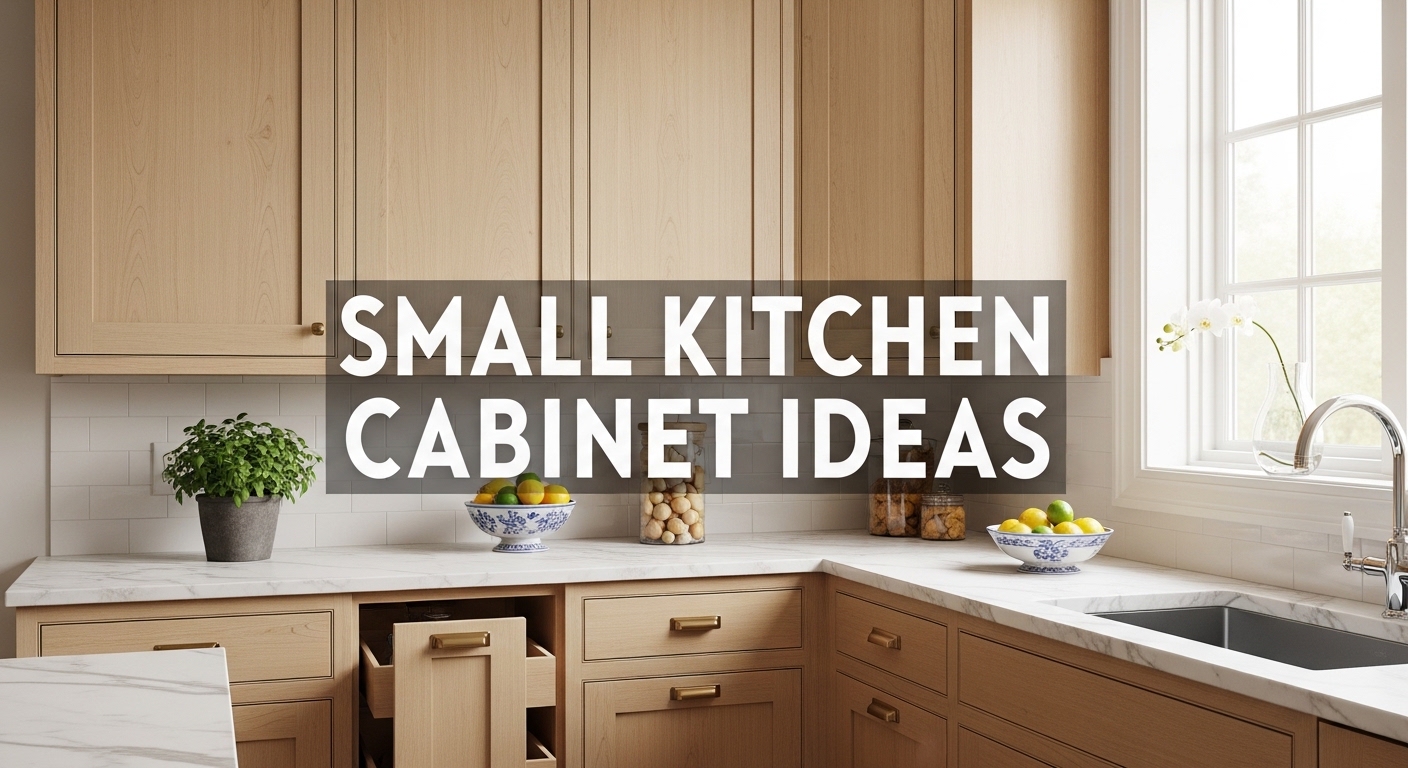
A small kitchen has always been a test of good design. Long before open plans and oversized islands, homes relied on compact kitchens where every cabinet carried responsibility. When done well, these spaces felt efficient, calm, and quietly beautiful rather than cramped or improvised.
The modern small kitchen cabinet idea builds on that same philosophy. It is not about squeezing in more storage at any cost, but about shaping cabinets that respect proportion, movement, light, and daily habits. When cabinets are planned with intention, even the smallest kitchen can feel composed and livable.
After the video, it helps to slow the pace and return to fundamentals. Cabinet decisions should come from how the kitchen is used, not from catalog spreads or trends. Storage that aligns with routine will always outperform decorative solutions that look good but frustrate daily life.
This is where many homeowners go wrong. They assume small kitchens demand compromises. In reality, they demand clarity. Cabinets must earn their place through function, durability, and visual restraint.
Understanding the True Role of Cabinets in Small Kitchens
In a compact kitchen, cabinets are not just storage units. They shape how the room feels, how light moves, and how comfortably people can work within the space. Poorly planned cabinets can make a kitchen feel tight even when square footage is reasonable.
The most effective small kitchen cabinet idea begins by accepting limits. Instead of fighting walls or corners, good cabinetry works with them. Shallow depths, clean lines, and consistent spacing help the eye read the room as organized rather than crowded.
One common mistake is treating cabinets as isolated pieces. In small kitchens, they function as a continuous system. Alignment across doors, drawers, and appliances creates visual calm and reduces the sense of clutter.
Cabinet Proportions That Respect Limited Space
Proportion matters more than style in a small kitchen. Oversized cabinet doors, thick frames, or heavy crown moldings can overwhelm the room and compress vertical space.
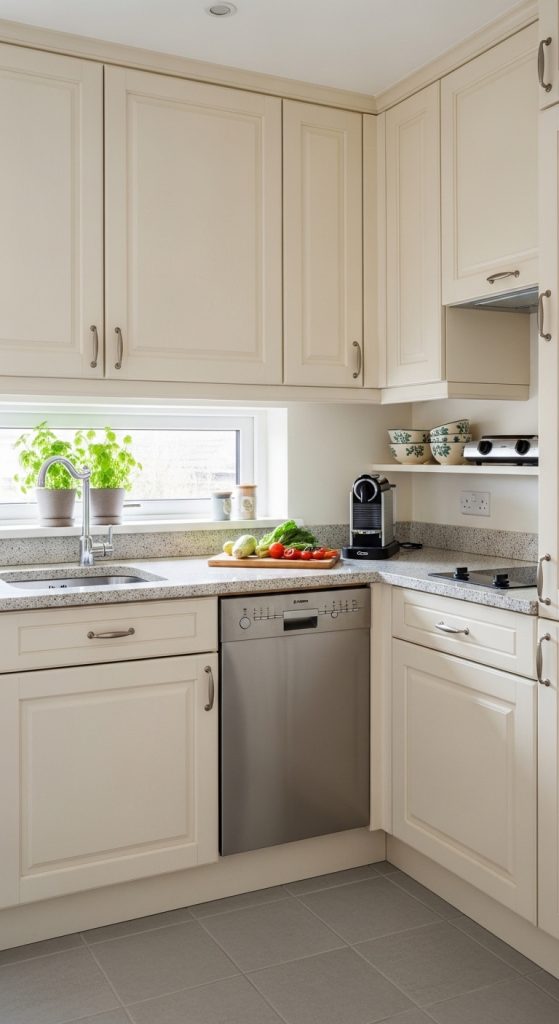
Homeowners often assume taller cabinets always provide better storage. In practice, cabinets that reach the ceiling should be reserved for items used less frequently. Otherwise, everyday tasks become inefficient and frustrating.
Choosing Between Upper Cabinets and Open Storage
The decision to use upper cabinets, open shelving, or a mix of both has a major impact on how a small kitchen feels. Cabinets offer concealment and visual order, while open storage introduces lightness and accessibility.
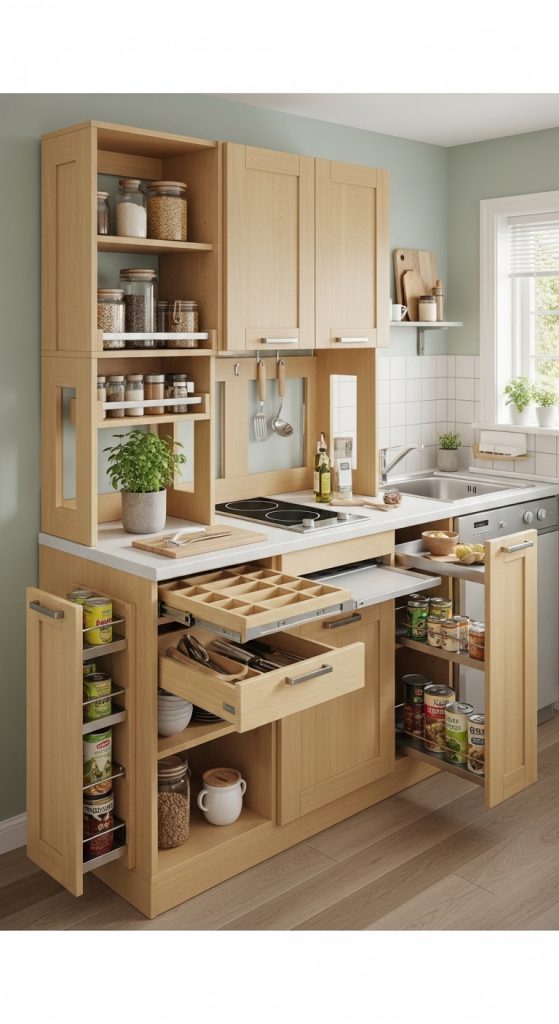
A frequent error is overusing open shelving. While attractive in photos, too much exposure can make a small kitchen feel chaotic. Cabinets provide essential visual rest in tight spaces.
Cabinet Depth Adjustments That Improve Movement
Standard cabinet depths are not always ideal for small kitchens. Reducing depth by even a few inches along certain walls can dramatically improve circulation and comfort.
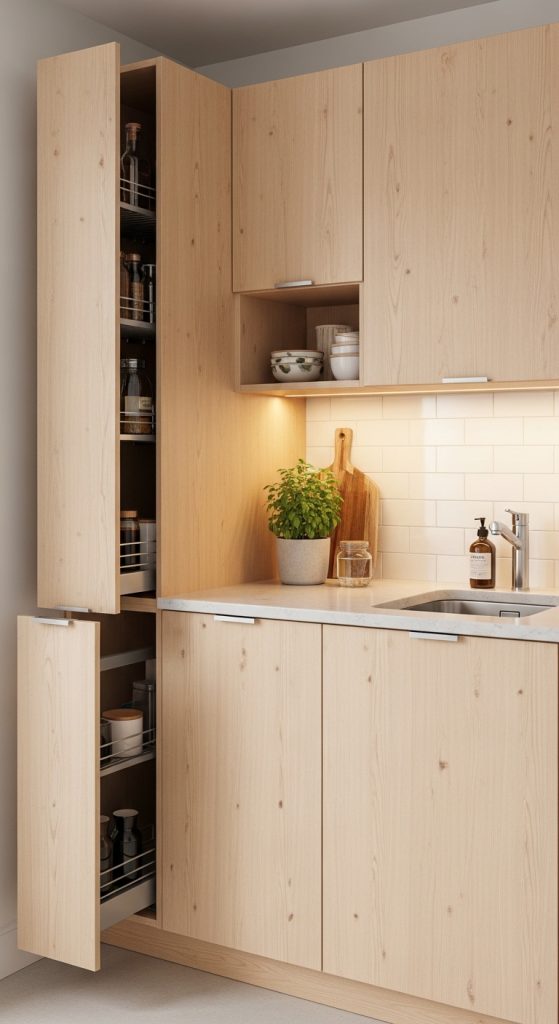
Homeowners often worry about losing storage. In reality, better access and movement often make the remaining storage more usable. Cabinets that are easier to reach tend to work harder.
Vertical Storage Without Visual Overload
Vertical storage is a powerful tool in compact kitchens, but it must be handled carefully. Tall cabinets can provide excellent capacity, yet they can also dominate the room if poorly detailed.
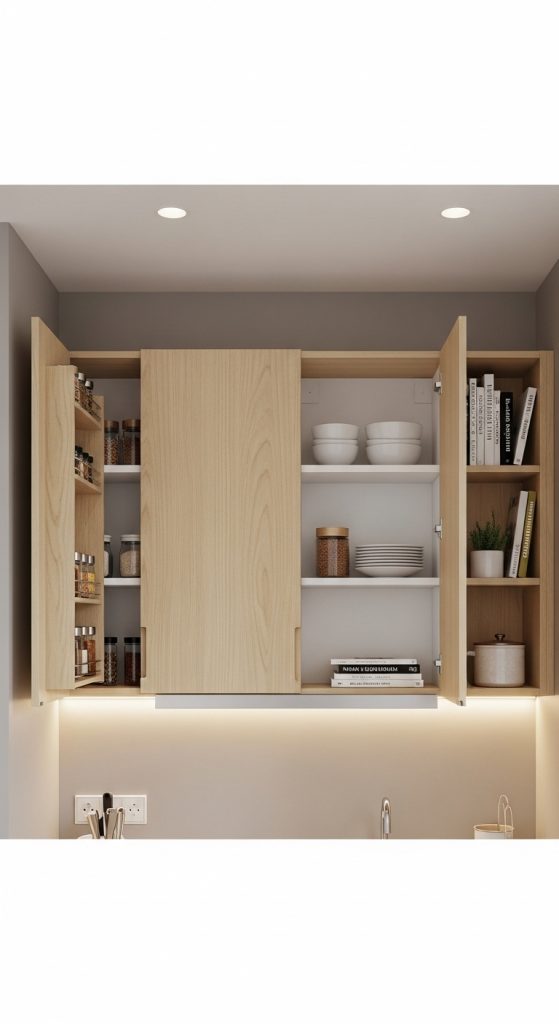
Avoid breaking vertical cabinets into too many segments. Continuous surfaces feel calmer and make ceilings appear higher, even in modest kitchens.
Cabinet Materials That Lighten the Space
Material choice plays a critical role in how cabinets affect the atmosphere of a small kitchen. Heavy woods, dark stains, and high-contrast patterns can visually shrink the room.
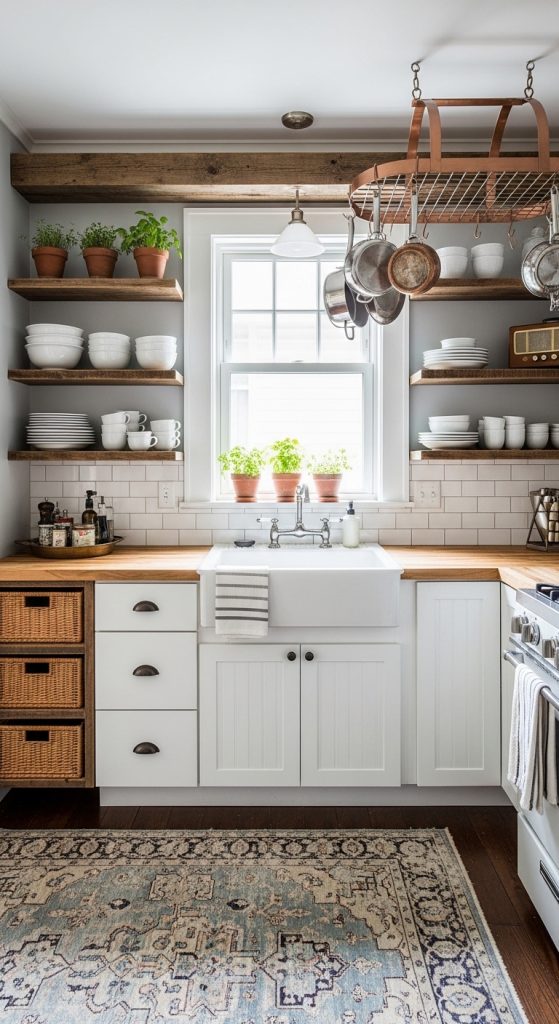
Durability matters as much as appearance. In small kitchens, cabinets endure more frequent contact. Materials should resist wear and clean easily without requiring constant maintenance.
Hardware Choices That Support Simplicity
Cabinet hardware is often overlooked, yet it strongly influences how busy or calm a small kitchen feels. Oversized pulls or decorative knobs can overpower compact cabinetry.
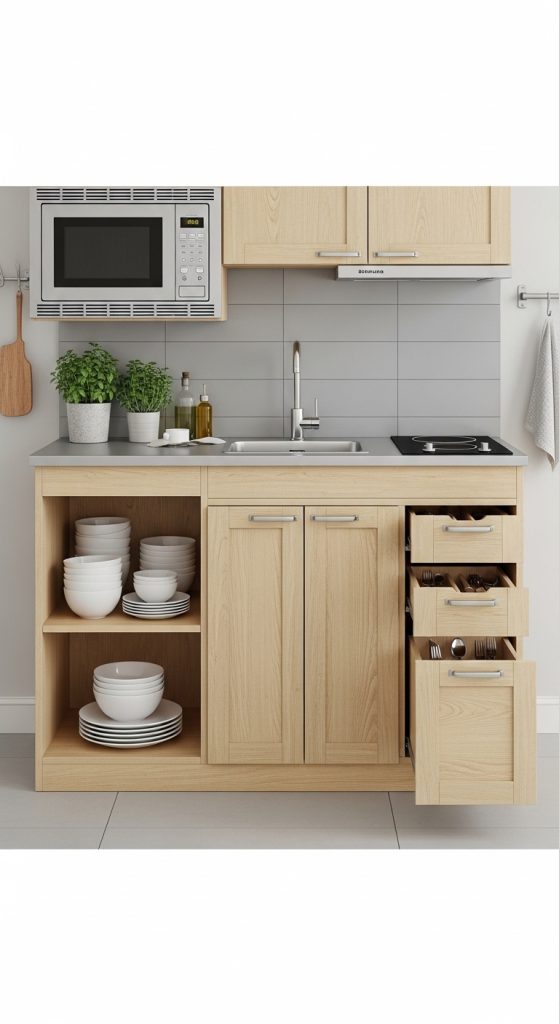
Another common mistake is mixing too many finishes. Limiting hardware finishes helps unify the space and keeps attention on layout rather than ornamentation.
Interior Cabinet Organization That Maximizes Use
Good cabinet design continues inside the box. Interior organization determines whether storage is efficient or frustrating over time.
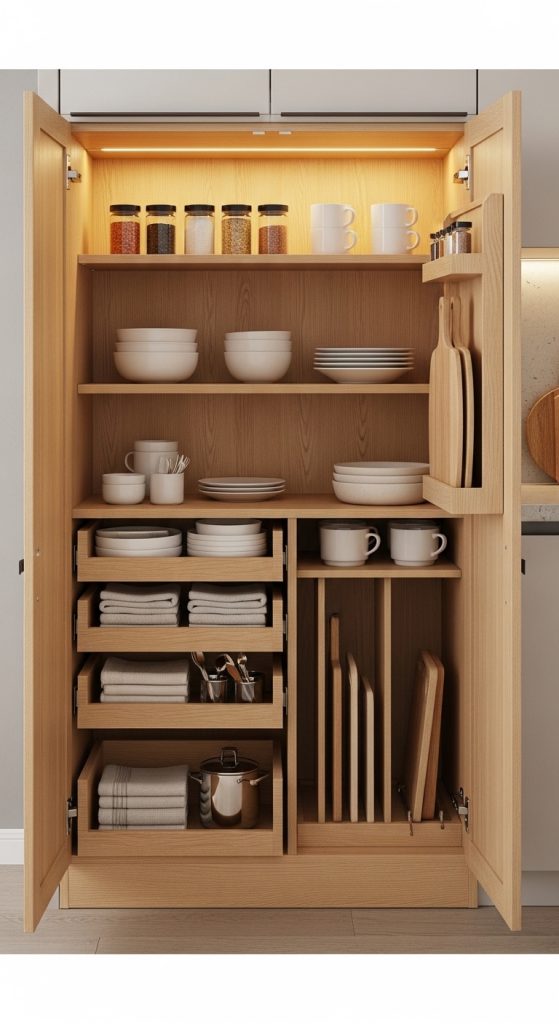
Avoid fixed shelves whenever possible. Flexibility allows cabinets to adapt as household needs change, which is essential for long-term satisfaction.
Comparing Cabinet Door Styles for Small Kitchens
| Door Style | Visual Impact | Best Use Case | Common Pitfall |
|---|---|---|---|
| Flat panel | Clean and minimal | Modern or transitional kitchens | Can feel cold if paired with harsh lighting |
| Shaker | Balanced and timeless | Most small kitchens | Oversized frames reduce interior space |
| Slab with texture | Subtle depth | Light-toned kitchens | Too much texture adds visual noise |
| Glass-front | Adds openness | Upper cabinets in limited areas | Overuse exposes clutter |
Selecting the right door style should align with both the home’s architecture and the kitchen’s scale. Simpler profiles usually age better in compact spaces.
Lighting Integration Within Cabinet Design
Lighting is inseparable from cabinet planning in small kitchens. Poor lighting can make even the best cabinets feel heavy and inconvenient.
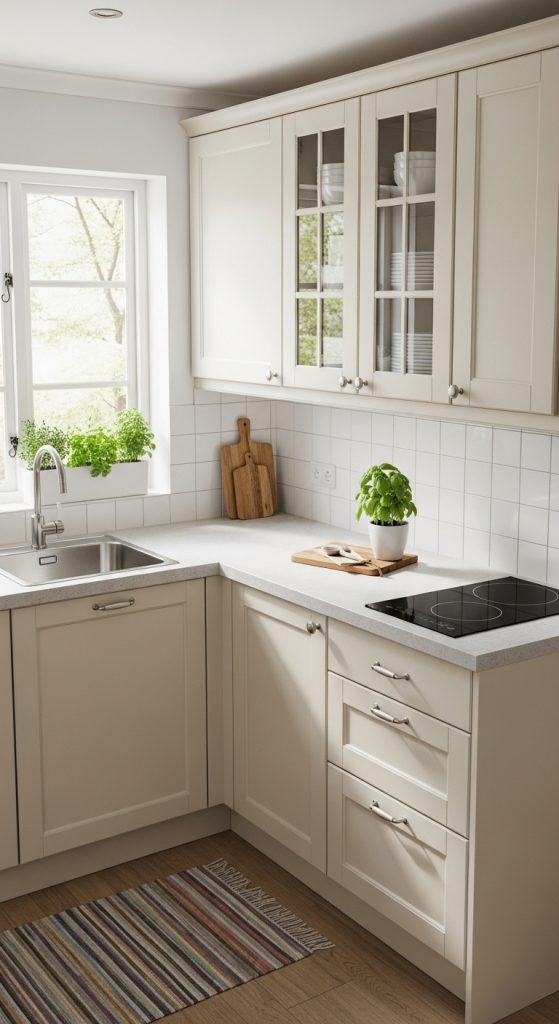
Avoid relying solely on ceiling fixtures. Layered lighting tied directly to cabinetry creates warmth and balance, making the room feel larger and more intentional.
Budget-Conscious Cabinet Strategies That Still Work
A small kitchen cabinet idea does not require custom millwork to succeed. Smart allocation of budget often produces better results than expensive materials used indiscriminately.
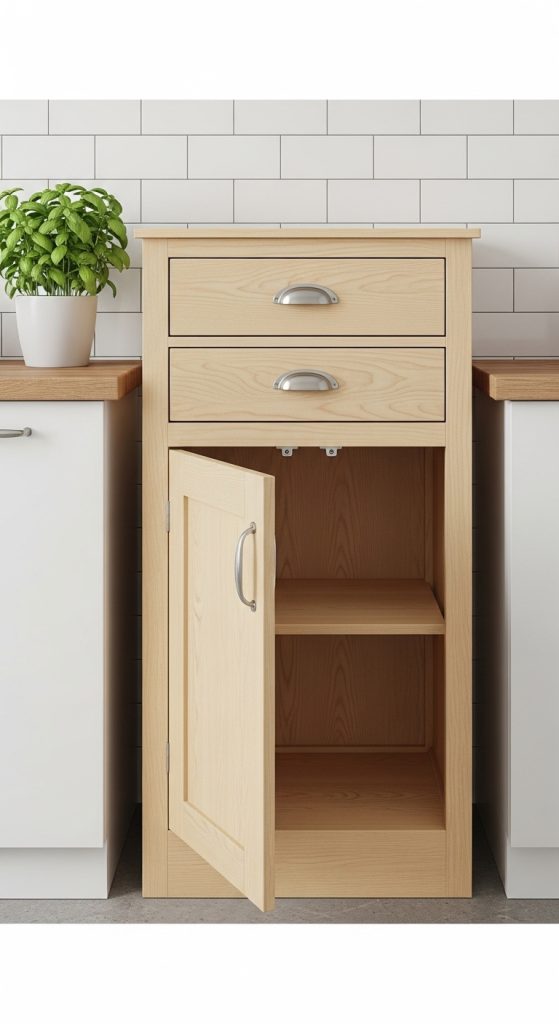
For renters or temporary solutions, modular cabinets and removable organizers provide flexibility without permanent alterations. Thoughtful planning matters more than permanence.
Avoiding Common Cabinet Layout Mistakes
One of the most frequent errors is overcrowding walls with cabinets. More storage is not always better if it compromises movement and light.
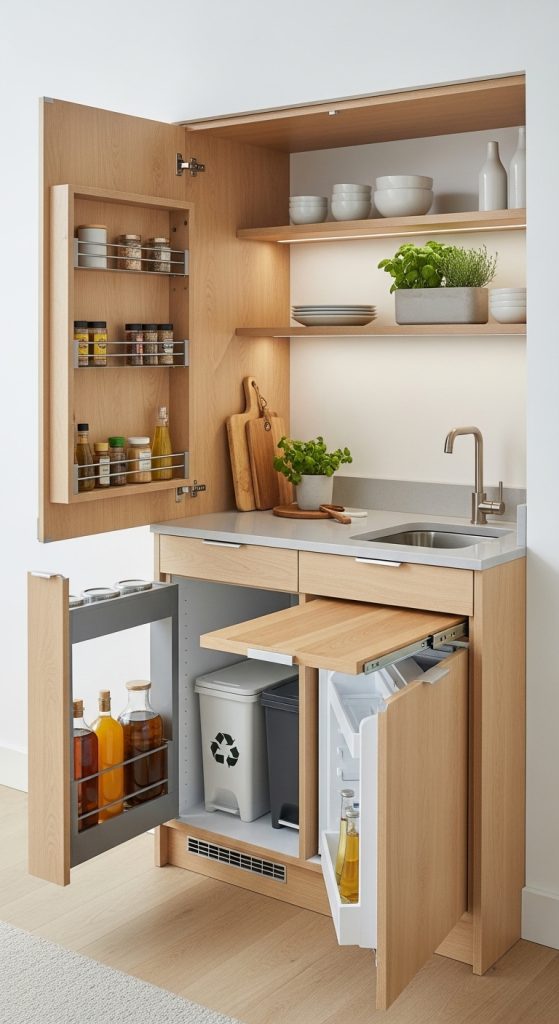
Finally, inconsistency in cabinet heights or alignments creates visual confusion. Small kitchens demand discipline and precision more than larger rooms.
Long-Term Thinking in Small Kitchen Cabinet Design
Cabinets should serve the household not just today, but years from now. Trends fade quickly, while good proportions and materials remain relevant.
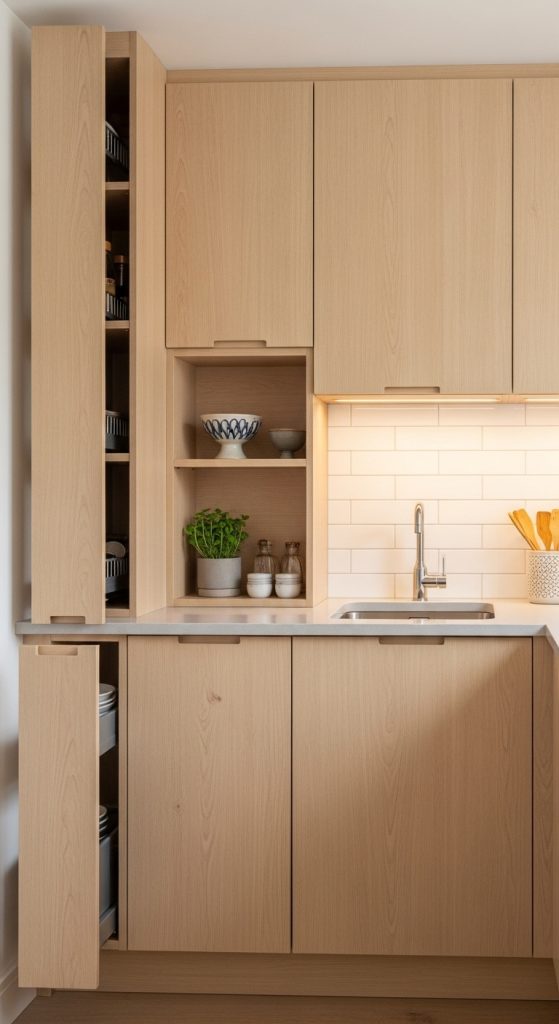
When cabinets are designed with restraint and purpose, a small kitchen becomes a place of ease rather than compromise. The space feels considered, functional, and quietly confident.
Bringing It All Together With Confidence
A successful small kitchen cabinet idea respects both space and lifestyle. It understands that beauty in compact rooms comes from clarity rather than excess.

When cabinets are chosen with care, size fades into the background. What remains is a kitchen that works, endures, and feels genuinely welcoming every day.