Small Camper Interior Ideas to Maximize Space and Style
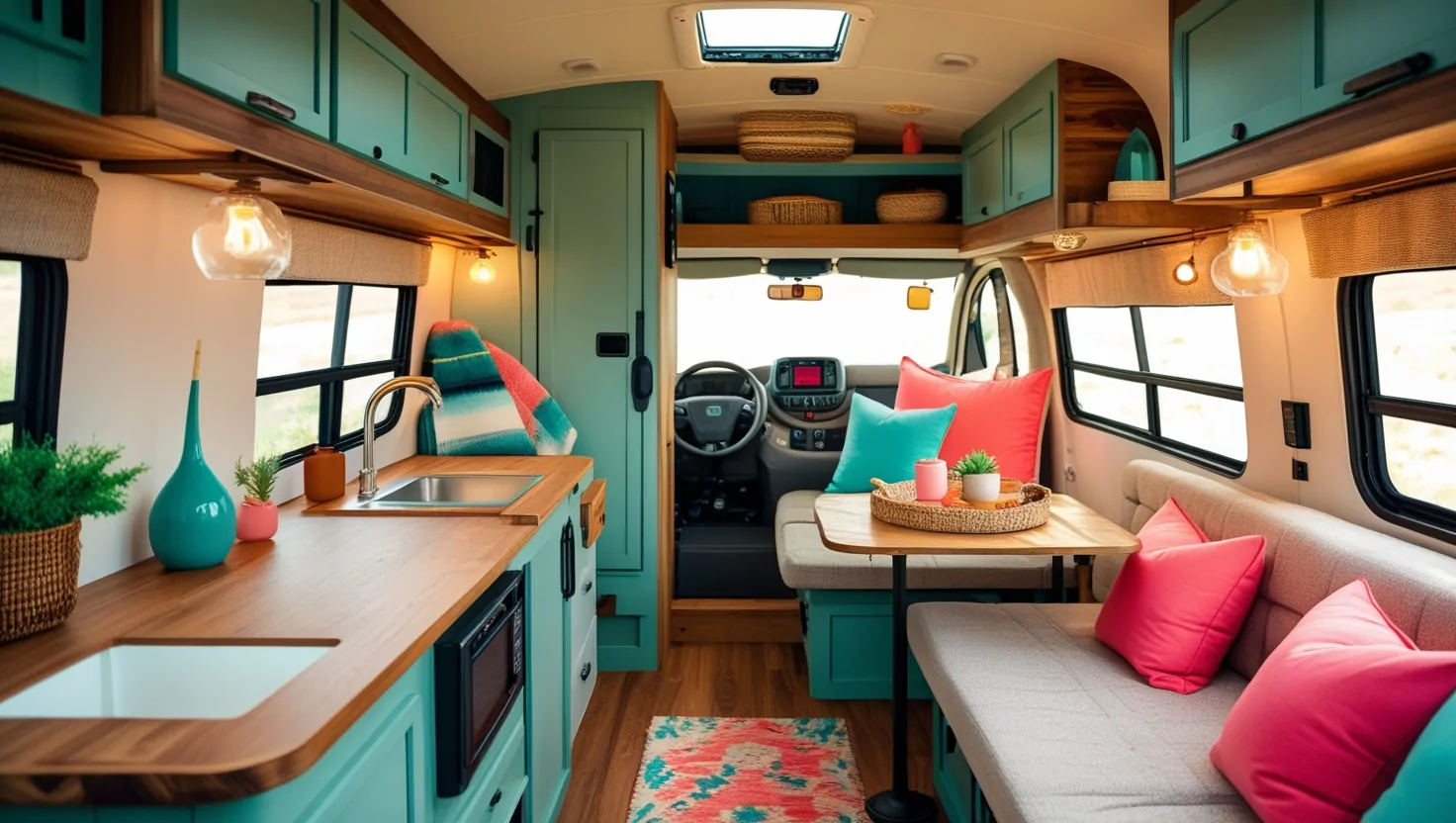
Designing the interior of a small camper is all about creative problem-solving. With limited square footage, every inch needs to serve a purpose — and ideally, more than one.
But that doesn’t mean sacrificing comfort or style. In fact, thoughtful design choices can transform even the tiniest camper into a warm, welcoming retreat on wheels.
Here are 11 inspiring ideas to help you make the most of your camper’s space — while keeping it beautifully livable.
Foldable Furniture for Flexible Living
In the world of small camper interiors, flexibility is everything. Foldable furniture makes it possible to transform your space for multiple uses — dining, lounging, working, or sleeping — without crowding the layout.
Opt for wall-mounted fold-down tables that disappear when not in use, giving you more open floor space. Chairs and stools that can stack or collapse flat are equally valuable. A Murphy-style bed or a fold-out sofa can turn your daytime seating into a cozy nighttime retreat within seconds.

| Furniture Type | Function | Space-Saving Benefit |
|---|---|---|
| Wall-mounted fold table | Dining/work area | Folds flat when unused |
| Convertible sofa bed | Lounge + sleep | Dual-purpose setup |
| Collapsible chairs | Seating | Stackable & easy to store |
Built-In Storage Under the Bed
Storage is the cornerstone of smart small camper design. Every inch under your bed can serve a purpose — from housing extra clothing to storing outdoor gear.
Choose a lift-up bed platform with hidden compartments underneath or built-in drawers that glide smoothly out.
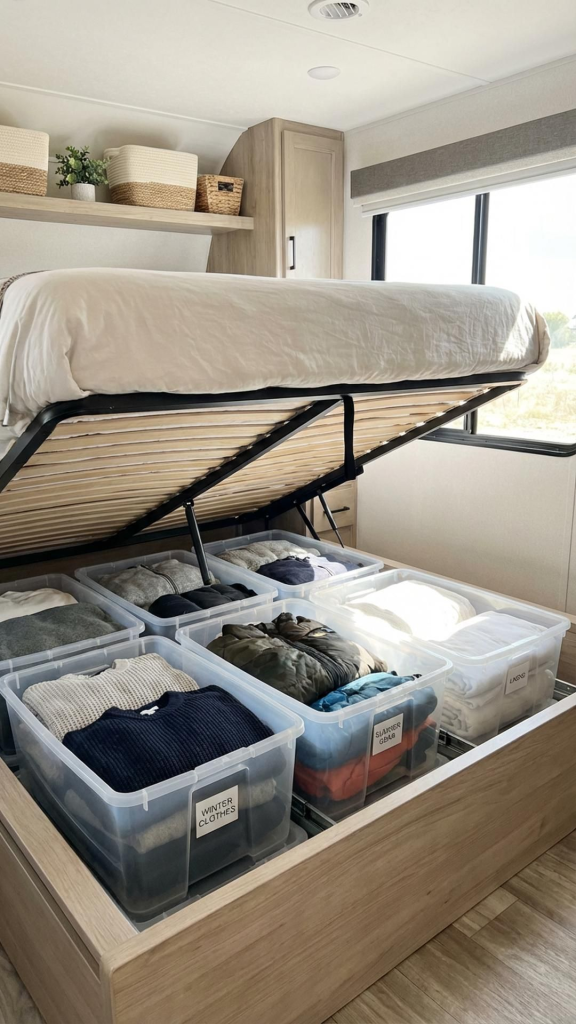
Clear storage bins are perfect for keeping things organized and easy to find. This type of smart storage keeps clutter out of sight, helping your camper feel open and restful.
Tip: Add fabric liners or baskets inside under-bed compartments to reduce noise and keep items from sliding while driving.

When storage space is tight, under-bed compartments become prime real estate. Rather than letting that area go to waste, opt for a platform bed with built-in drawers or lift-up storage lids. Sliding bins can also work well for seasonal gear, extra bedding, or clothing.
Light Color Palette for a Spacious Feel
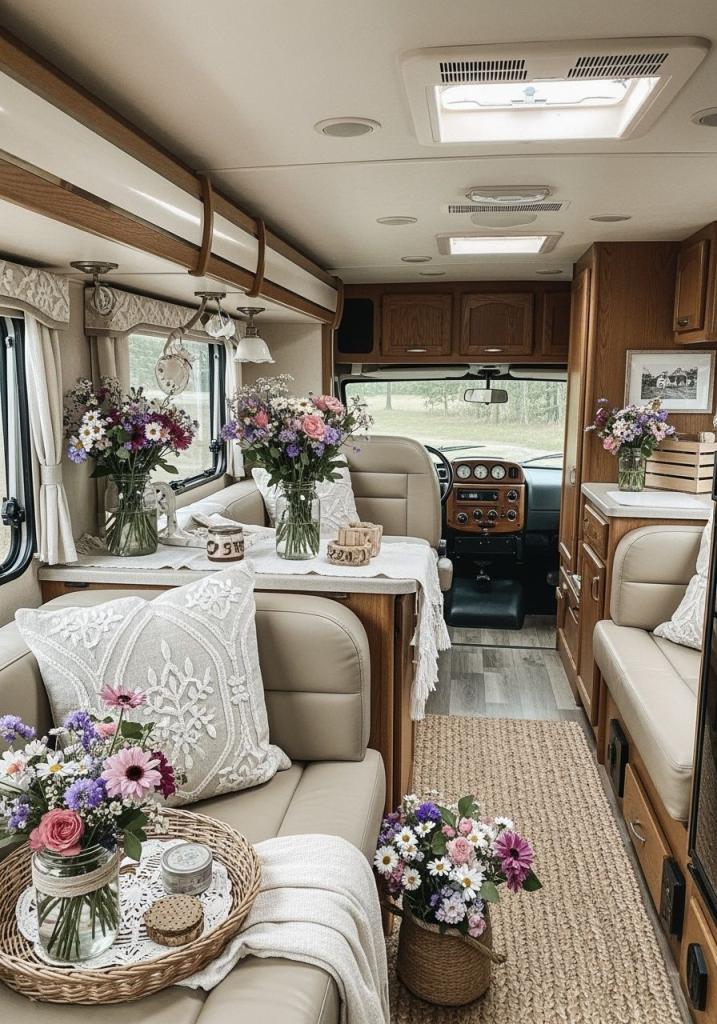
Color has an enormous effect on how large or small your camper feels. Light shades — especially whites, creams, and soft grays — visually expand the space by reflecting light.
Paint walls and cabinets in pale tones, then introduce natural materials like linen curtains, woven rugs, or oak trim for warmth.
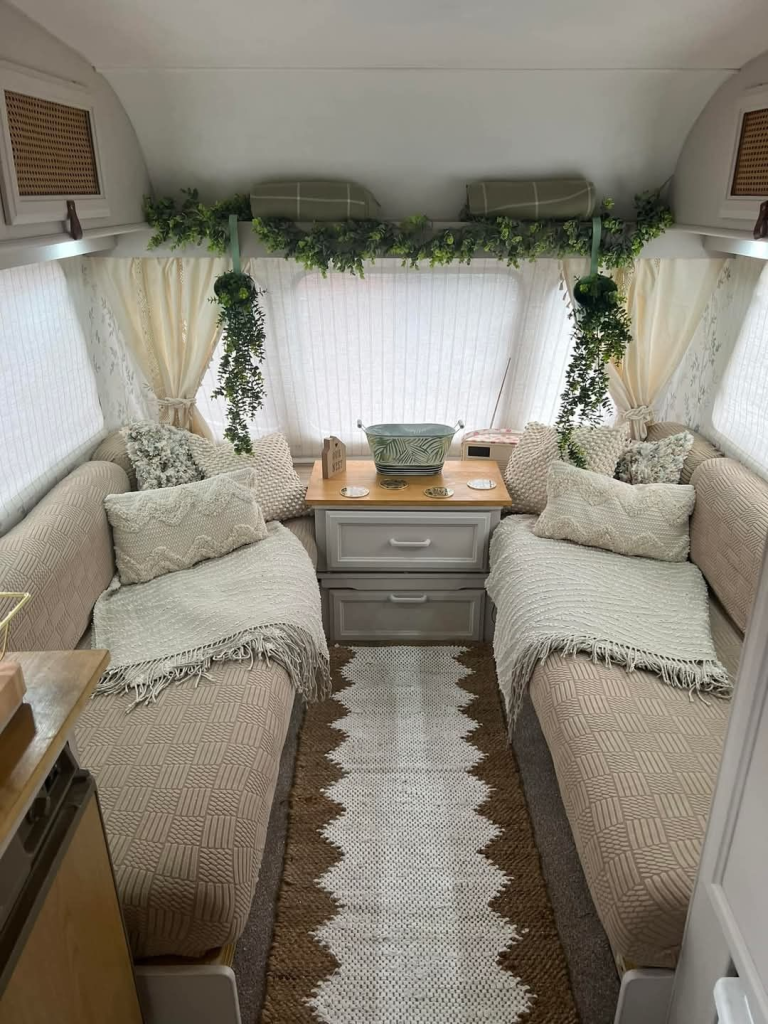
A splash of muted color, such as sage green or sandy beige, adds life without overpowering the minimal look.
Warning: Avoid heavy, dark paints on multiple surfaces — they can make your camper feel cramped.
| Palette Type | Colors Used | Effect |
|---|---|---|
| Coastal Bright | White, beige, pale blue | Airy & open |
| Warm Minimalist | Cream, tan, oak | Cozy yet spacious |
| Nordic Neutral | White, grey, birch | Clean and modern |
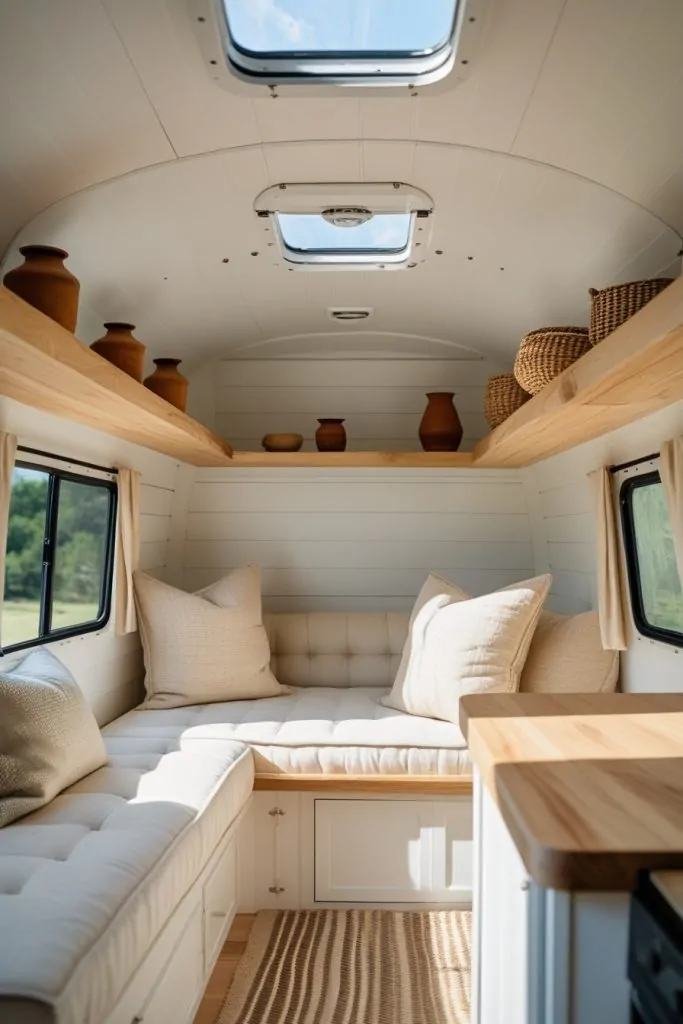
Light tones do wonders in small spaces. Bright whites, soft greys, and warm neutrals reflect natural light and visually expand the interior of your camper.
Paint walls and cabinetry in these shades to create a fresh, airy feel.
Multi-Use Convertible Dinette
The convertible dinette is the heart of many camper layouts. It functions as a dining table, office desk, and sleeping area — all in one compact zone.
During the day, the table serves as your eating or work area. At night, it can fold down or lower to form a bed base with cushions on top.
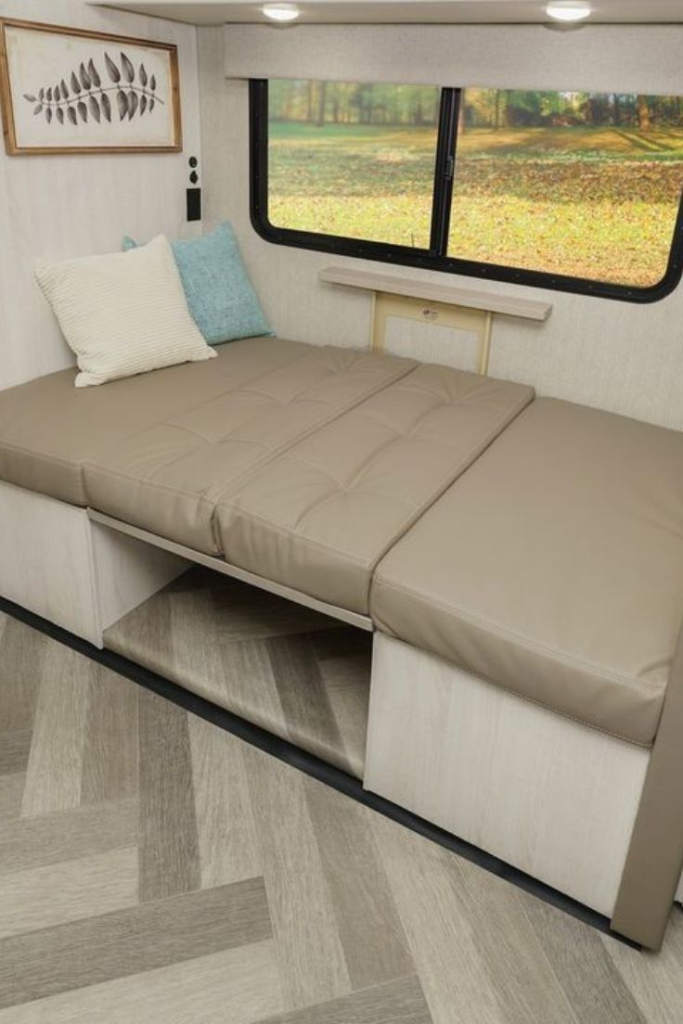
Choose high-resilience foam cushions for comfort, and easy-clean upholstery for longevity. Add a few throw pillows and soft lighting to turn this space into your all-day comfort zone.
Tip: Attach LED strip lighting under the cabinets above your dinette for a cozy evening ambiance.

A convertible dinette is one of the most efficient and functional features you can include in your camper.
During the day, it serves as a dining space or workstation. At night, it can be reconfigured into a sleeping area — perfect for guests or even as a main bed in smaller setups.
Vertical Wall Storage and Hooks
When you can’t go outward — go upward. Vertical wall storage is a camper essential that maximizes every available inch.
Use pegboards for flexible organization, magnetic strips for kitchen knives or spice jars, and sturdy hooks for hats, coats, or bags. Slim open shelves work beautifully for décor or small potted plants.
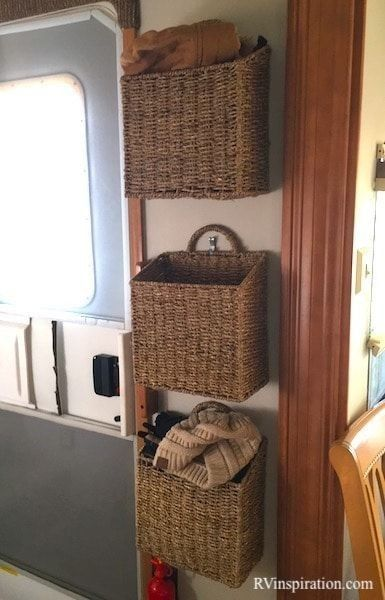
Keeping essentials off counters makes the entire camper feel more spacious and organized.
Tip: Install command hooks or removable adhesive racks to avoid drilling holes in your camper walls

When you can’t expand outward, think upward. Wall-mounted storage options help keep everyday essentials within reach while freeing up counters and floor space. Pegboards are especially versatile and can hold everything from kitchen tools to keys and accessories.
Slide-Out Pantry or Pull-Out Drawers
Every camper has narrow gaps that often go unused. These are perfect for slide-out pantries or vertical pull-out drawers that keep dry goods and utensils neatly stored.
A tall, narrow pantry can hold everything from canned food to spices, while pull-out drawers under benches or beside the fridge can hide cleaning supplies or snacks.
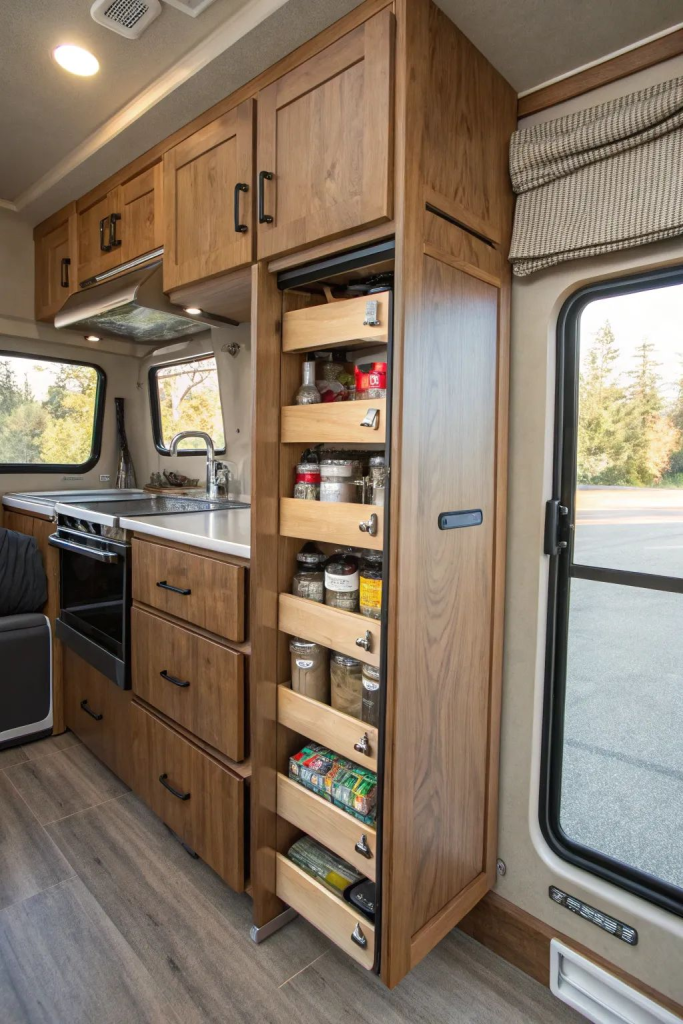
Add smooth gliders for easy access and a custom-built look.
| Storage Solution | Best For | Benefit |
|---|---|---|
| Slide-out pantry | Food items | Compact and accessible |
| Pull-out drawer | Kitchenware/tools | Uses hidden spaces |
| Narrow pull-up shelf | Toiletries | Vertical efficiency |

Every camper has awkward gaps between cabinets or near appliances — and these are perfect spots for slide-out storage. A pull-out pantry takes advantage of vertical height while keeping your dry goods organized and accessible.
Narrow drawers can be tucked between larger fixtures and used for utensils, cleaning supplies, or toiletries.
Cozy Bedding with Layered Textures
Make your camper feel like home with soft, layered bedding. Use textured blankets, cozy throws, and accent pillows to add warmth and style without taking up extra space.
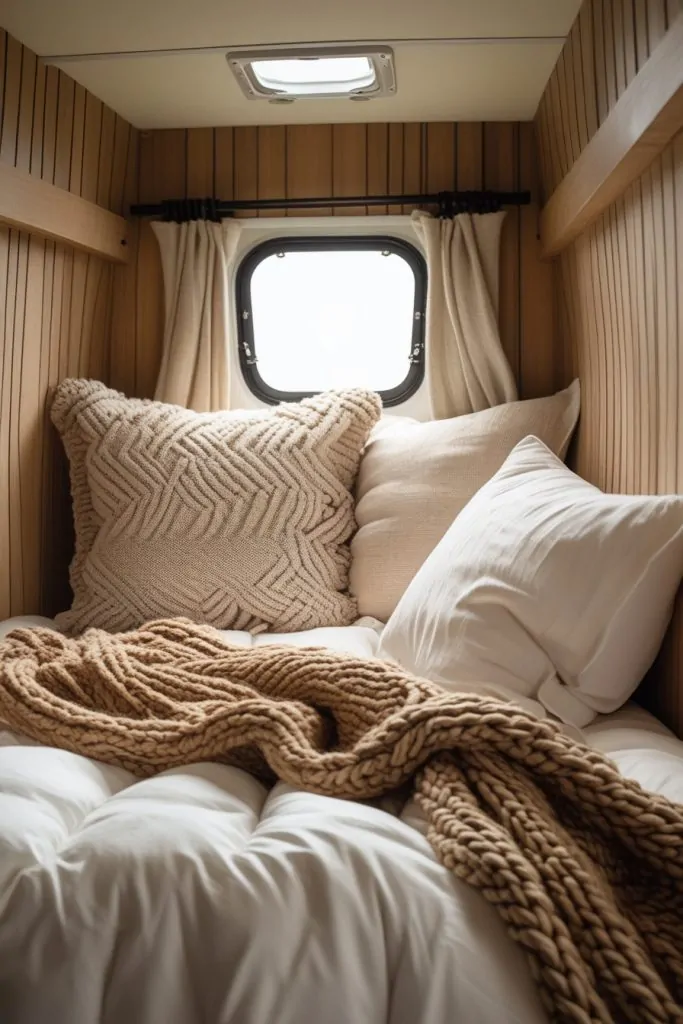
Turn your sleeping area into a snug sanctuary with thoughtfully chosen bedding. Layering is the key — think soft sheets, textured throws, and a variety of pillows that can double as backrests during the day.
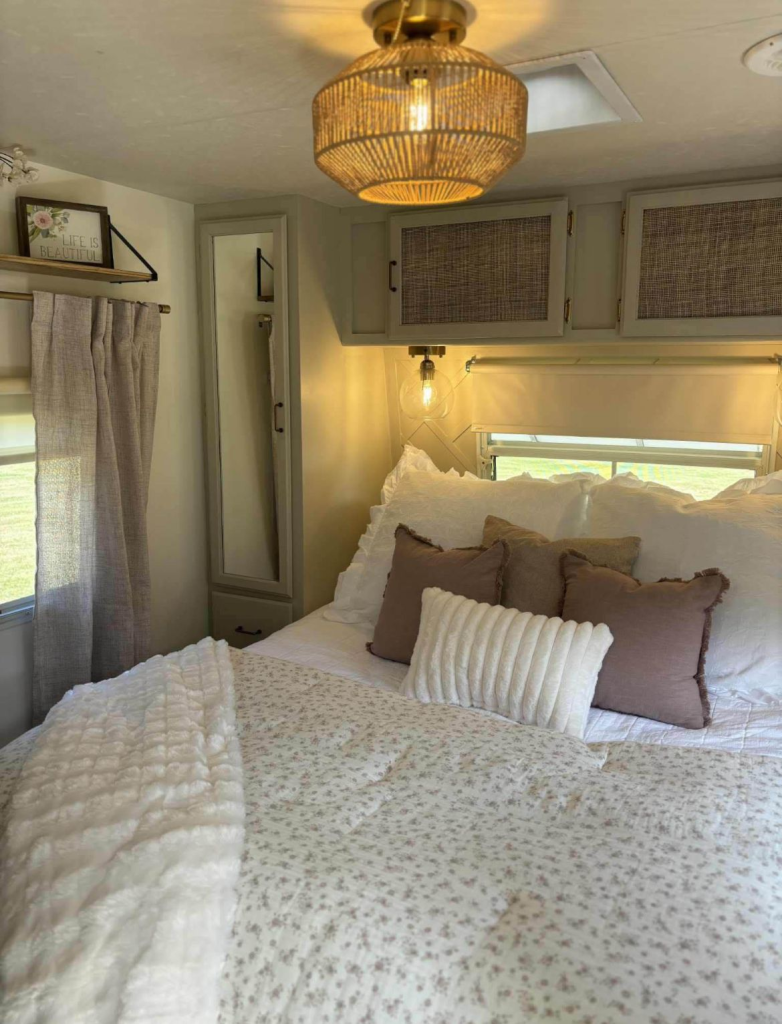
Choose textiles in neutral or earthy tones for a calming effect, and don’t be afraid to mix textures like cotton, knit, and faux fur. In a space that’s small by nature, a cozy bed can feel especially luxurious — and help make your camper truly feel like home.
Compact Wet Bath with Space-Efficient Fixtures
A wet bath — where the shower and toilet share the same waterproof space — is a smart way to fit full bathroom functionality into a tight camper layout.

For many travelers, having a bathroom onboard is non-negotiable. A compact wet bath is an efficient solution that combines shower and toilet space into one waterproof enclosure.
Look for water-saving fixtures, space-saving vanities, and clever organizers like hanging caddies or built-in shelves. You can even use a shower curtain or sliding door to keep things neat.
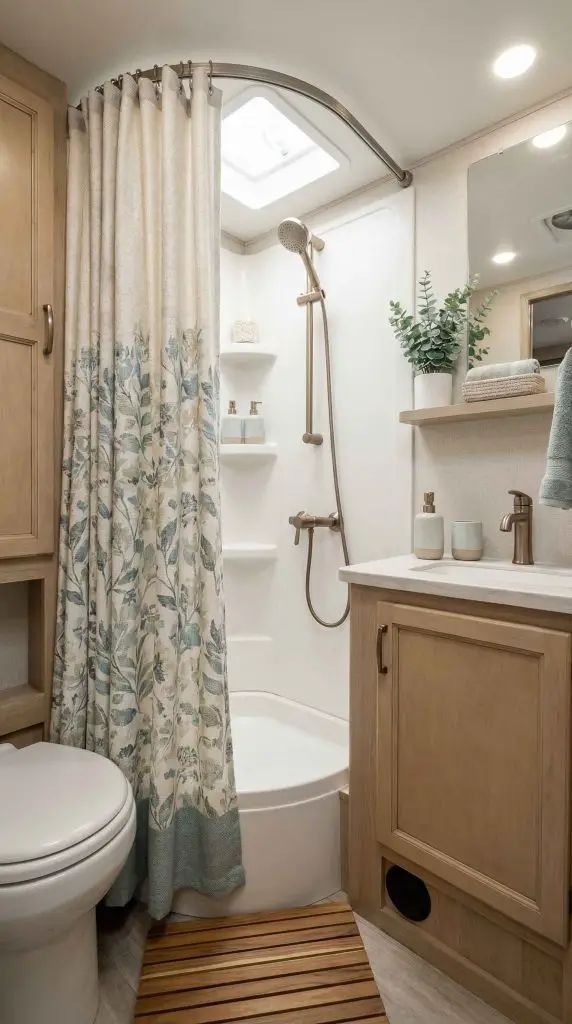
While it may be small, a well-designed wet bath adds comfort and independence to life on the road.For many travelers, having a bathroom onboard is non-negotiable.
A compact wet bath is an efficient solution that combines shower and toilet space into one waterproof enclosure. Look for water-saving fixtures, space-saving vanities, and clever organizers like hanging caddies or built-in shelves.
Overhead Loft or Bunk Space
Take advantage of vertical room with an overhead loft bed or bunk-style sleeping area. It frees up floor space and can double as extra storage during the day.

Make the most of your camper’s vertical space by adding a loft bed or bunk sleeping area. Elevated sleeping zones free up floor space for lounging, dining, or storage.
They’re especially useful in family campers, where multiple people need designated sleeping spots.
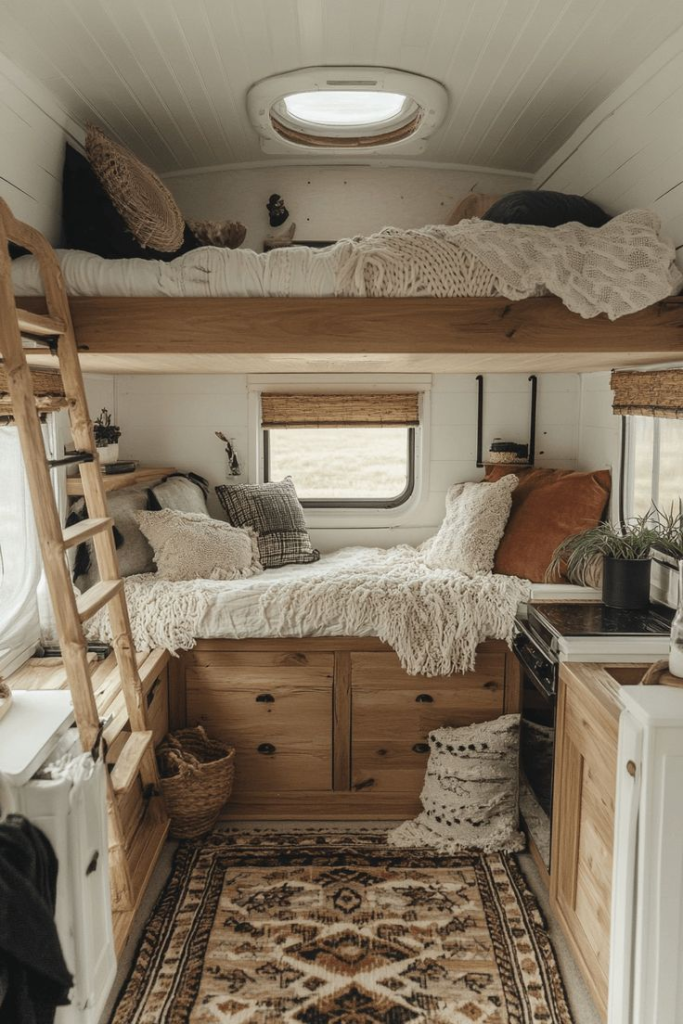
During the day, the bunk can even function as a storage nook for clothes, gear, or linens. With some curtains or privacy panels, it can also feel like its own little retreat within the camper.
Nature-Inspired Interior Design
Bring the outdoors in with natural materials like wood, linen, rattan, or stone-patterned accents. These earthy touches make your camper feel like a cozy forest cabin or mountain retreat.

Even though you’re inside, your camper is part of the great outdoors — so why not reflect that in your design?
Incorporate natural elements like wooden cabinetry, linen upholstery, rattan baskets, or stone-patterned wallpaper to create a calming, earthy vibe.
Slide-Out Table or Hidden Desk Nook
Need to work on the go? A slide-out table or foldaway desk creates a functional office space that disappears when you don’t need it — keeping your camper clean and uncluttered.

For digital nomads or remote workers, having a workspace in your camper is a game-changer.
A slide-out table or hidden desk that folds down from a cabinet lets you work comfortably without dedicating permanent space to an office setup. When you’re done for the day, simply tuck it away.
Cozy Plaid Corner with Candlelit Charm

This rustic camper design captures the warmth of a cabin getaway within a compact space.
The walls and ceiling are clad in natural pine wood, giving the interior a golden glow, especially as soft sunlight filters through the twin camper windows.
The plaid red-and-green cushions add instant coziness, wrapping the seating area in a classic cabin aesthetic.
Matching curtains frame the windows, tying the look together with a nostalgic charm that feels both festive and timeless.
Warm Pine Camper

Step into a camper that feels like a forest cabin on wheels. This design embraces a palette of warm honey-colored pine wood that stretches from the floor to the ceiling, creating an organic, enveloping vibe.
The standout detail here is the bold use of tartan fabrics — seen on the curtains, cushions, and even the upholstery of the built-in bench seating. These red and forest green patterns contrast beautifully with the soft wood tones, creating a dynamic yet harmonious interior.
The focal point is the sturdy wood table, minimally styled with an amber candle, rustic ceramic mugs, and a touch of greenery. Everything in the space feels intentional, from the woven throw blankets to the iron hooks holding practical tools on the wall.
It’s a reminder that good design in small spaces is all about choosing the right textures and tones. This interior doesn’t just look inviting — it feels like a place you could live in for weeks on end.
Woodland Retreat on Wheels

This rustic camper interior takes inspiration from woodland lodges and turns it into a travel-ready haven. Walls are lined with thick natural wood planks, while the ceiling features visible wooden beams that amplify the cabin feel.
Plush cushions in deep forest green and burgundy plaids offer both comfort and a rich visual layer. Shelving above the windows displays vintage camping gear and personal touches that make the space feel lived-in.
A wooden dining table sits beneath soft golden light, its surface set with a flickering candle, enamel mugs, and a mason jar of wildflowers. The window views show a hint of pine trees outside, making it easy to forget you’re in a camper and not deep in the woods.
This setup is perfect for nature lovers who appreciate rustic charm and timeless styling. It’s a beautiful balance of practical and poetic — designed for moments of quiet reflection or slow mornings by the fire.
Scandinavian-Boho Fusion

Marrying Scandinavian simplicity with rustic camper charm, this interior leans into earth tones and natural materials. The walls are wood-paneled in soft beige and light oak, while the seating area features creamy, plaid-accented cushions that add a pop of warmth without overwhelming the palette.
Final Thoughts
Small campers may be limited in square footage, but they’re unlimited in potential. With a little creativity and the right design choices, you can turn your camper into a stylish, practical, and deeply personal home away from home.
Whether you value efficiency, coziness, or a strong connection to nature, these 11 interior ideas can help you strike the perfect balance between space and style. Wherever the road takes you, your camper will be ready to go — with comfort, beauty, and function built in.
FAQs About Small Camper Interior Design
1. How can I make a small camper feel more spacious?
Use light color palettes like white, beige, or soft grey to visually open up the space. Mirrors and strategic lighting also help reflect natural light and make your camper feel larger and airier.
2. What type of furniture works best in a small camper?
Opt for foldable, convertible, or multi-purpose furniture — such as sofa beds, wall-mounted tables, and fold-down desks — to maximize functionality without crowding your living area.
3. How can I maximize storage in my camper?
Use under-bed storage, overhead cabinets, hanging hooks, and pull-out drawers. Utilize every corner — vertical wall space, hidden compartments, and even ceiling racks — for smart storage solutions.
4. What lighting options are ideal for camper interiors?
Go for LED strip lights, compact wall sconces, or touch-operated lights. Soft, warm lighting enhances coziness while energy-efficient LEDs preserve battery life during off-grid camping.
5. How do I add personality to a camper’s small space?
Incorporate natural textures, layered textiles, and personal décor elements like photos, artwork, or plants. Choose cohesive colors and repeat materials to keep the design visually consistent.
6. Are wet baths worth including in a small camper?
Yes, if you value convenience and self-sufficiency. A compact wet bath combines the toilet and shower in one waterproof space, maximizing efficiency without needing separate plumbing zones.
7. What’s the best flooring for camper interiors?
Vinyl planks or waterproof laminate flooring are excellent choices — they’re durable, easy to clean, and resistant to moisture. Area rugs or woven mats add warmth and comfort underfoot.
8. How can I make my camper cozier for long trips?
Layer your bedding with textured throws and cushions, use soft lighting, and incorporate warm wood tones. Adding scents like candles or essential oil diffusers can also make the space feel homier.
9. How do I balance functionality with aesthetics?
Choose practical items that also look great — for example, woven baskets for storage, stylish wall hooks, or foldable furniture in matching finishes. Every piece should serve a purpose while complementing your décor.
10. What’s a good layout for a small camper?
Keep high-traffic areas open and arrange furniture along the walls to maintain flow. Use a convertible dinette or fold-down bed to allow your camper to transition easily from day to night mode.