Creative Mud Kitchen Ideas for Outdoor Play and Learning
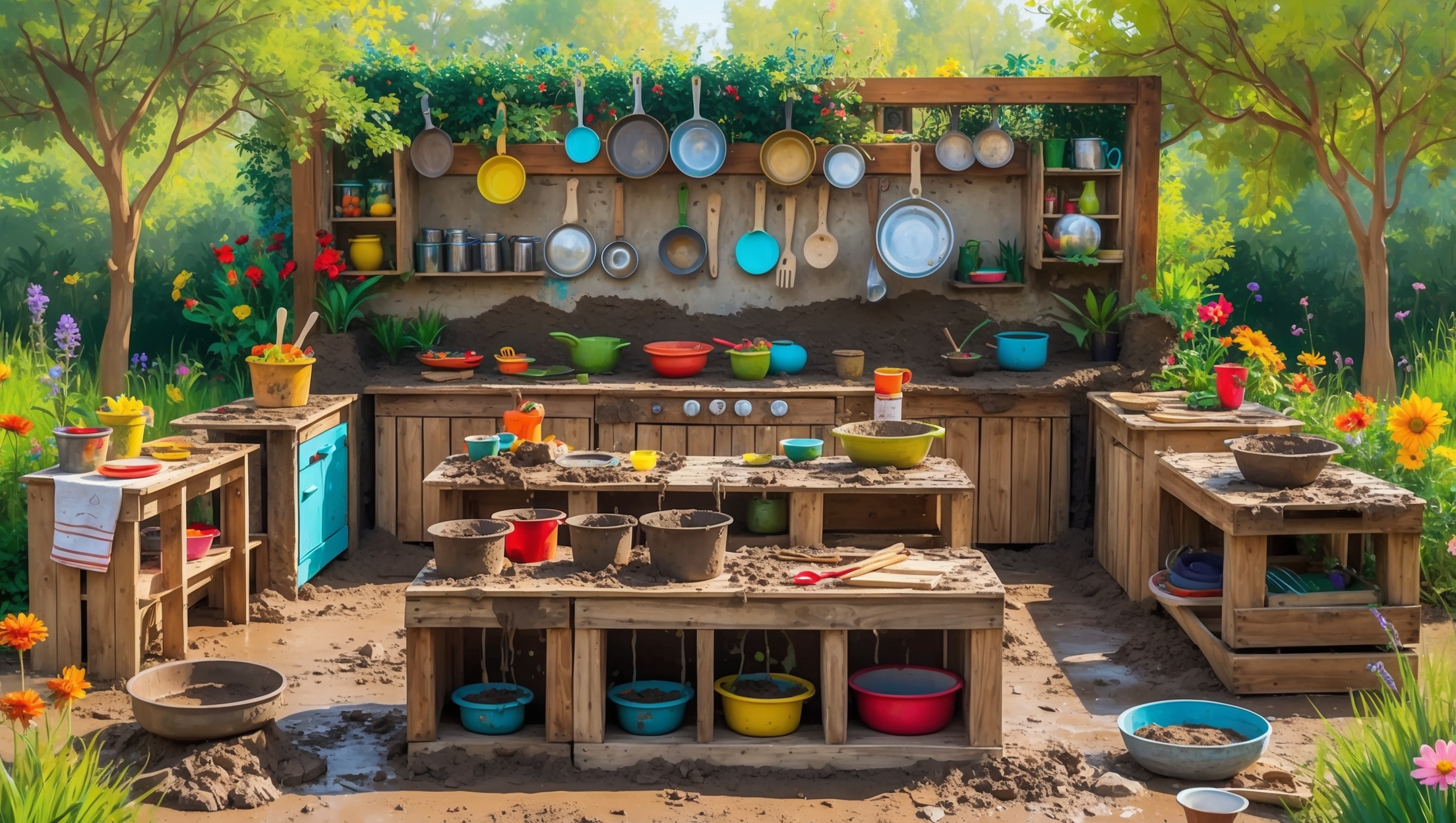
A mud kitchen is a beloved backyard feature that encourages children to explore nature, engage in imaginative play, and develop important sensory and motor skills. Whether you’re building one from scratch or upgrading an existing setup, these creative mud kitchen ideas will help you design a play space that’s both educational and fun.
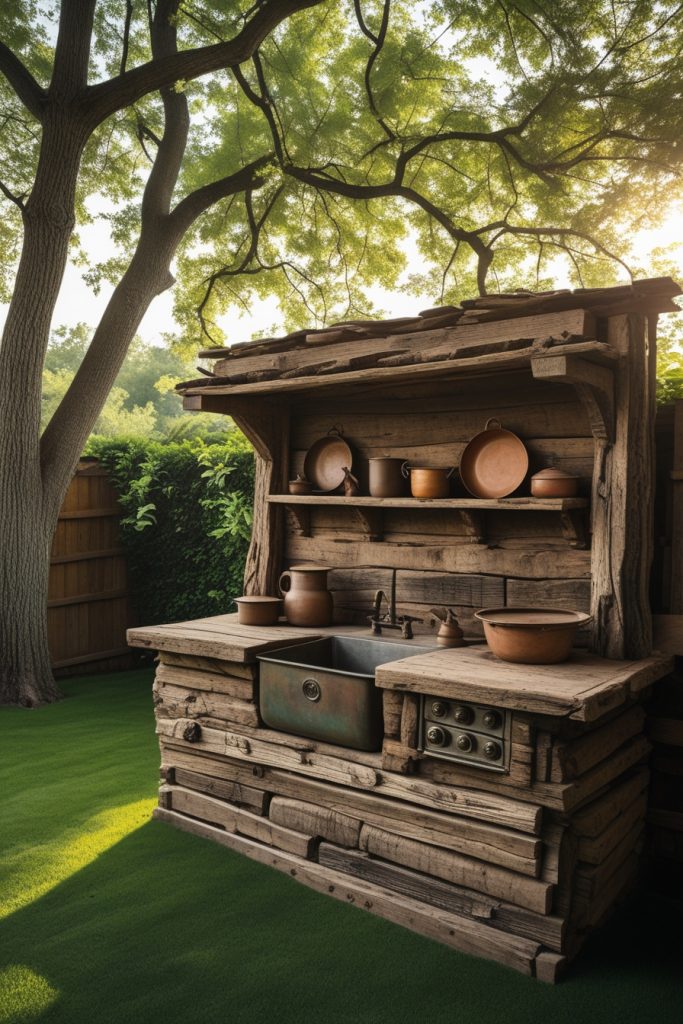
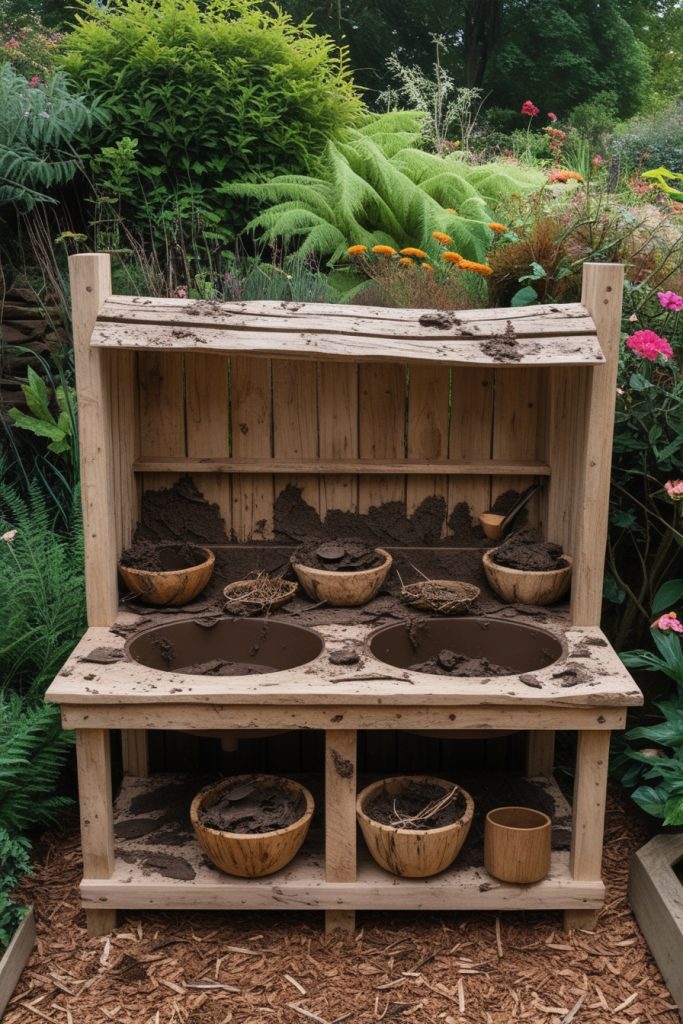
Rustic Wooden Mud Kitchen with Sink and Stove
A rustic mud kitchen brings charm and authenticity to outdoor play. Use reclaimed wood for the structure to give it a weathered, farmhouse feel that blends naturally with your backyard setting. Incorporate elements like an old sink, salvaged knobs, or vintage cabinet handles to add detail and function, mimicking a real kitchen setup kids can recognize and enjoy.
Adding a pretend stovetop with painted burners or a removable grill surface creates endless opportunities for imaginative cooking scenarios. Kids will love pretending to boil “stone soup” or fry up some mud pancakes. This setup not only looks beautiful but also encourages hours of independent and cooperative play.
Double Mud Kitchen for Group Play
If you have multiple kids or frequently host playdates, a double-sided mud kitchen is a game changer. This layout includes two separate workstations — one on each side — allowing children to cook, mix, and explore simultaneously without getting in each other’s way. It’s perfect for cooperative play and developing social skills like sharing, turn-taking, and communication.
You can place shared storage or a central ingredient bin between the two sides for tools, spoons, bowls, and natural play items like leaves, pebbles, and pinecones. This setup not only accommodates group interaction but also creates a more dynamic, inclusive space for imaginative storytelling and outdoor learning.
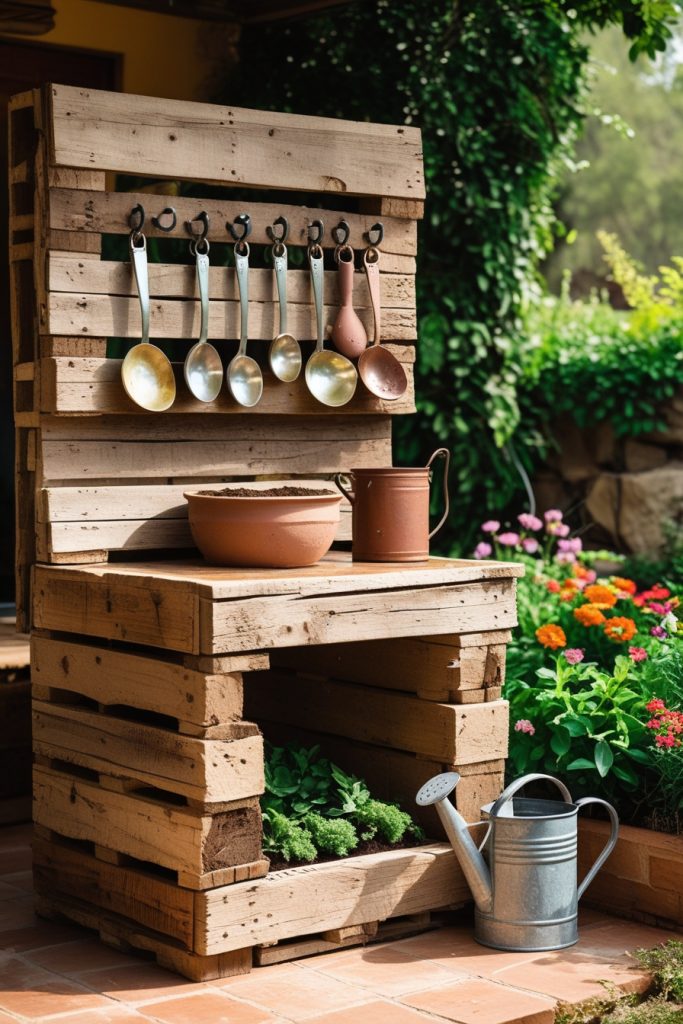
Pallet Mud Kitchen with Hanging Tools
Pallets are a budget-friendly, eco-conscious way to build a durable mud kitchen. Sand them down for safety, then stack and attach them to form a basic countertop and backsplash. Their open slats make it easy to attach hooks, racks, or small containers for organizing cooking tools and mud play supplies.
Hanging utensils from pegboards, metal strips, or garden hooks keeps the workspace clean while helping children develop organizational skills. They’ll naturally learn to tidy up after play and find satisfaction in having everything in its place — just like a real chef in a busy kitchen!
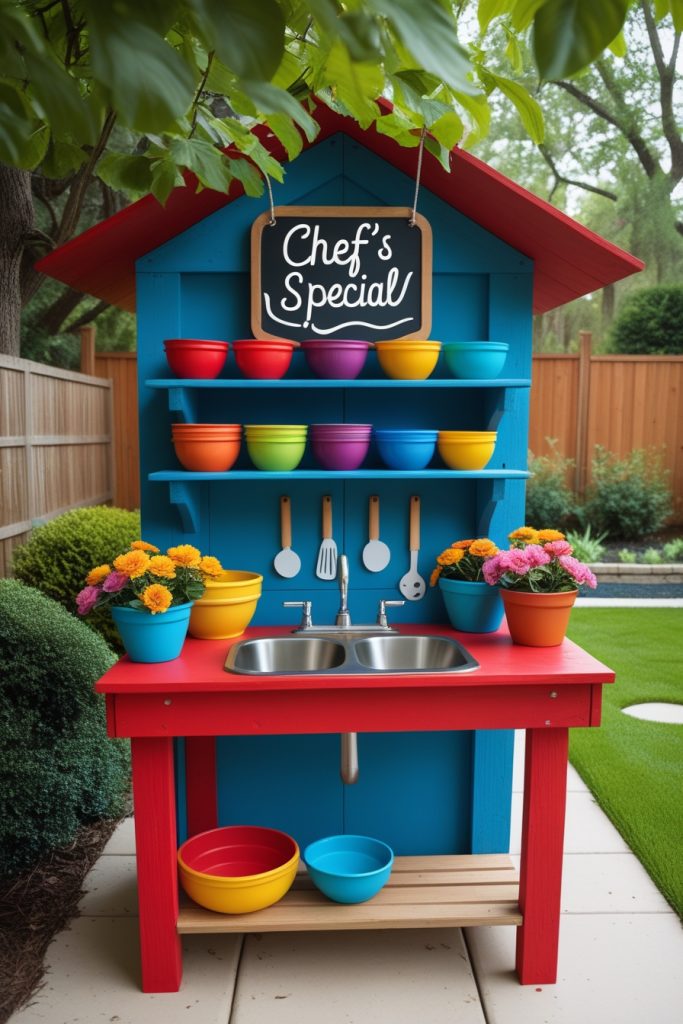
Colorful Painted Mud Kitchen
Inject personality and fun into your outdoor space with a boldly painted mud kitchen. Use bright, weather-resistant paints to color-code drawers, label shelves, or create fun patterns. Think rainbow backsplashes, polka-dotted cabinet doors, or even a chalkboard-painted surface for writing pretend recipes.
Color not only makes the kitchen visually stimulating but also provides an opportunity for learning. Children can practice color recognition, sorting, and early language skills by matching utensils or ingredients to painted sections, all while engaging in rich pretend-play scenarios.
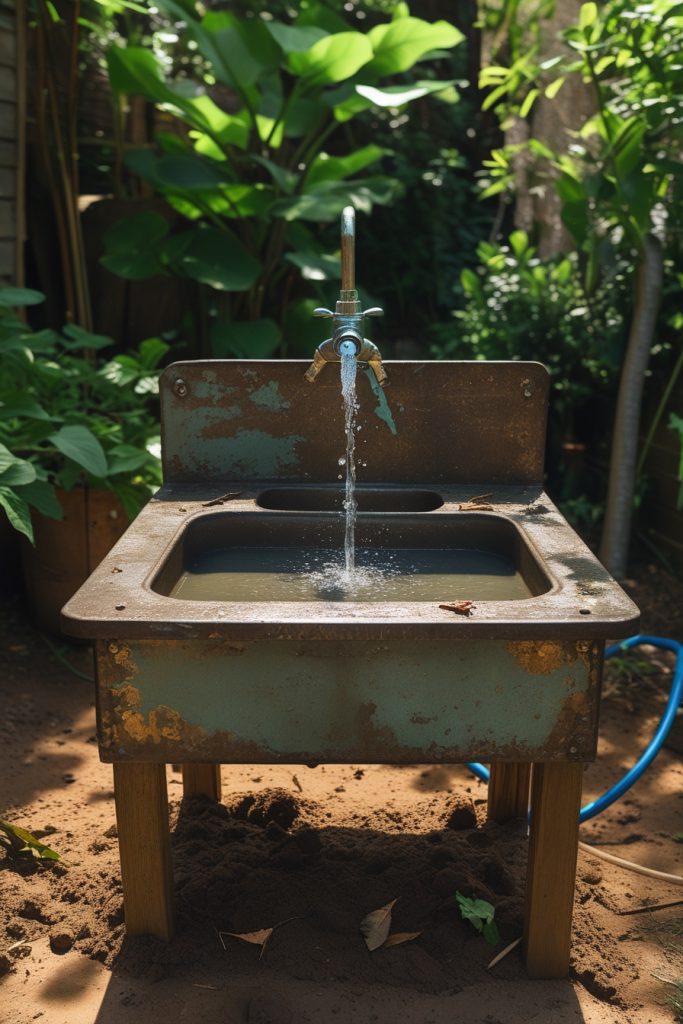
Mud Kitchen with Real Water Feature
Bringing water into the mud kitchen takes playtime to a whole new sensory level. Install a working faucet connected to a garden hose or use a manual hand pump for a more rustic effect. You can even set up a rainwater collection barrel with a spout for an eco-conscious approach.
The ability to add and control real water enhances the realism of play and teaches kids about volume, pouring, and cause and effect. Whether they’re washing dishes, filling pots, or mixing muddy concoctions, children will love the tactile exploration this setup offers.
Farmhouse-Style Mud Kitchen
A farmhouse-style mud kitchen is all about cozy aesthetics and classic details. Use beadboard paneling, weathered finishes, and vintage-style fixtures to create a homey feel. Install faux drawers with antique-style pulls, enamel bowls as sinks, and even a gingham curtain for under-sink storage.
This style appeals to kids and adults alike — it’s functional, photogenic, and encourages role-play grounded in real-life kitchen tasks. A farmhouse mud kitchen also pairs beautifully with an herb garden or flower boxes, further connecting play with nature and simple living.
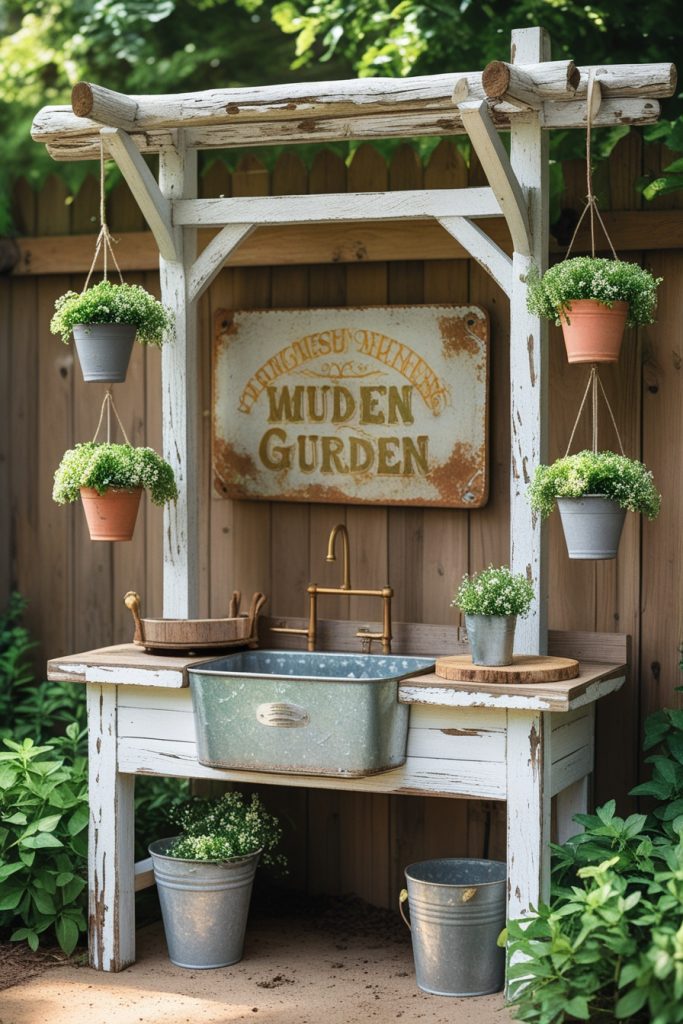
Upcycled Cabinet Mud Kitchen
Instead of starting from scratch, repurpose an old cabinet or sideboard into a fully functional mud kitchen. Remove or rearrange drawers to make space for a sink bowl and stovetop. The existing shelving provides built-in storage for tools, bowls, and natural “ingredients.”
This approach is not only eco-friendly but also cost-effective and customizable. Paint or seal the cabinet with weatherproof materials, then let your child help with decoration — painting labels, choosing knobs, or adding fun decals to make it truly their own.
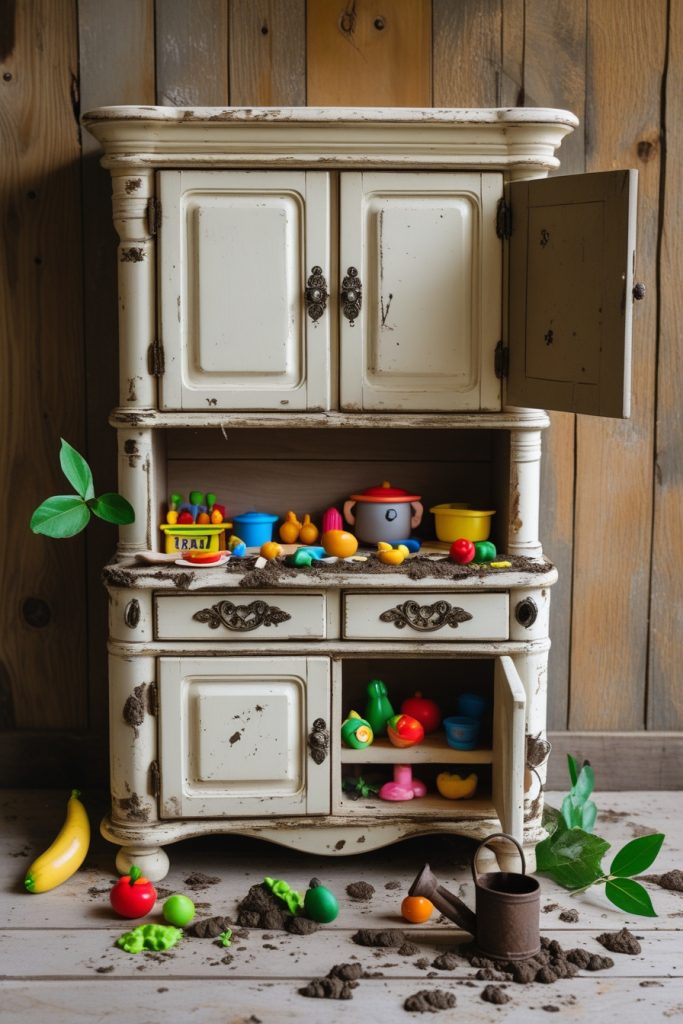
Nature-Themed Mud Kitchen with Tree Stump Seating
Placing your mud kitchen in a natural setting surrounded by logs, rocks, and branches fosters deeper sensory and environmental connection. Tree stumps can be used as seats, tabletops, or even cooking surfaces, encouraging children to interact with nature as part of their daily play.
This setup is ideal for forest school-style play, promoting creative exploration using found objects. Children will begin to incorporate leaves, bark, flowers, and dirt into their imaginary meals, developing observation skills and a respect for the natural world.
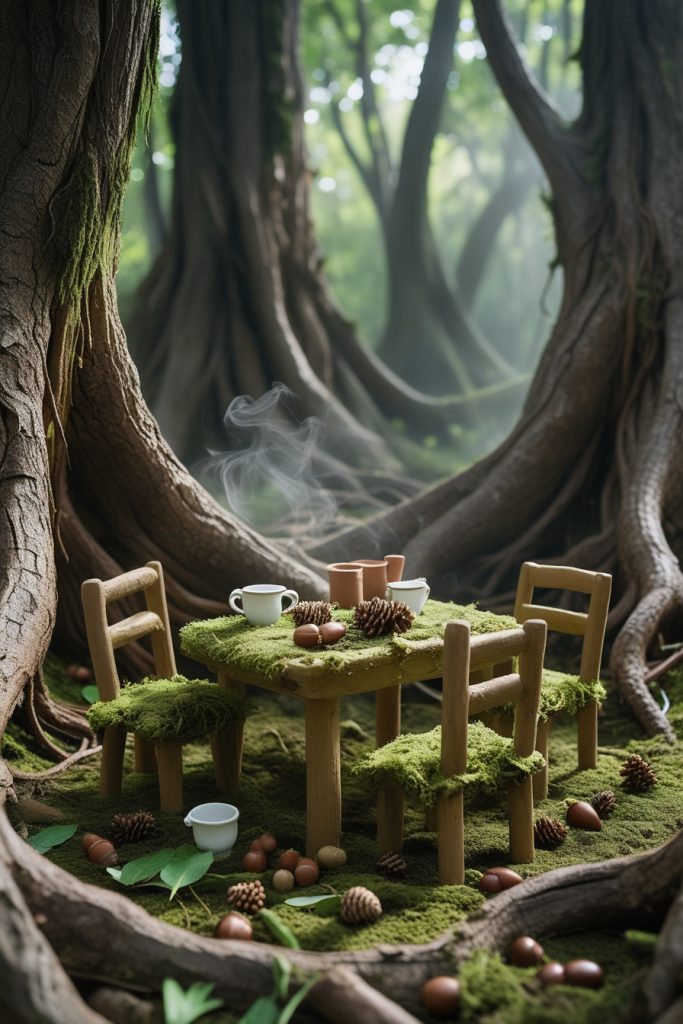
Chalkboard Menu and Recipe Station
Adding a chalkboard transforms your mud kitchen into a fully immersive play café. Kids can write menus, invent recipes, or take “orders” from family and friends. This boosts early literacy skills and gives structure to pretend play scenarios, enriching the educational value of the setup.
Mount the chalkboard above the counter or as a standing sign nearby. Consider adding a small clipboard or notepad for “orders,” creating more layers of role-play and communication. This feature turns every muddy concoction into a story worth telling.
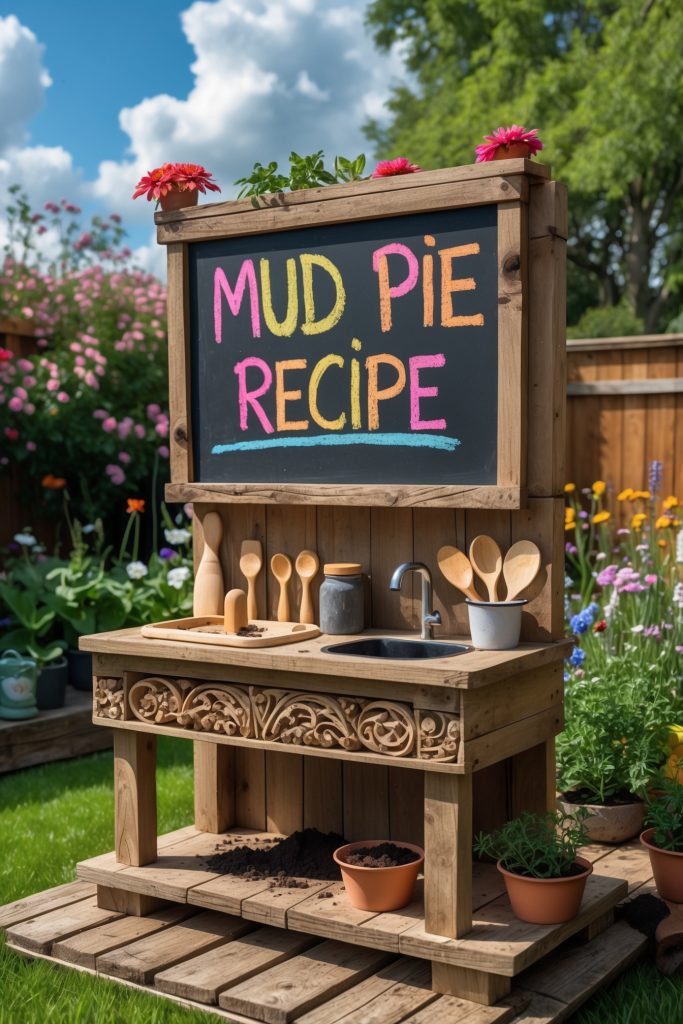
Compact Wall-Mounted Mud Kitchen
In smaller spaces, a wall-mounted mud kitchen is a smart solution. Install a slim countertop, some hooks, and a few hanging shelves directly on a fence or exterior wall. Despite its size, it still offers ample opportunity for messy play without taking up precious backyard real estate.
This space-saving design is perfect for balconies, patios, or urban gardens. You can customize it with collapsible surfaces or modular pieces that fold away when not in use, making it practical and playful even in the most compact of environments.
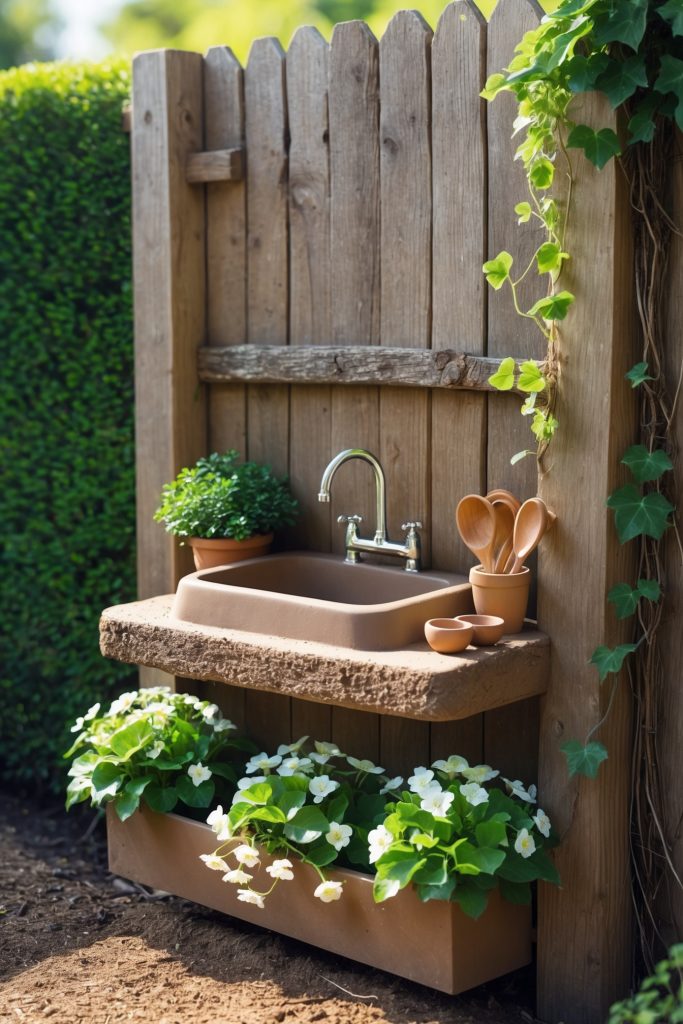
Recycled Sink & Counter Mud Kitchen
Using a real sink gives children a tactile, hands-on experience that closely mimics adult kitchen tasks. Install a stainless steel, ceramic, or even plastic sink basin into a wooden countertop to create a durable, washable workspace for scooping, stirring, and pouring.
Pair this with a mounted counter and basic cabinetry to provide functional storage and surface space. Kids love the satisfying clang of real metal and the feel of smooth basins — and it’s a great way to teach real-life kitchen skills through imaginative play.
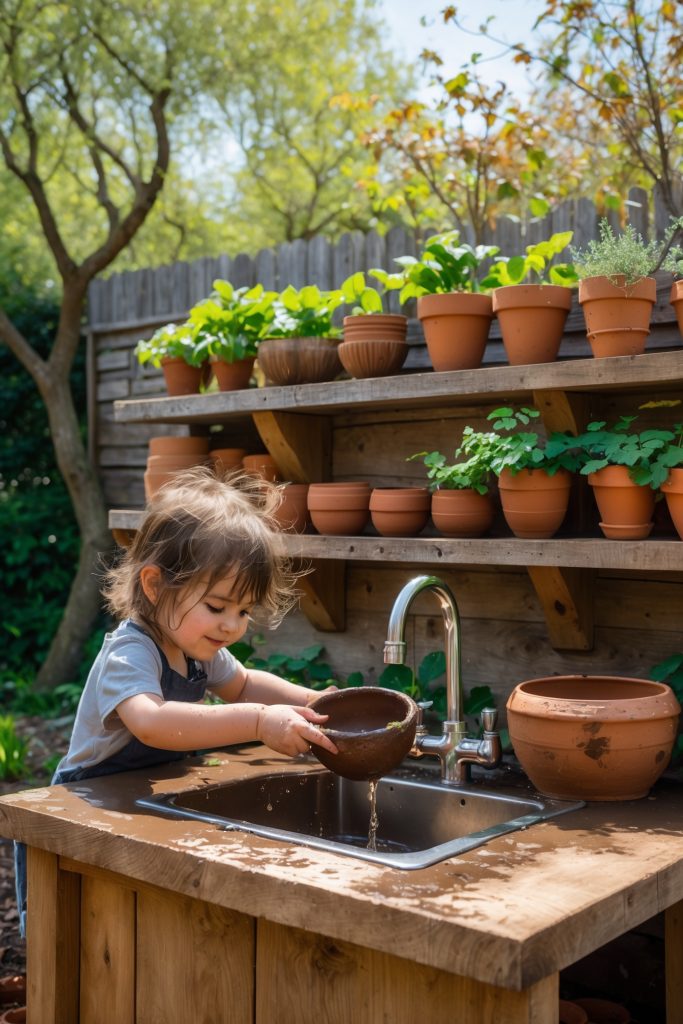
Sensory Table + Mud Kitchen Combo
Combining a mud kitchen with a sensory table extends the learning and play potential. Add bins for sand, water, pebbles, or even dried rice, and rotate them based on the season or your child’s interests. These tactile materials stimulate fine motor skills and cognitive development.
This combo setup allows children to move fluidly between mixing mud pies and digging for treasure. It’s ideal for younger children or neurodiverse learners who benefit from a wide range of sensory inputs during outdoor playtime.
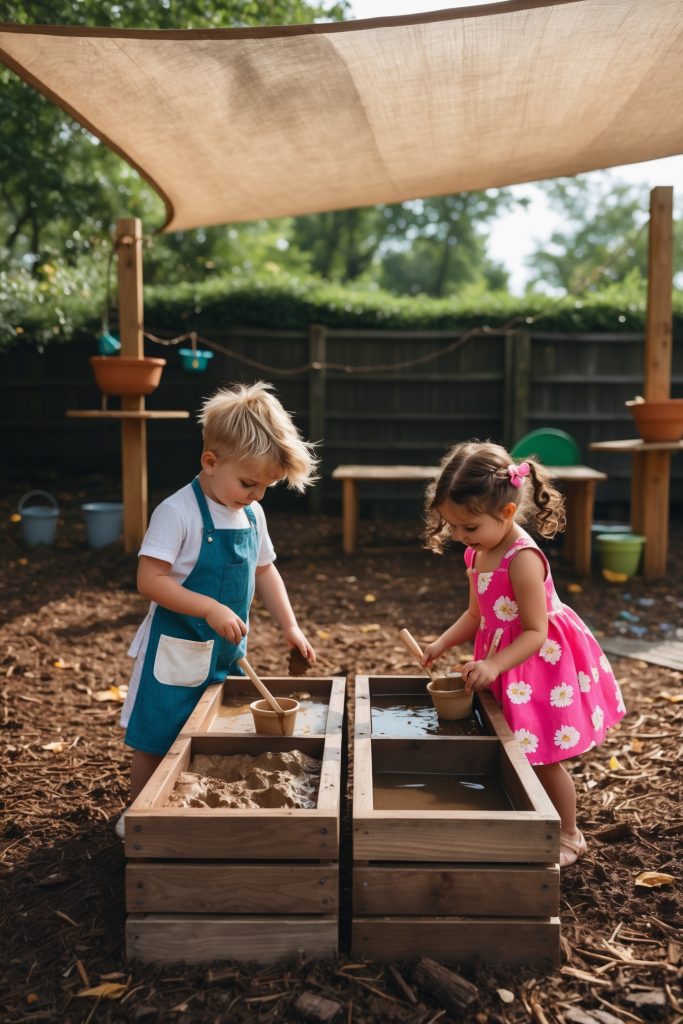
Themed Mud Kitchen (Café, Bakery, Restaurant)
Infuse your mud kitchen with personality by giving it a theme! Whether it’s “The Mud Pie Café,” “Dirt & Donuts,” or “Outdoor Bistro,” adding signs, role-play props, and costumes turns pretend play into a fully immersive experience. You can even create daily “specials” for your kids to prepare.
This is especially fun for older kids who love storytelling and dramatic play. Themes evolve easily — today it’s a coffee shop, tomorrow it’s a science lab. This adaptability keeps your mud kitchen fresh, exciting, and endlessly creative.
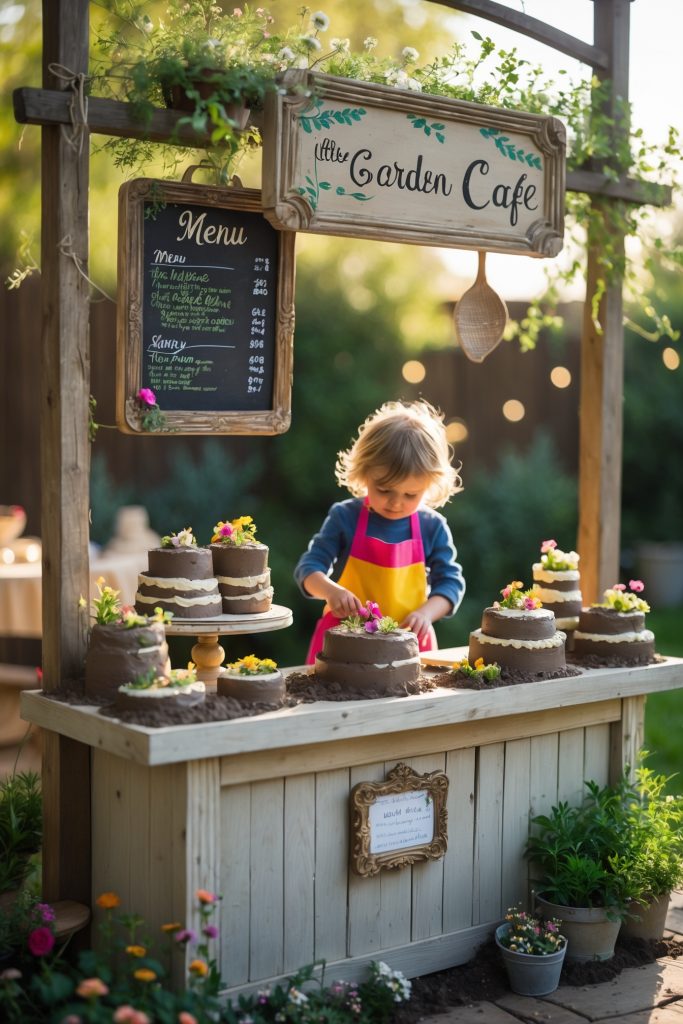
Outdoor Herb Garden and Kitchen Combo
Enhance your mud kitchen with a surrounding herb garden. Grow safe, edible herbs like mint, chives, basil, and rosemary, and encourage your kids to snip and use them in their pretend dishes. It teaches gardening basics and introduces sensory exploration through taste and smell.
This feature transforms playtime into a lesson in plant care and sustainability. Watching plants grow and using them in their “recipes” helps children appreciate the connection between nature and nourishment — even in their imaginary kitchen world.
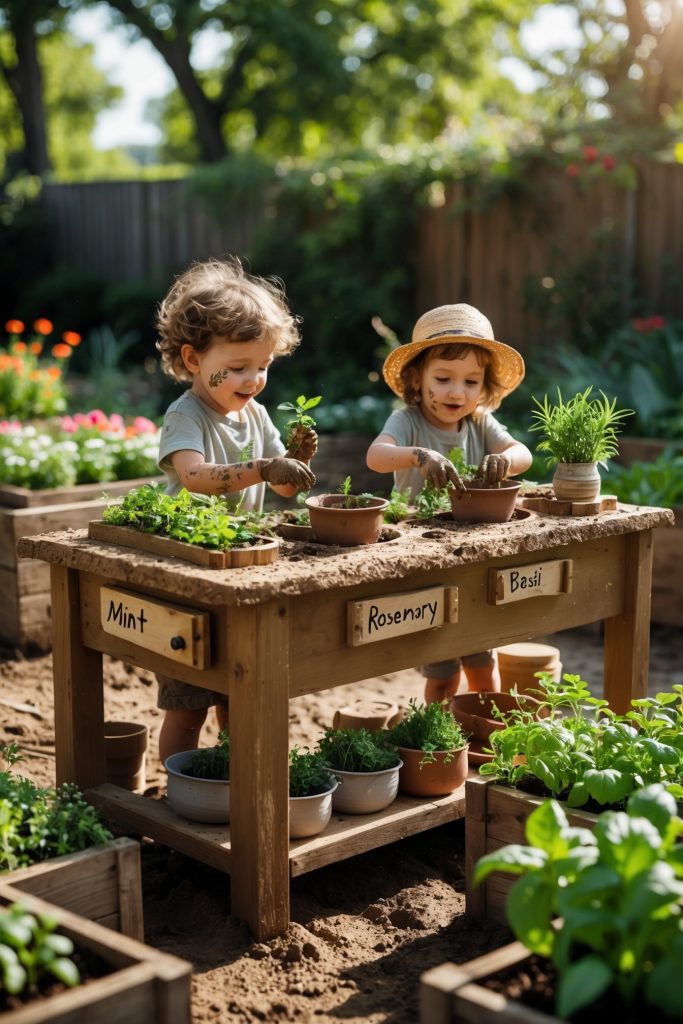
Multi-Level Countertop Kitchen
Design your mud kitchen with staggered countertop heights to accommodate children of different ages or abilities. This makes the kitchen more inclusive and allows multiple children to engage in different tasks simultaneously — from prepping “meals” to cleaning up.
The variation in height also supports gross motor development, encouraging stretching, reaching, and lifting. Add stools, storage underneath, or step platforms to expand functionality, giving kids more freedom to move and manipulate their environment.
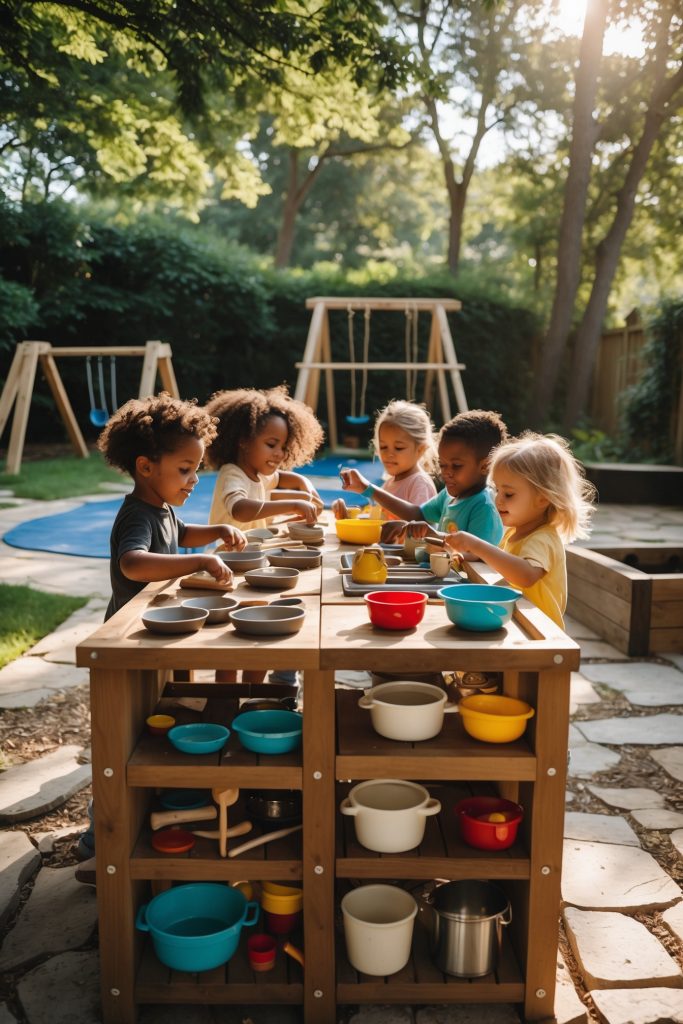
Covered Mud Kitchen with Roof or Canopy
Adding a roof or canopy extends mud kitchen play into any weather. Use a simple tarp, pergola, or repurposed patio umbrella to shield kids from sun or rain. It keeps the kitchen cleaner and provides a cozy nook feel that children naturally gravitate toward.
A covered kitchen can also double as an outdoor classroom, where children can gather, play, and even snack. String up fairy lights or hang seasonal decorations to make the space magical year-round — perfect for all-day, all-weather adventures.
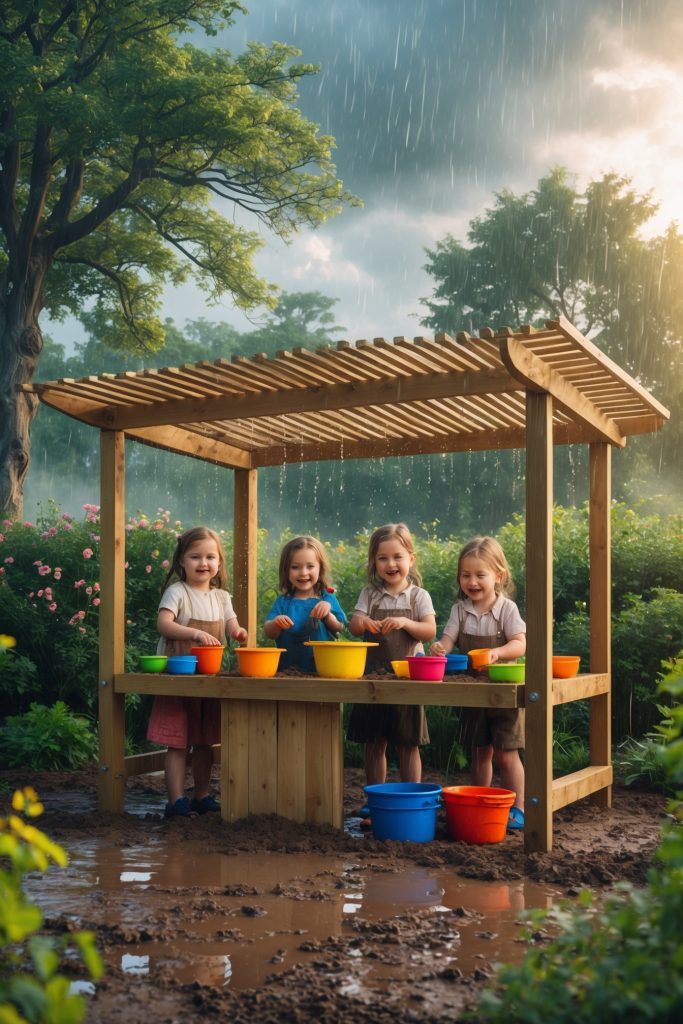
Portable Mud Kitchen on Wheels
Mobility is a major plus for families who want flexibility. Adding locking casters to the base allows you to wheel the mud kitchen to different areas of your yard or move it into storage when not in use. It’s also helpful for adjusting play based on sun, shade, or weather.
A portable mud kitchen can be compact or elaborate, but it gives you more control over when and where it’s used. Plus, kids love helping move their “restaurant” to a new location — it adds novelty and variety to outdoor play.
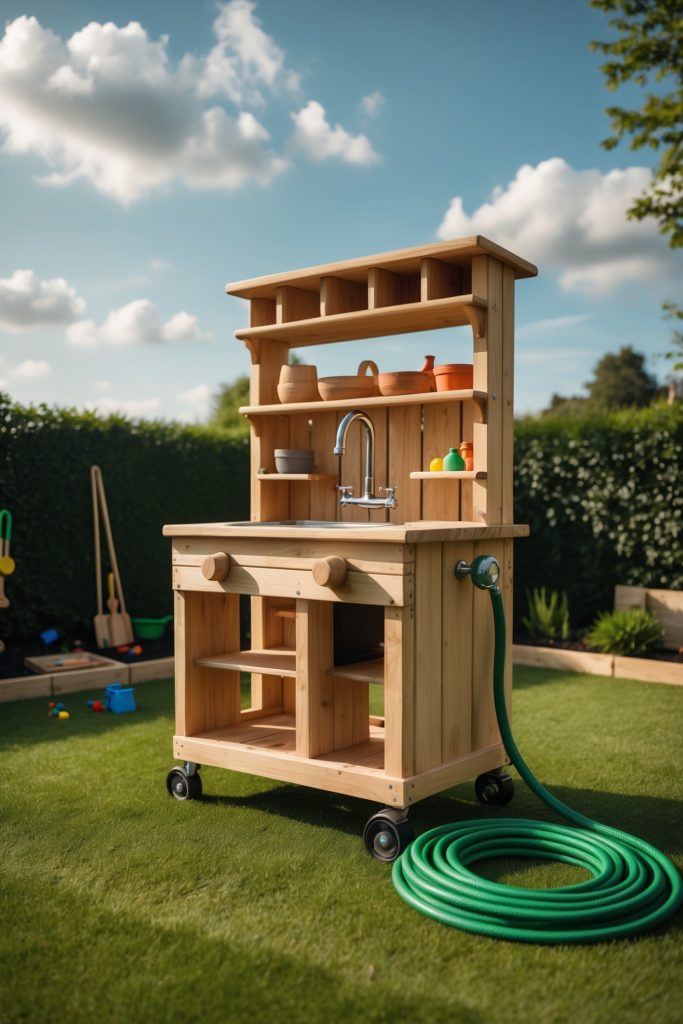
Eco-Friendly Mud Kitchen Using Natural Materials
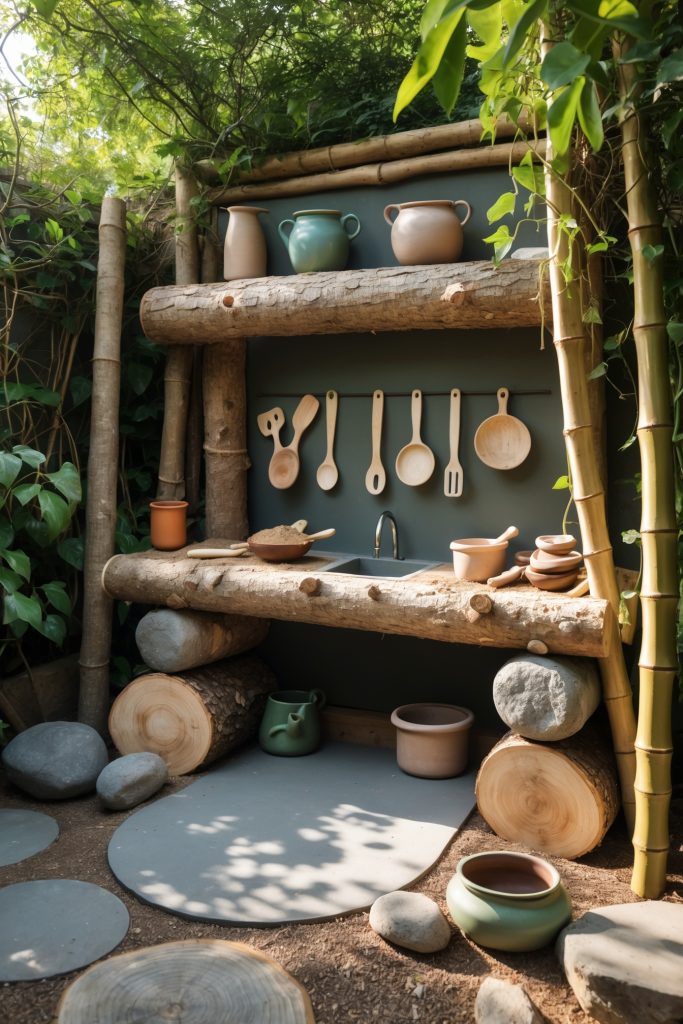
An eco-conscious mud kitchen made from logs, bamboo, reclaimed wood, and stone is both beautiful and sustainable. These materials blend seamlessly into natural settings and encourage an appreciation for the environment through play.
Use tree limbs for handles, stone slabs for counters, and driftwood for shelves. Not only does this reduce waste, but it also fosters a deeper connection to the outdoors, grounding your child’s play in the textures and rhythms of nature itself.
Final Thoughts
Mud kitchens aren’t just about getting messy — they’re interactive outdoor classrooms that nurture creativity, cooperation, and curiosity. Whether you go for a rustic DIY project, repurpose old furniture, or design a colorful themed kitchen, these 18 ideas will help you create a space where kids can dig in, explore, and play for hours.
Let your child’s imagination flourish with a mud kitchen that fits your backyard, your budget, and their boundless energy!