Small Apartment Decorating Ideas
Small Apartment Decorating Ideas
Decorating a small apartment is an opportunity to design with intention. Limited square footage encourages thoughtful choices, creative storage, and a focus on pieces that are both functional and beautiful. When space is planned carefully, even the smallest apartment can feel open, stylish, and comfortable. The goal is not to fit more into the space, but to make every element work smarter while maintaining a calm and cohesive atmosphere.
A well-decorated small apartment feels organized rather than crowded, layered rather than busy, and personal without becoming overwhelming. With the right approach, compact living can feel refined, efficient, and surprisingly spacious.




Creating a Light and Open Foundation
Light plays a critical role in how spacious an apartment feels. Natural light should always be maximized. Avoid heavy curtains that block windows, and instead choose sheer fabrics or simple blinds that allow sunlight to filter through. Keeping window areas visually clean helps the entire room feel brighter and more expansive.
Color also influences perception. Soft neutrals such as warm white, light beige, pale gray, or muted earth tones reflect light and create an airy backdrop. A consistent color palette throughout the apartment helps connect spaces visually, making the layout feel larger and more cohesive.
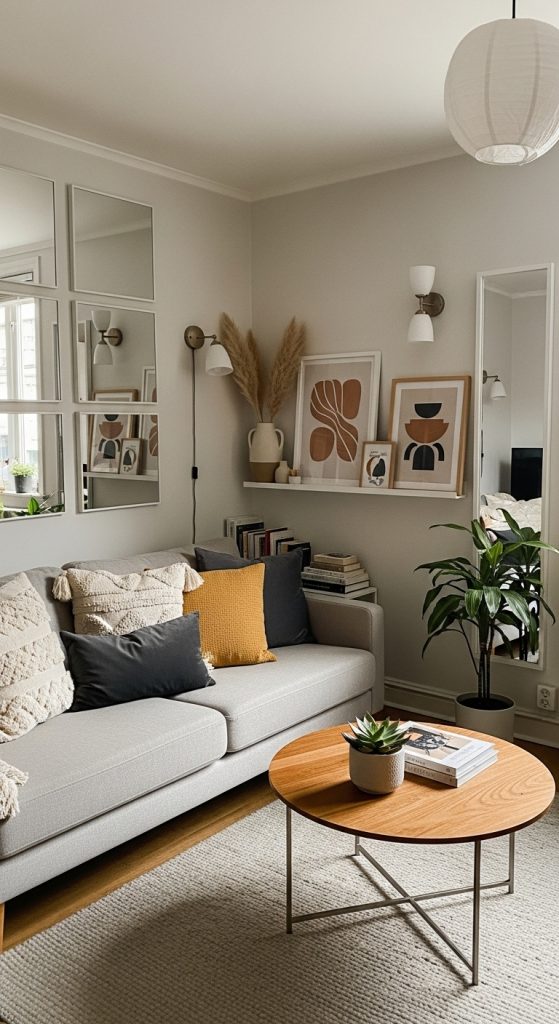
Mirrors are another powerful tool. A large mirror placed opposite a window reflects light and creates depth, instantly expanding the feel of a room.
Choosing Furniture with Purpose
In a small apartment, every piece of furniture should serve a purpose. Instead of filling the space with multiple small items, focus on a few well-proportioned pieces that offer both comfort and functionality.
Furniture with exposed legs creates visual openness by allowing more floor area to be seen. Slim-profile sofas, compact armchairs, and streamlined tables prevent the room from feeling heavy. Multi-functional furniture is especially valuable. A storage ottoman, a sofa bed, or a dining table that doubles as a workspace helps maximize utility without increasing clutter.
Scale is essential. Oversized furniture can overwhelm a small room, while pieces that are too tiny may feel temporary or insufficient. The key is balance and proportion.
Defining Zones in Open Layouts
Many small apartments feature open-plan living areas where the living room, dining space, and kitchen share one area. Defining zones helps create structure and improves functionality.
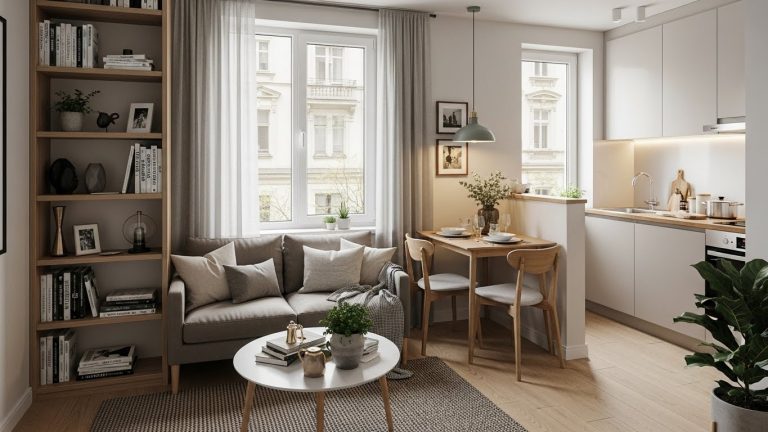
Area rugs are one of the simplest ways to anchor a space. A rug under the sofa establishes the living area, while a smaller rug or table setup can define a dining corner. Lighting can also help separate zones. A floor lamp near seating and a pendant light over a dining table visually organize the layout without adding walls.
Furniture placement should encourage flow. Leaving clear pathways and avoiding crowded arrangements helps the apartment feel more spacious and comfortable.
Vertical Storage for Maximum Efficiency
When floor space is limited, vertical storage becomes essential. Tall shelving units, wall-mounted cabinets, and floating shelves keep belongings organized without occupying valuable square footage.
Open shelving works well for displaying books, plants, or decorative pieces, but it should be styled thoughtfully to avoid visual clutter. Mixing closed storage with open display areas helps maintain a clean and balanced appearance.
Wall hooks, peg rails, and mounted organizers are particularly useful in entryways, kitchens, and bedrooms, allowing everyday items to stay accessible while keeping surfaces clear.
Smart Bedroom Solutions
In small apartments, the bedroom often requires creative planning. Beds with built-in drawers or storage underneath provide valuable space for clothing, linens, or seasonal items. Platform beds or minimalist frames help maintain a clean visual profile.
Wall-mounted nightstands or narrow side tables save space while still offering convenience. Soft lighting, layered bedding, and a limited color palette create a restful environment without overcrowding the room.
If the bedroom shares space with other functions, such as a home office, a compact desk and a simple chair placed near natural light can create a productive corner without overwhelming the layout.
Small Kitchen Styling and Organization
Even the most compact kitchens can feel efficient and inviting with thoughtful organization. Keeping countertops as clear as possible immediately makes the space feel larger. Everyday items can be stored in cabinets, baskets, or wall-mounted racks.
Open shelving can add character when styled with uniform containers or neatly arranged dishes. Magnetic knife strips, hanging utensil rails, and vertical spice organizers help free up drawer and counter space.
Light colors, reflective surfaces, and under-cabinet lighting enhance brightness and make the kitchen feel more open.
Using Color and Texture Thoughtfully
While a neutral base helps maintain openness, adding texture prevents the apartment from feeling flat. Natural materials such as wood, linen, woven baskets, and ceramics introduce warmth and depth.
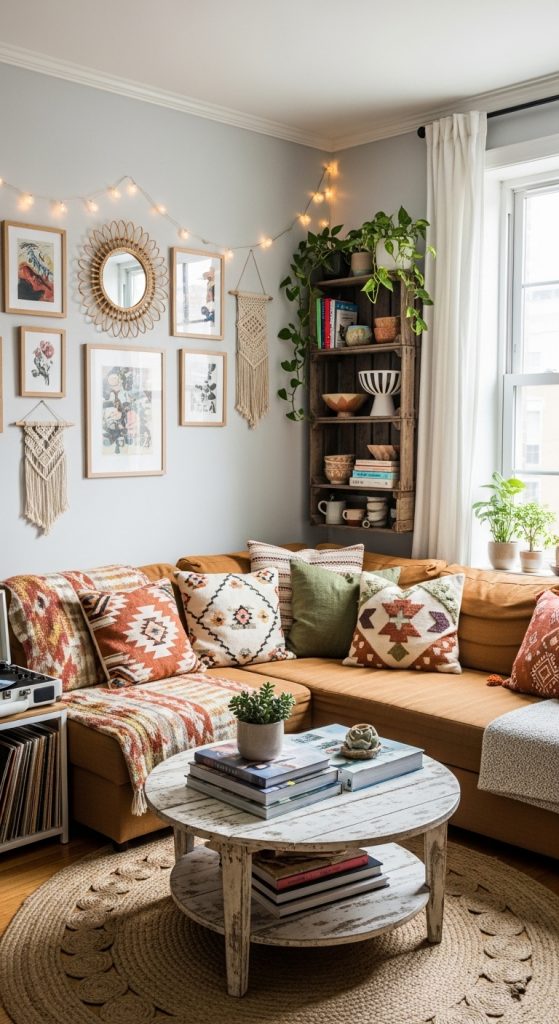
Accent colors can be incorporated through cushions, throws, artwork, or decorative objects. Keeping accents within a coordinated palette maintains harmony across the apartment.
A monochromatic approach — using different shades of the same color — works particularly well in small spaces, creating visual continuity while still adding interest.
Decorating Walls Without Overcrowding
Wall décor should enhance the space without making it feel busy. Instead of many small frames scattered around, a single large artwork or a carefully arranged gallery wall creates a stronger visual impact.
Floating shelves can display personal items, plants, or books while keeping surfaces uncluttered. Wall-mounted lighting or mirrors also add function without taking up floor space.
The key is editing carefully. Leaving some wall space empty allows the room to breathe.
Bringing Life with Plants
Plants add freshness and softness to small apartments. Compact varieties such as snake plants, pothos, or small ficus trees work well without requiring much space.
Hanging planters, wall-mounted pots, or narrow plant stands allow greenery to be incorporated vertically. Even a single well-placed plant near a window or beside a sofa can make the apartment feel more vibrant and welcoming.
Creating a Cohesive Look Throughout
One of the most effective ways to make a small apartment feel larger is through consistency. Repeating materials, finishes, or colors across rooms creates visual flow. Similar metal finishes, coordinated textiles, and a unified color palette prevent the space from feeling fragmented.
Decluttering regularly is equally important. Small spaces function best when surfaces remain clean and storage is organized. A minimalist approach does not mean empty or sterile — it means keeping only what is useful or meaningful.
Making Small Spaces Feel Personal and Comfortable
Ultimately, a small apartment should reflect your lifestyle and personality. Meaningful artwork, favorite books, comfortable textiles, and thoughtful lighting create warmth and character.
Layered lighting, including ambient, task, and accent sources, makes the apartment feel inviting at any time of day. Soft textures, warm tones, and natural elements contribute to a sense of comfort that goes beyond square footage.
Small apartment decorating is about quality over quantity, intention over excess. When each piece is chosen carefully and the layout supports daily living, compact spaces become efficient, stylish, and deeply livable. With thoughtful design, even the smallest apartment can feel open, organized, and beautifully complete.