Olive Green Bedroom Ideas for Calm Livable Spaces

Olive green has quietly held its place in interiors for centuries, long before it became a color swatch or a marketing trend. Rooted in nature, military history, and classical architecture, it carries a sense of stability that few colors can offer in a bedroom setting.
In lived-in homes, olive green works not because it is fashionable, but because it adapts. It softens light, grounds furnishings, and supports rest without feeling dull or heavy when used with intention.
Why Olive Green Belongs in the Bedroom
Bedrooms benefit from colors that reduce visual noise, and olive green excels at this. Unlike bright greens that stimulate energy, olive contains brown and gray undertones that calm the nervous system. This makes it especially effective for sleep-focused spaces.
From a design standpoint, olive green acts as a bridge color. It connects warm and cool elements, allowing flexibility with wood tones, metals, and textiles. This adaptability is why it appears in historic homes as often as in modern interiors.


Choosing the Right Shade of Olive Green
Not all olive greens perform the same way in a bedroom. Some lean yellow and feel earthy, while others lean gray and appear more subdued. The choice should depend on light exposure and room size.
South-facing bedrooms can handle deeper, cooler olives without feeling gloomy. North-facing rooms benefit from warmer olives with subtle yellow undertones to counteract cool daylight.
Paint samples should always be viewed on multiple walls. Olive green changes dramatically throughout the day, and a shade that looks perfect at noon may feel too flat at night.
Avoid choosing olive solely from a color strip. Context matters more than the hue itself, especially in spaces meant for rest.

Olive Green Walls as a Foundation
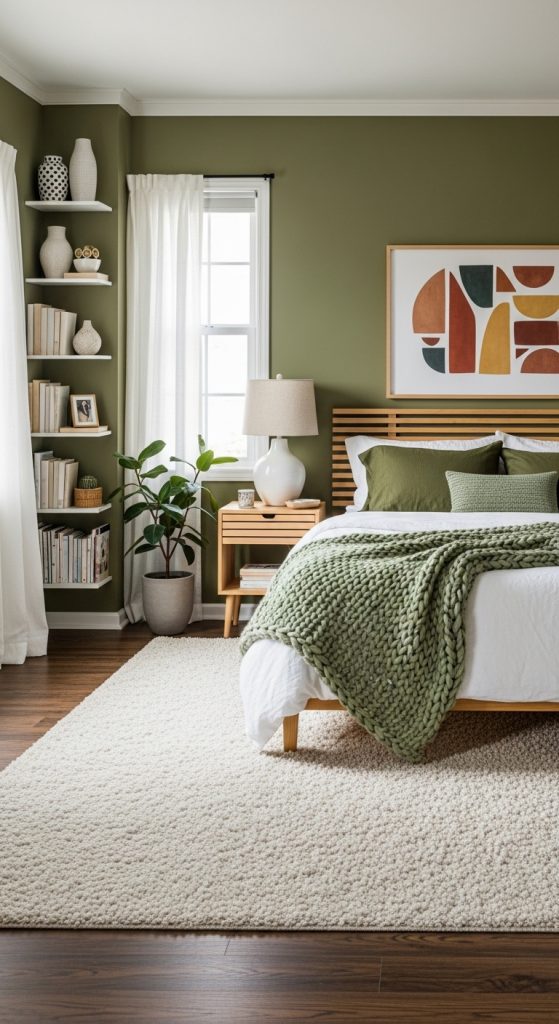
Using olive green on walls creates an enveloping effect that supports relaxation. It works well as a full-room color or as a feature wall behind the bed, depending on ceiling height and room proportions.
In smaller bedrooms, a matte or eggshell finish prevents glare and helps walls recede visually. For larger rooms, a soft satin finish can add subtle richness without appearing shiny.
Wall color should be balanced with lighter elements at eye level and above. White or cream ceilings, light curtains, and pale bedding prevent the room from feeling enclosed.
A frequent error is pairing olive walls with dark furniture throughout. Contrast is essential to keep the space breathable.
Bedding Choices That Complement Olive Green
Bedding is where olive green can either shine or overwhelm. Neutral bedding in ivory, warm white, or soft beige allows olive walls to remain the focus while maintaining visual calm.
Layering textures matters more than introducing additional colors. Linen, washed cotton, and lightweight wool add depth without visual clutter.
For those who want color variation, muted tones like clay, rust, or soft charcoal work better than bright accents. They echo olive’s natural roots without competing.
Avoid highly patterned bedding with olive walls. Simplicity reinforces the restful quality of the space.
Furniture Finishes That Work Best
Olive green pairs naturally with wood, but not all wood tones behave the same way. Mid-tone oak, walnut, and aged pine create warmth without heaviness.
Painted furniture in off-white or greige offers contrast while keeping the palette restrained. Black furniture can work, but only in limited quantities and balanced with lighter textiles.
Metal finishes should lean warm. Aged brass, bronze, and soft gold enhance olive’s richness, while bright chrome can feel disconnected.
Oversized furniture is a common pitfall. Olive green already adds visual weight, so furniture should feel proportional and slightly lighter in form.

Lighting That Brings Olive Green to Life
Lighting determines how olive green is perceived. Poor lighting can make it appear flat or muddy, while thoughtful lighting reveals its complexity.
Layered lighting is essential. A combination of ambient ceiling light, bedside lamps, and accent lighting prevents shadows from dominating the room.
Warm light temperatures between 2700K and 3000K are ideal. Cool lighting drains olive of its warmth and makes the space feel sterile.
Avoid relying on a single overhead fixture. Bedrooms benefit from softer, indirect light sources that support winding down.

Olive Green in Small Bedrooms
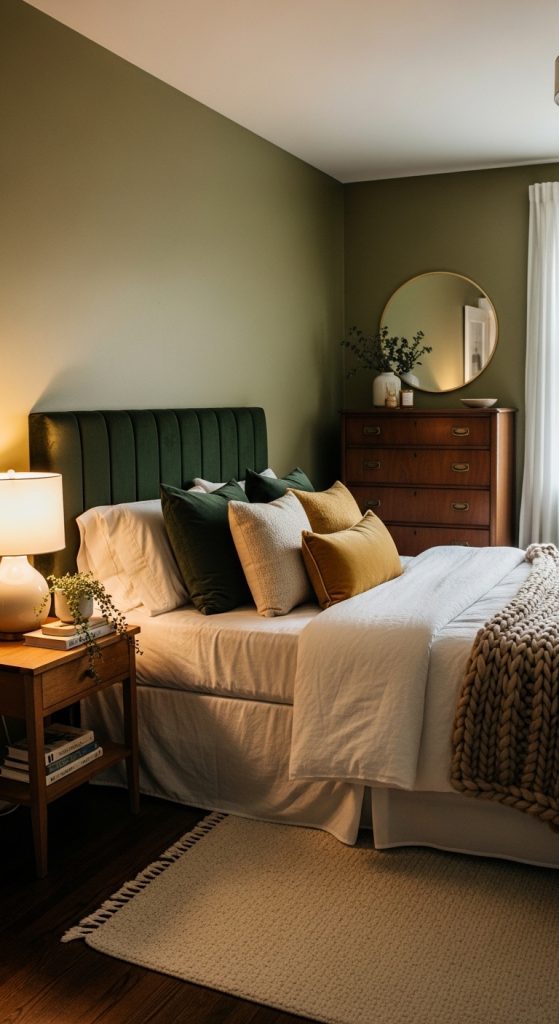
In compact bedrooms, olive green can be used strategically rather than extensively. A single olive wall or upholstered headboard introduces the color without overwhelming the space.
Vertical elements, such as tall curtains or narrow wall paneling, help maintain a sense of height. Keeping floors light further balances the depth of olive.
Mirrors become especially useful in small rooms. They reflect light and prevent olive from absorbing too much brightness.
The biggest mistake in small bedrooms is over-layering. Restraint is key when working with deeper tones.

Budget-Friendly Ways to Introduce Olive Green
Olive green does not require a full renovation to be effective. Textiles, paint on a single wall, or even artwork can introduce the color gradually.
Curtains, throw pillows, and bed runners are renter-friendly options that make a noticeable impact. They can be removed or replaced easily.
Secondhand furniture painted in olive green can add character without cost. The color hides wear better than lighter paints.
Avoid buying multiple small olive accents. One or two intentional elements feel more cohesive than scattered touches.
Olive Green for Renters and Temporary Homes
Renters can still benefit from olive green without permanent changes. Peel-and-stick wallpaper in muted olive tones offers flexibility and depth.
Bedding and removable slipcovers allow the color to anchor the room while remaining reversible. Even a large olive area rug can shift the room’s mood.
Lighting upgrades are often overlooked in rentals. Swapping bulbs and adding floor lamps dramatically improves how olive elements are perceived.
The key is commitment within limits. Even temporary solutions should feel deliberate rather than hesitant.
Pairing Olive Green with Other Colors
Olive green thrives in restrained palettes. Neutrals such as cream, taupe, and soft gray provide balance and longevity.
Earth tones like terracotta and camel add warmth when used sparingly. These combinations feel grounded rather than decorative.
Blues can work if they are muted and slightly dusty. Bright blues tend to clash with olive’s subdued nature.
Avoid pairing olive with stark white in excess. The contrast can feel abrupt instead of soothing.
Textiles and Materials That Enhance Olive Green
Natural materials reinforce olive green’s organic quality. Linen, wool, rattan, and unfinished wood feel at home alongside it.
Smooth, high-gloss surfaces should be limited. Too much shine competes with olive’s softness and disrupts the bedroom’s calm.
Layering different textures within the same color family adds richness without visual noise. This approach feels timeless rather than styled.
Synthetic materials often cheapen the effect. When possible, prioritize fewer, better-quality pieces.
Common Mistakes and How to Avoid Them
One of the most frequent mistakes is using olive green without enough light contrast. Every olive element should be balanced with something lighter nearby.
Another issue is over-accessorizing. Olive green works best when allowed to breathe, supported by negative space.
Ignoring undertones leads to mismatched finishes. Warm olives need warm companions, while cooler olives need restraint.
Finally, copying showroom designs without adapting them to real life often results in impractical spaces. Bedrooms should serve daily routines first.
Practical Comparison of Olive Green Approaches
| Application Area | Best Use Case | Key Consideration |
|---|---|---|
| Painted walls | Long-term homeowners | Choose undertone carefully |
| Upholstered headboard | Small or rental bedrooms | Balance with light bedding |
| Textiles only | Budget or temporary setups | Limit to one or two items |
| Furniture accents | Character-driven spaces | Keep forms simple |
Creating a Bedroom That Lasts
Olive green succeeds because it does not demand attention. It supports rest, adapts to change, and matures gracefully with the home.
When used with intention, it allows homeowners to invest slowly, change pieces over time, and still maintain a cohesive space.
The most successful olive green bedrooms feel personal rather than styled. They reflect daily life, evolving needs, and a respect for comfort.
In the end, olive green is not about making a statement. It is about creating a bedroom that continues to feel right, year after year.