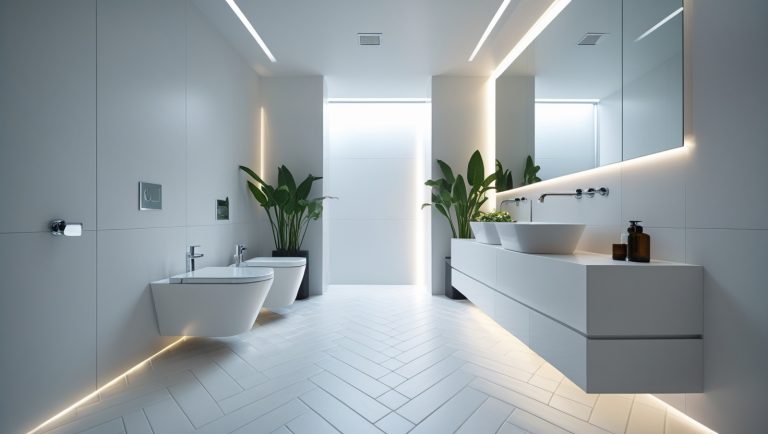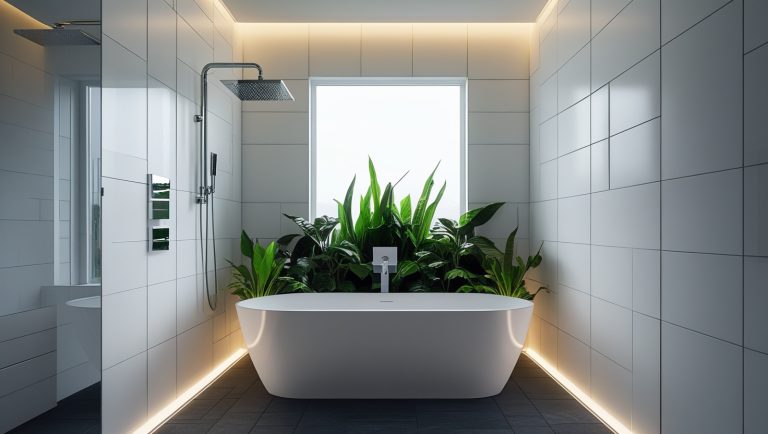
Grey Bathroom Tile Ideas For Beauty and Daily Living

Grey bathroom tiles have earned their place in lasting home design not because they follow trends, but because they solve real problems homeowners face every day. Across decades of residential renovations, grey has proven itself as a stabilizing color that adapts to changing tastes, evolving fixtures, and different stages of life. It sits comfortably between light and dark, warm and cool, modern and traditional, offering flexibility that few other finishes can match.
In practical terms, grey tiles perform exceptionally well in bathrooms where moisture, wear, and lighting challenges collide. They hide water spots better than white, feel calmer than black, and age more gracefully than highly pigmented colors. Historically, variations of grey stone and clay tiles have appeared in European bathhouses, early twentieth-century homes, and contemporary architecture alike, reinforcing their timeless appeal rather than tying them to a specific era.
Understanding Grey as a Bathroom Foundation


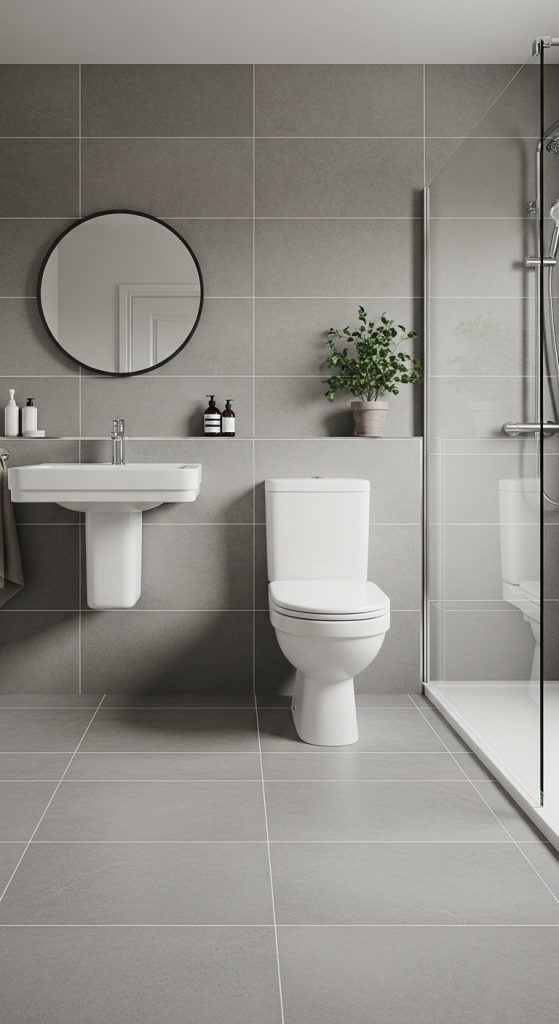
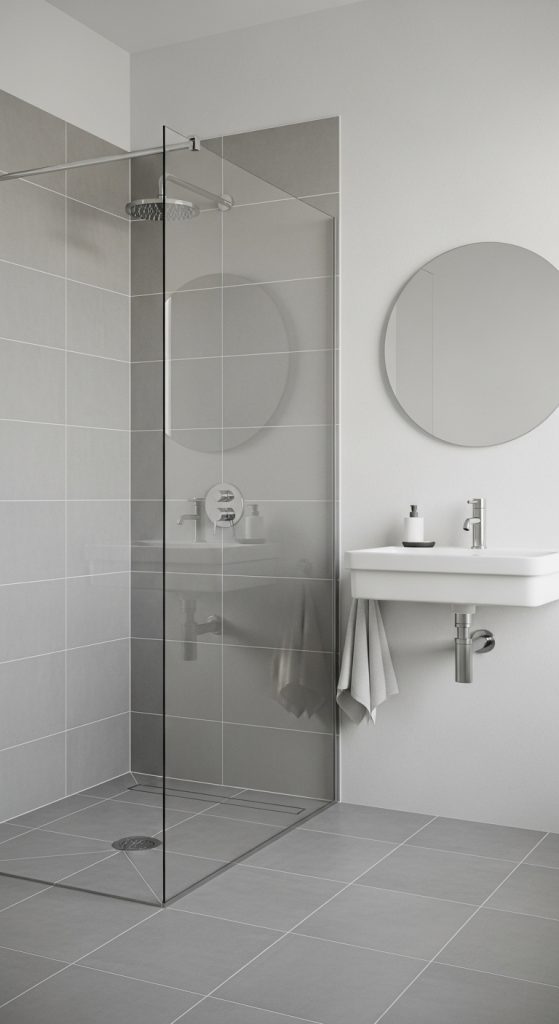
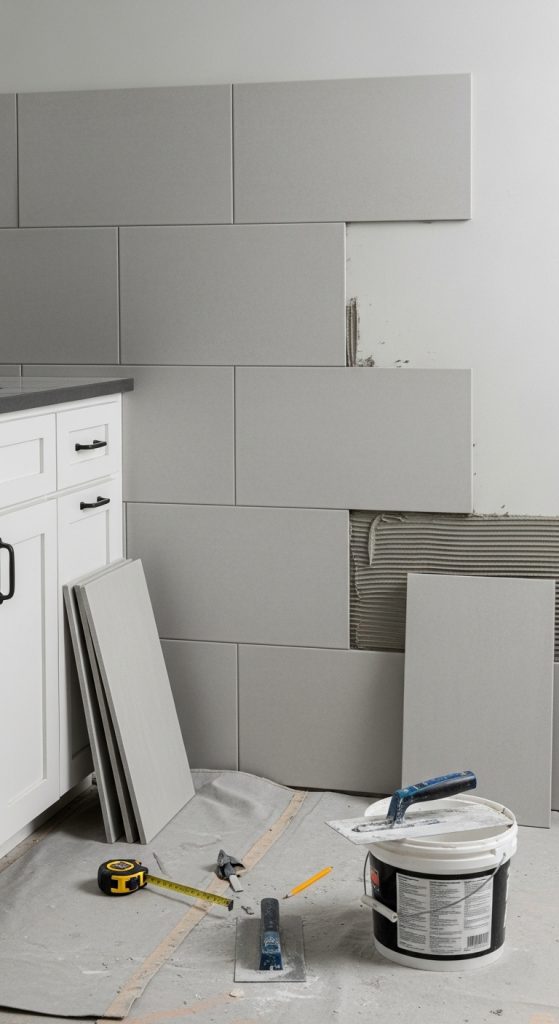
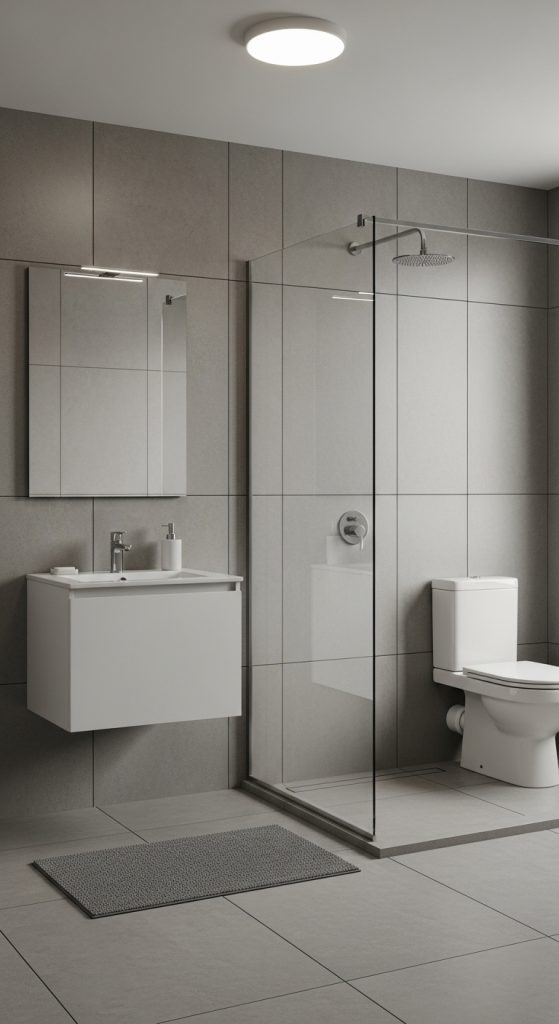
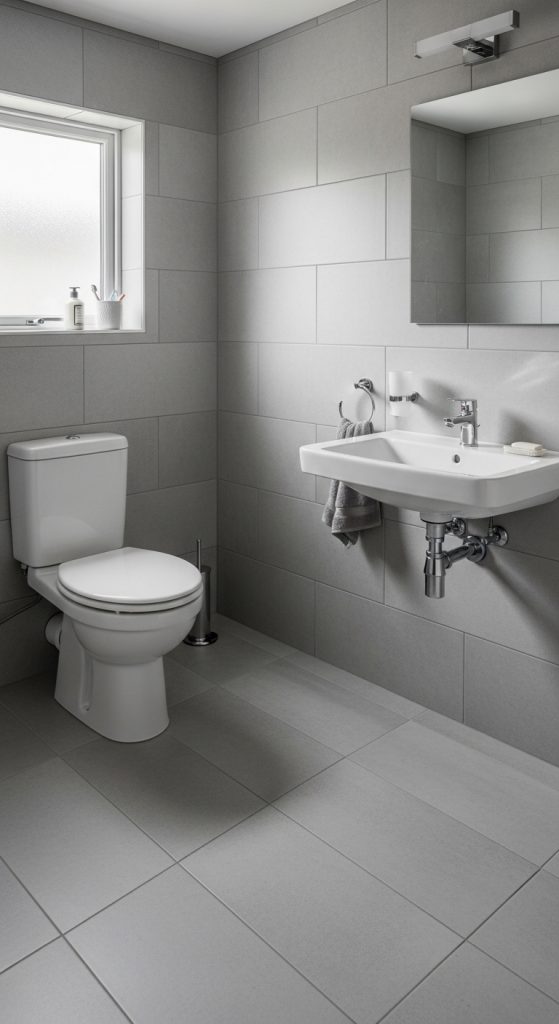
Grey works in bathrooms because it behaves like a neutral with depth rather than emptiness. Unlike beige, which can read dated, or stark white, which can feel clinical, grey absorbs and reflects light in a controlled way. This makes it especially forgiving in rooms where natural light is limited or inconsistent.
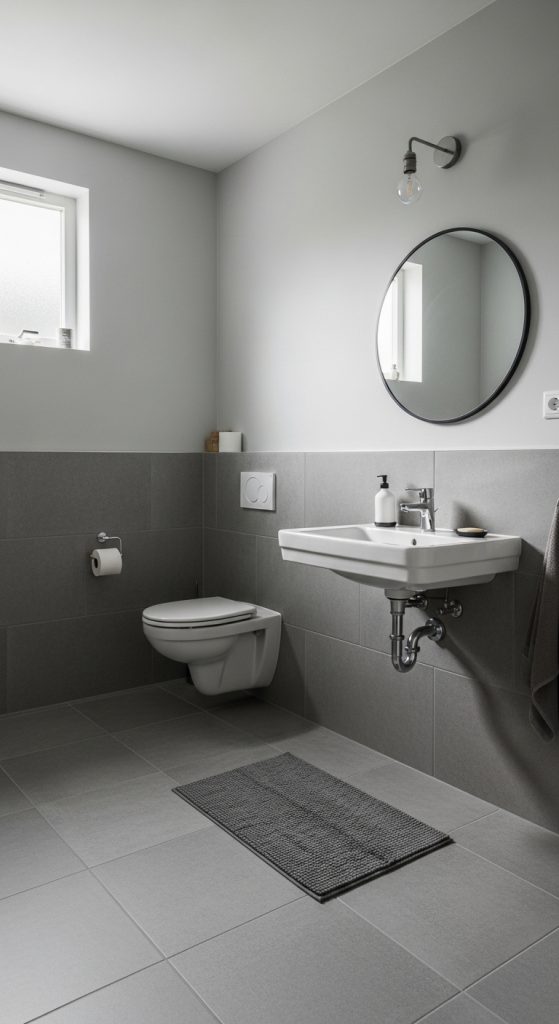
From a layout perspective, grey tiles help visually anchor the room. Floors in mid-tone grey feel stable underfoot, while walls in lighter greys create an enveloping effect without closing the space in. Darker greys, when used sparingly, can define zones such as showers or vanity walls without overwhelming the room.
Homeowners often underestimate how much lighting influences grey. A cool grey tile under warm lighting can appear muddy, while a warm grey under cool LED lighting can look flat. Testing samples in your actual bathroom lighting conditions is not optional; it is essential for avoiding regret.
Common mistakes include choosing grey tiles based solely on showroom appearance, ignoring undertones, and mixing too many shades without a clear hierarchy. Successful grey bathrooms typically rely on one dominant shade supported by subtle variations in texture rather than color.
Warm Grey Versus Cool Grey Choices
The undertone of grey tile determines whether a bathroom feels inviting or stark. Warm greys contain hints of beige, taupe, or brown, while cool greys lean toward blue or green undertones. Understanding this distinction helps prevent clashing with fixtures and finishes.
Warm grey tiles work particularly well in bathrooms with brass, brushed nickel, or wood accents. They soften the space and are forgiving in homes with warm wall colors or traditional elements. Cool grey tiles pair better with chrome fixtures, crisp white paint, and modern silhouettes.
Lighting plays a decisive role here. North-facing bathrooms or rooms with minimal sunlight often benefit from warmer greys to prevent a cold, shadowy feel. South-facing or well-lit bathrooms can handle cooler greys without feeling unwelcoming.
A frequent homeowner mistake is mixing warm grey floor tiles with cool grey wall tiles, resulting in visual tension rather than contrast. If mixing undertones, keep one surface dominant and the other subtle to maintain cohesion.
Tile Finishes and Their Real-World Performance
Finish affects both aesthetics and maintenance more than most homeowners expect. Glossy grey tiles reflect light, making small bathrooms feel larger, but they also show water spots and require frequent cleaning. Matte finishes hide imperfections better but absorb light, which can make dim spaces feel heavier.
Textured finishes, such as stone-look or lightly patterned porcelain, add visual interest without relying on color changes. These finishes also provide better slip resistance, an important safety consideration for family bathrooms and aging-in-place designs.
Polished stone-look tiles should be used carefully. While they offer elegance, they often require sealing and ongoing maintenance. Porcelain alternatives provide similar visuals with far less upkeep, making them a practical choice for most households.
Below is a simple comparison to guide finish selection.
| Tile Finish | Best For | Maintenance Level | Slip Resistance |
|---|---|---|---|
| Glossy | Small, bright bathrooms | High | Low |
| Matte | Everyday family use | Low | Medium |
| Textured | Showers, floors | Low | High |
| Polished stone | Luxury spaces | High | Low |
Choosing a finish should always reflect how the bathroom is actually used, not just how it looks in photos.
Grey Tile Layouts That Influence Space Perception
Tile layout directly affects how large or small a bathroom feels. Large-format grey tiles reduce grout lines, creating a cleaner visual field that makes compact bathrooms feel more expansive. They also simplify cleaning and maintenance.
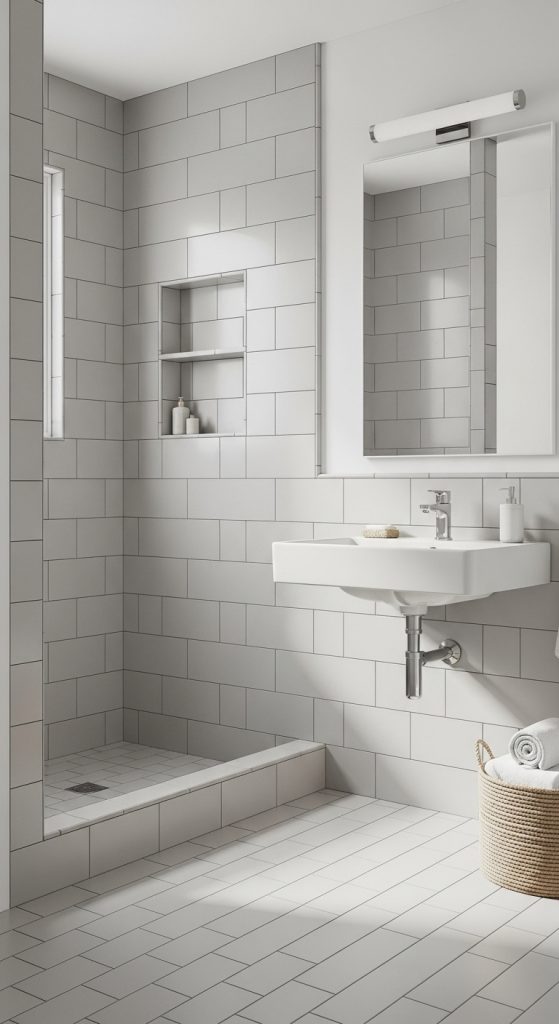
In contrast, smaller tiles such as mosaics or subway tiles introduce rhythm and texture. When used thoughtfully, they can add character without overwhelming the space. Vertical stacking can make ceilings feel higher, while horizontal layouts can widen narrow rooms.
A common error is using overly busy patterns in small bathrooms. Grey already provides subtle variation, so layouts should enhance rather than compete with it. Simpler patterns often age better and support future updates.
For homeowners on a budget, strategic layout choices can elevate inexpensive tiles. Aligning grout lines carefully and maintaining consistent spacing often matters more than the tile price itself.
Floors That Support Comfort and Durability
Bathroom floors endure constant exposure to moisture, temperature changes, and foot traffic. Grey floor tiles excel here because they conceal wear better than lighter shades while remaining visually neutral.
Mid-tone greys are particularly forgiving, hiding minor dirt and water marks without appearing dark. For households with children or pets, textured porcelain tiles provide grip and resilience without sacrificing style.
Radiant floor heating pairs well with grey tiles, as the color visually balances the warmth underfoot. When installing heated floors, choose tiles with consistent thickness to ensure even heat distribution.
Avoid high-gloss finishes on floors unless slip resistance is specifically rated for wet areas. Safety should always outweigh visual preference in this context.
Wall Applications That Feel Intentional
Grey wall tiles can be used to define zones within the bathroom. Full-height tiling in showers protects walls while creating a cohesive enclosure. Half-height tiling with painted walls above can reduce costs while maintaining durability where it matters most.
Using the same grey tile on both floors and walls creates a seamless, spa-like effect, especially in smaller bathrooms. This approach works best with subtle textures to avoid monotony.
Accent walls in darker grey can anchor freestanding tubs or vanities, but restraint is key. One feature wall is usually enough to create focus without overwhelming the room.
A frequent mistake is mismatching wall and floor tile scales. Large floor tiles paired with tiny wall tiles can feel disjointed unless balanced carefully through grout color and layout.
Grout Choices That Change Everything
Grout is often treated as an afterthought, yet it dramatically influences the final look of grey tiles. Matching grout creates a continuous surface that feels calm and modern. Contrasting grout highlights tile shape and pattern, adding visual interest.
Light grout with grey tiles brightens the room but requires more maintenance. Dark grout hides stains but can make spaces feel heavier if overused. Mid-tone grey grout often offers the best balance.
Epoxy grout is worth considering for bathrooms due to its stain resistance and durability, especially in showers. While more expensive upfront, it reduces long-term maintenance concerns.
Inconsistent grout spacing and color variation are common installation mistakes. Hiring an experienced installer or carefully supervising the process protects the investment in your tiles.
Grey Tiles in Small and Shared Bathrooms
Small bathrooms benefit from grey tiles that unify surfaces rather than divide them. Using the same tile across multiple planes minimizes visual breaks and enhances perceived space.
Shared or family bathrooms require durability and ease of cleaning. Matte or lightly textured grey porcelain tiles perform well under frequent use without constant upkeep.
Wall-mounted vanities paired with grey floor tiles expose more floor area, increasing the sense of openness. Mirrors and layered lighting further prevent grey from feeling heavy.
Avoid mixing too many materials in tight spaces. Grey works best when allowed to act as a calm backdrop rather than one element among many competing finishes.
Budget-Conscious Grey Tile Strategies
Grey tiles are available at nearly every price point. Affordable ceramic or porcelain options can look high-end when paired with thoughtful layout and quality fixtures.
Focusing tile use in high-impact areas, such as showers or behind vanities, while using paint elsewhere helps control costs. Consistent color selection maintains cohesion even with reduced tile coverage.
Buying extra tiles from the same batch ensures future repairs match seamlessly. This small upfront expense prevents visible inconsistencies later.
DIY installations can reduce costs, but bathrooms demand precision. Mistakes in waterproofing or layout often cost more to fix than professional installation would have initially.
Longevity, Maintenance, and Future Flexibility
Grey tiles age well because they adapt to changing styles. Swapping fixtures, paint colors, or accessories can refresh the bathroom without replacing tiles.
Regular cleaning with non-abrasive products preserves surface finishes. Avoid harsh chemicals that can dull matte tiles or damage grout over time.
When planning for resale, grey bathrooms appeal to a broad range of buyers. Their neutrality allows prospective owners to imagine personal touches without major renovations.
Ultimately, grey bathroom tile choices succeed when they are guided by how the space is used daily rather than how it appears in fleeting inspiration images.
Bringing It All Together Thoughtfully
Grey bathroom tiles are not a shortcut to good design; they are a framework that rewards careful decision-making. When undertones, finishes, layouts, and lighting are aligned, grey becomes quietly powerful rather than visually passive.
A well-designed grey bathroom supports morning routines, withstands years of use, and remains adaptable as tastes evolve. It feels composed rather than decorated, intentional rather than assembled.
By approaching grey tile selection with patience and practical understanding, homeowners create bathrooms that remain comfortable, functional, and visually relevant long after trends shift.