Inspired Kitchen Decor Ideas to Elevate Your Cooking Space
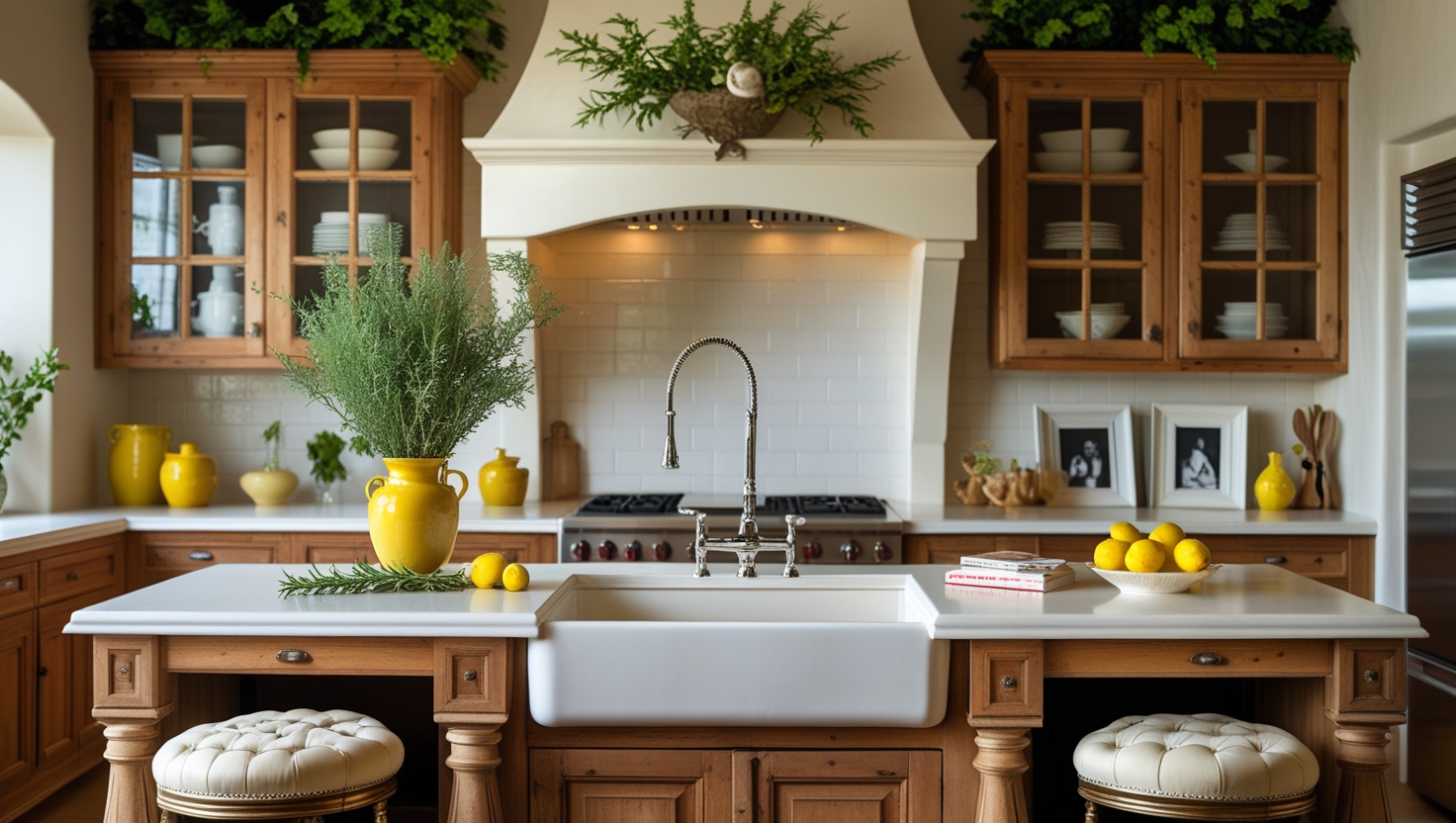
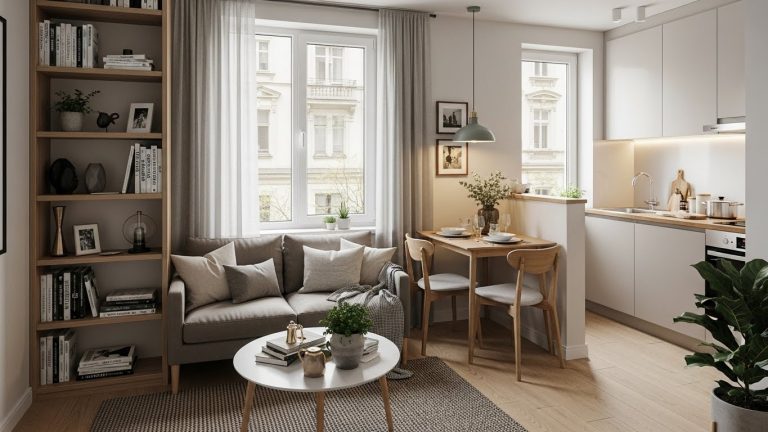
The kitchen is more than just a place for meal prep—it’s the soul of your home. It hosts coffee-fueled mornings, late-night chats, impromptu family meetings, and celebrations big and small. That’s why decorating your kitchen with thought and style is just as important as designing your living room or bedroom. The right decor can bring warmth, character, and personality to any space, no matter its size or layout.
Explore these unique and richly detailed kitchen decor ideas designed to spark creativity and help you craft a kitchen that feels deeply personal and inspiring.
Open Shelving with Curated Displays

Open shelving has become a hallmark of thoughtful kitchen decor, offering a way to blend function with beauty. By replacing traditional upper cabinets with floating shelves, you open up your space visually while giving yourself the chance to showcase items that reflect your personal style. Whether it’s stacks of ceramic dishware, textured glass jars, or a mix of cookbooks and trailing plants, this setup brings an effortless charm to the room.
The key to making open shelving work lies in curation. This isn’t the place for every coffee mug you own—think of it like a gallery. Choose pieces in a cohesive color palette, vary the height and texture, and don’t overcrowd the shelves. Wood brackets or industrial metal supports add even more character, and materials like oak, walnut, or ash can soften a modern kitchen instantly.
While it may take a bit more upkeep to keep everything dust-free and visually tidy, open shelves are ideal for people who enjoy styling and re-styling their space. It’s a beautiful solution for showcasing personality in a space that often leans heavily on function.
Statement Lighting Above the Island

Lighting is often the unsung hero of kitchen design, but when done right, it becomes the centerpiece. Adding statement pendant lighting above your island or peninsula immediately draws the eye and creates a layered, cozy atmosphere. Whether you go for sculptural glass globes, woven rattan shades, or dramatic matte black fixtures, your lights can transform the feel of the entire space.
Functionally, pendant lighting defines zones in open-concept kitchens, creating a sense of place without walls. But it also gives you an opportunity to introduce material contrast—think brass fixtures in a white kitchen, or smoked glass in a wood-heavy room. Hanging two or three lights in a row can feel modern and clean, while a single oversized pendant brings a bit of artistic flair.
Choose dimmable options if possible, so the mood can shift from bright prep work to warm evening ambiance. The right lighting doesn’t just illuminate your space—it makes it feel alive and intentional.
Natural Wood Elements for Warmth
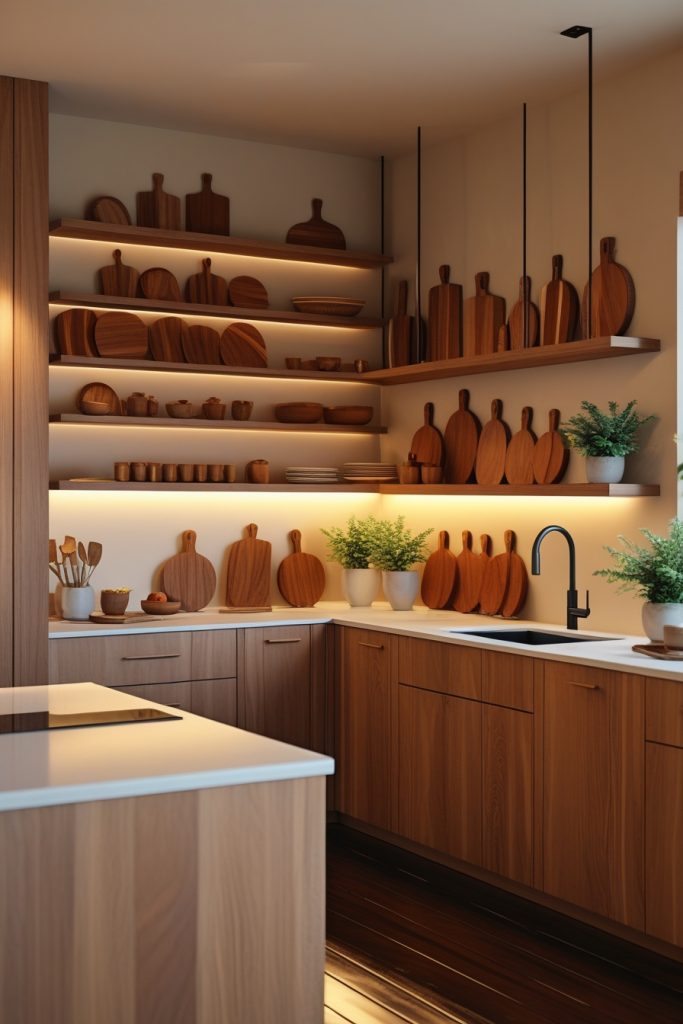
If your kitchen feels a bit sterile or flat, natural wood accents are an easy way to bring warmth and grounding. You don’t need to go full rustic—just a few key elements like butcher block countertops, open oak shelves, or decorative wooden trays can soften sharp lines and make the space more inviting.
Wooden bowls, cutting boards, and utensil holders add organic texture while remaining functional. You might even bring in wood-framed artwork or a reclaimed beam for a subtle architectural detail. These touches balance out modern appliances and sleek finishes, offering a layered, lived-in look.
This decor approach works especially well in Scandinavian, minimalist, and organic modern kitchens where the balance of materials plays a big role. Whether you lean light and airy or rich and moody, natural wood details help tell a story of warmth and craftsmanship.
Colorful Backsplash Tile
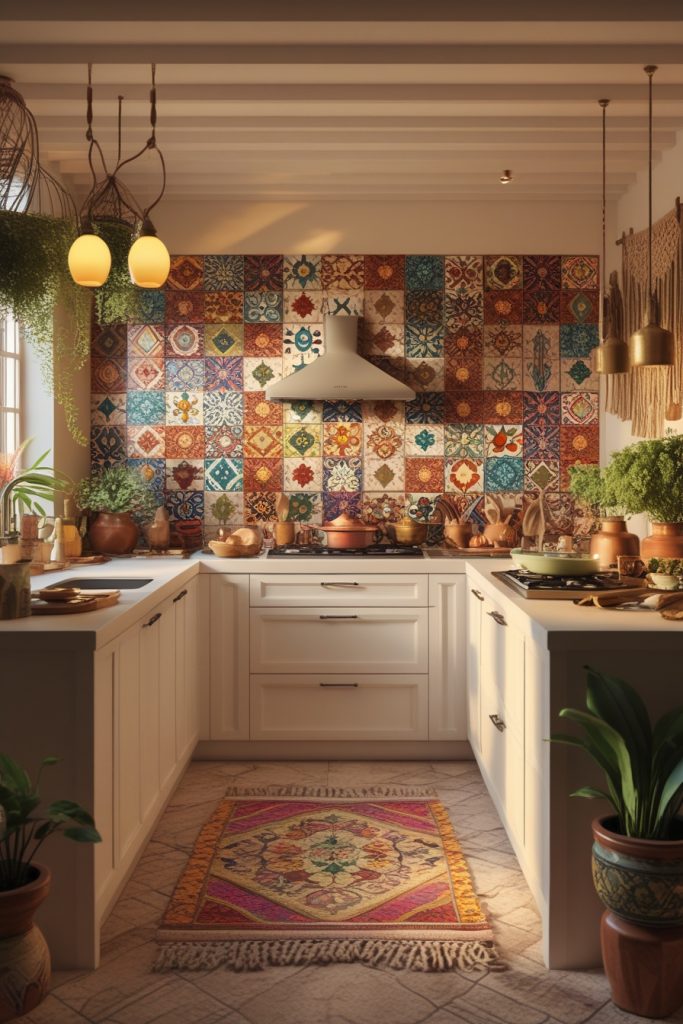
For kitchens that crave personality, a colorful backsplash is a powerful way to make a statement. Patterned or vividly colored tiles introduce energy and vibrancy without overwhelming the entire room. Moroccan zellige, Mediterranean motifs, or even bold geometric tiles can define your style in a single glance.
Unlike wall paint, backsplash tiles are long-lasting and highly resistant to wear, making them perfect for both beauty and function. The space between your countertops and cabinets becomes a canvas for creative expression—whether you choose a patchwork mosaic, a uniform hue, or a repeating pattern with contrasting grout.
Pairing bold tile with more neutral cabinets and countertops helps strike a balance. And if you’re hesitant to go all-in, you can tile just one wall or the area behind the stove for a dramatic yet manageable pop of color.
Herb Planters on the Windowsill

Fresh herbs in the kitchen are more than a culinary bonus—they’re a charming decor element that breathes life into the space. A row of terracotta or ceramic pots lined up on the windowsill brings in nature, color, and fragrance, making your kitchen feel fresh and welcoming.
Rosemary, basil, mint, and thyme are all easy to grow with a bit of sunlight, and you can rotate them seasonally to keep things interesting. Using matching pots or repurposed jars with hand-lettered labels adds a rustic and homey touch that feels intentional without being overdesigned.
In addition to enhancing your meals, these plants help purify the air and provide a subtle sensory element to your space. Whether your kitchen is modern or traditional, herbs are a universally charming addition.
Gallery Wall or Framed Art

Kitchens are often overlooked when it comes to artwork, but adding a gallery wall or a few framed prints can personalize the space and elevate its design. Treat your kitchen like any other room—if you have a blank wall, fill it with something beautiful, nostalgic, or thought-provoking.
From vintage food illustrations to travel photography or handwritten recipe prints, the possibilities are endless. Mix frame sizes and styles for an eclectic look, or keep it clean and uniform for a more polished finish. Art can sit above a countertop, beside a pantry door, or even near your dining nook.
This decorative layer helps balance the functional nature of a kitchen with your unique sense of style. It’s an unexpected element that invites people to linger—and offers something to enjoy beyond what’s on the plate.
Layered Rugs and Runners

Adding a rug or runner to your kitchen instantly adds softness, pattern, and warmth. Especially in long galley-style kitchens or those with hard tile or wood floors, a textile underfoot makes the space feel more inviting and complete.
Choose washable, durable materials like cotton, jute blends, or indoor/outdoor synthetics that can stand up to spills and foot traffic. Vintage-style Turkish rugs, bold geometric runners, or soft neutrals with subtle texture can all make a statement without sacrificing practicality.
Layering rugs in zones—such as one near the sink and another near the stove—also helps define functional areas within the room. Just be sure to use rug pads or grip tape to keep everything in place and safe.
Minimalist Countertop Styling

If your goal is a clean, elevated kitchen, minimalist countertop styling offers a luxurious and serene approach. Rather than covering every inch with gadgets or decor, choose a few beautiful essentials to leave out—like a ceramic utensil holder, a marble tray with oil and vinegar bottles, or a sculptural vase with greenery.
This method creates visual breathing room and makes cleaning easier, while still looking styled and intentional. It’s especially powerful in kitchens with open layouts, where the countertops are always on display.
The trick is to strike a balance between practical and pretty. A soap dispenser, cutting board, and salt cellar can all look like part of the decor when chosen thoughtfully. Less truly is more when each item is well-considered.
Hanging Pot Rack for Form and Function

A hanging pot rack is both utilitarian and decorative, especially when stocked with beautiful cookware. It frees up cabinet space, keeps essentials within reach, and introduces texture and shine to your kitchen—especially when you use copper, cast iron, or enamel-coated pieces.
Mounted above an island or along a wall, a rack with S-hooks or a suspended frame adds architectural interest. It’s a favorite in farmhouse, French country, or industrial kitchens, where the look leans cozy and storied.
Just remember: this approach only works if your pots are clean and curated. If you’re someone who enjoys collecting quality cookware, this is the perfect opportunity to display it proudly and use it often.
Statement Bar Stools

Bar stools are often an afterthought, but they can drastically influence the feel of your kitchen. Swapping out standard seating for statement stools—be it woven rattan, sculptural metal, or velvet upholstery—adds both comfort and a dose of design.
Choose stools that contrast or complement your island material for a layered look. Upholstered options with backs are great for comfort, while backless designs can feel more streamlined in smaller spaces.
Bar stools also offer a way to play with texture or color in an otherwise neutral kitchen. Whether you’re going boho, industrial, or sleek and modern, the right seating can be a subtle showstopper.
Glass Jars and Pantry Displays
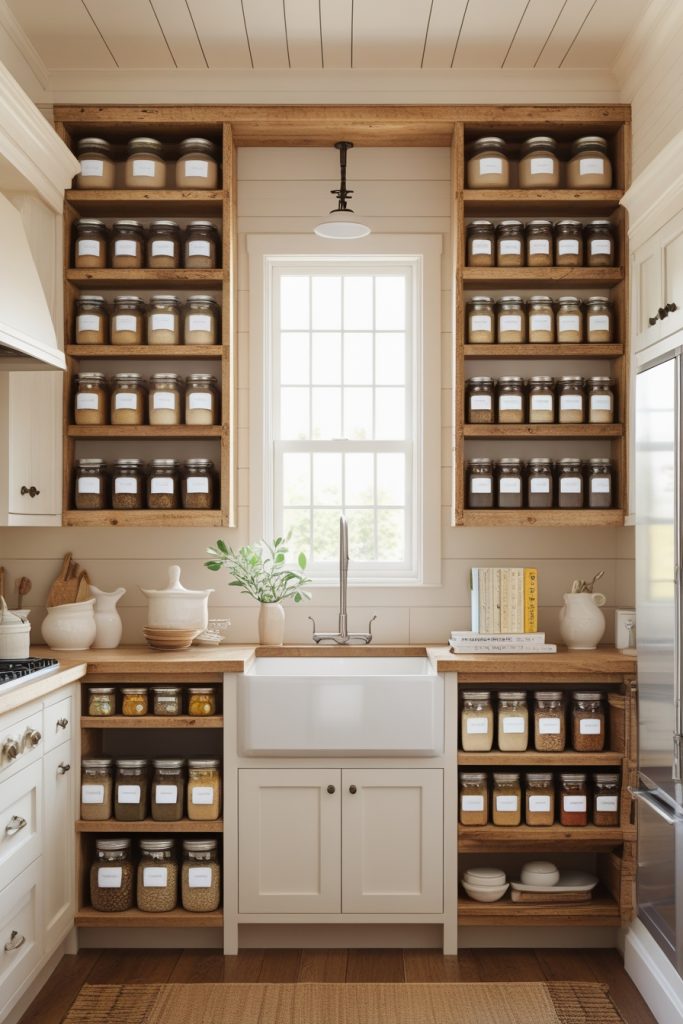
Turning your pantry items into a curated display is both practical and aesthetically pleasing. Think labeled glass jars with bamboo lids, neatly organized shelves, and baskets for bulkier items—all exposed in a way that feels like styled storage.
Open shelving or clear-front cabinets make this even easier. Fill jars with grains, pasta, spices, or snacks, and arrange them by color or category for visual interest. Use baskets or trays to group loose items and avoid clutter.
This look works best when it’s consistently maintained. It’s a system that rewards tidy habits—but when done right, it transforms everyday kitchen tasks into a visual treat.
Dark Accent Wall or Cabinets

Moody tones like navy, charcoal, or forest green can add depth and drama to your kitchen, especially when balanced with natural light and lighter elements. A dark accent wall or cabinetry anchors the space and gives it a bold, designer feel.
Pair dark tones with brass or matte black hardware, light wood floors, or marble countertops to create contrast. These rich colors make a space feel cozy, sophisticated, and timeless all at once.
This decor idea is especially powerful in open-plan kitchens, where darker cabinetry or a painted wall can help distinguish the kitchen area without using physical barriers.
Chalkboard or Pegboard Wall

Adding a chalkboard or pegboard wall is a clever way to infuse both personality and function into your kitchen. Chalkboard paint turns any surface into a space for handwritten recipes, shopping lists, or rotating artwork—perfect for families or anyone who loves to jot things down.
A pegboard, on the other hand, adds instant storage. With a few hooks and pegs, you can hang utensils, pots, pans, baskets, or even mugs. It’s a highly adaptable system that can evolve with your needs.
This decor feature works well in small or busy kitchens, where flexibility and creativity are essential. It’s playful, useful, and infinitely customizable.
Seasonal and Rotating Decor

Keeping your kitchen decor dynamic throughout the year brings a sense of rhythm and joy to the space. Small, rotating touches like a vase of seasonal flowers, festive linens, or a bowl of citrus can refresh your kitchen without a full overhaul.
Use floating shelves, countertops, or windowsills as places to experiment with seasonal elements. In spring, opt for pastel blooms and fresh herbs; in autumn, layer in warm-toned textiles and dried arrangements. Even something as simple as changing your hand towels or artwork can signal a new mood.
This flexible approach allows you to continually enjoy the process of decorating, keeping your kitchen feeling relevant, alive, and full of charm all year round.
Final Thoughts
Decorating your kitchen isn’t about following a formula—it’s about layering textures, stories, and details that feel true to you. Whether you love the simplicity of wood accents and minimalist styling or prefer bold tile and playful artwork, each decor decision contributes to a space that feels warm, personal, and alive. Let your kitchen reflect your lifestyle and taste, and don’t be afraid to experiment. After all, the best designs evolve over time.