
Farmhouse Dining Room Decor Ideas

A farmhouse dining room carries a sense of warmth that feels both nostalgic and welcoming. It is a space designed for gathering, conversation, and shared meals, where comfort takes priority and materials tell a story. Rooted in simplicity and practicality, farmhouse décor blends rustic charm with refined touches to create a room that feels timeless rather than trendy.
The beauty of farmhouse design lies in its balance. It embraces natural textures, neutral tones, and handcrafted elements, yet remains functional and uncluttered. When thoughtfully styled, a farmhouse dining room becomes the heart of the home — inviting, relaxed, and full of character.
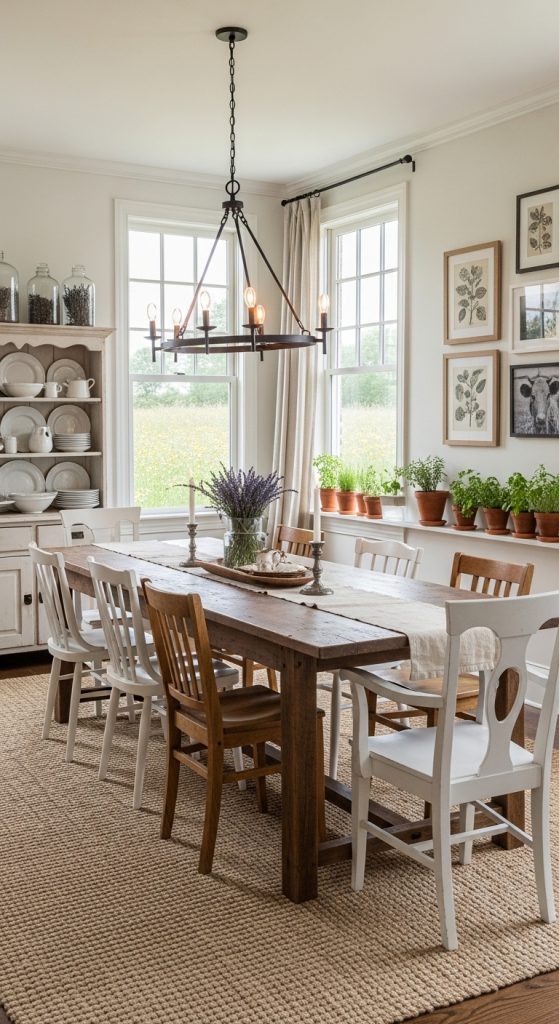


A Solid Wood Dining Table as the Anchor
At the center of every farmhouse dining room is a sturdy wooden table. Often crafted from oak, pine, or reclaimed wood, this piece sets the tone for the entire space. Visible grain, knots, and natural imperfections are not flaws but defining features that enhance authenticity.
A large rectangular table works beautifully in spacious rooms, while a round pedestal table creates intimacy in smaller areas. The finish can range from natural and lightly sealed to whitewashed or distressed, depending on the desired mood.
This table is more than furniture; it is a gathering point that reflects the practical roots of farmhouse living.
Mixing Seating for Character
Farmhouse style embraces variety, especially when it comes to seating. Instead of matching chairs all around, consider combining different styles for a collected look. Wooden spindle chairs, cross-back chairs, or even a long bench on one side add visual interest.
Benches are particularly fitting in farmhouse spaces, reinforcing the communal spirit. Upholstered chairs at the ends of the table can introduce softness while maintaining balance.
The goal is comfort first, with subtle variations that feel intentional but not overly coordinated.
Neutral and Earthy Color Palettes
A farmhouse dining room typically begins with a neutral foundation. Shades of warm white, soft cream, beige, greige, and muted gray create a calming backdrop. These tones reflect natural light and allow wood textures to stand out.
Earthy accents such as sage green, dusty blue, or muted terracotta can be introduced through textiles or décor. Keeping the palette cohesive ensures the space feels serene and timeless.
Neutral walls paired with wood furniture create a classic farmhouse aesthetic that never feels heavy or overwhelming.
Rustic Lighting with Warm Glow
Lighting plays a defining role in farmhouse décor. Oversized pendant lights, lantern-style chandeliers, or wrought iron fixtures add rustic charm while providing ample illumination.
Wood and metal combinations are especially fitting, blending industrial elements with traditional warmth. Soft, warm-toned bulbs enhance the cozy atmosphere and make the dining area feel inviting during evening gatherings.
The lighting fixture often serves as a focal point above the table, anchoring the room visually and adding character.
Layered Textiles for Comfort
Textiles soften the rustic foundation of farmhouse design. A natural fiber rug beneath the table adds texture and warmth, especially in rooms with hardwood or tile flooring. Linen table runners, cotton placemats, and simple patterned napkins introduce subtle detail without overwhelming the space.
Curtains in light linen or cotton maintain brightness while adding softness to windows. Layering fabrics in complementary neutral tones enhances the cozy, lived-in feel.
Texture is essential in farmhouse décor, creating depth without relying heavily on bold color.
Incorporating Vintage and Antique Touches
Farmhouse dining rooms often feature vintage or antique elements that give the space history. An old sideboard, distressed cabinet, or repurposed hutch provides storage while reinforcing the rustic theme.
Decorative items such as ceramic pitchers, enamelware, wooden bowls, or woven baskets add authenticity. These pieces do not need to be elaborate; their charm lies in simplicity and age.
Even small details, like aged brass hardware or vintage-inspired mirrors, contribute to the room’s character.
Open Shelving and Display Cabinets
Storage in a farmhouse dining room can double as decoration. Open shelving allows you to display stacked plates, glass jars, and ceramic dishware in an organized yet relaxed manner.
A glass-front cabinet or traditional hutch provides enclosed display space while keeping items protected. Styling shelves with a mix of practical and decorative pieces maintains functionality without sacrificing aesthetics.
Keeping displays minimal and thoughtfully arranged prevents clutter and preserves the room’s calm atmosphere.
Natural Elements for Organic Warmth
Bringing natural elements into the dining room enhances the farmhouse feel. Fresh flowers in simple vases, branches in ceramic pitchers, or greenery arranged in woven baskets add life and freshness.
Seasonal décor can also reflect farmhouse simplicity — pumpkins in autumn, evergreen branches in winter, or wildflowers in spring. These organic touches reinforce the connection to nature that defines farmhouse style.
Even a simple wooden bowl filled with fruit can serve as a charming and practical centerpiece.
Statement Walls and Architectural Details
Architectural elements can elevate a farmhouse dining room. Shiplap walls, beadboard paneling, or exposed wooden beams introduce texture and authenticity. Painted shiplap in soft white or pale gray keeps the room bright while adding depth.
If structural changes are not possible, consider creating a focal wall with rustic wood panels or a large framed mirror. These details add interest without overpowering the space.
The key is subtlety. Architectural accents should complement the room rather than dominate it.
Keeping the Space Functional and Inviting
Above all, a farmhouse dining room should feel comfortable and welcoming. Avoid overcrowding the space with excessive décor. Leave room for easy movement around the table and ensure seating feels accessible and relaxed.
A well-styled centerpiece, balanced lighting, and thoughtfully arranged furniture create an inviting environment for everyday meals and special gatherings alike.
Farmhouse dining room décor is about blending simplicity with warmth. By focusing on natural materials, neutral palettes, layered textures, and meaningful accents, you can create a space that feels timeless and heartfelt.
When designed with care, a farmhouse dining room becomes more than a place to eat. It becomes a space where memories are made, stories are shared, and everyday moments feel special in their simplicity.