
Boho Dining Room Decor Ideas That Feel Collected, Warm, and Timeless

The bohemian dining room has always been less about decoration and more about atmosphere. Long before “boho” became a label, people across cultures gathered around handmade tables, layered textiles, mismatched chairs, and objects acquired slowly over time. The spirit of this style comes from lived experience rather than showroom perfection. In real homes, a boho dining room functions as a place of connection — meals stretch longer, conversations feel unhurried, and the room reflects the people who use it rather than a rigid design formula. When done well, boho dining room decor balances freedom with intention, warmth with practicality, and character with comfort.
Designing a Dining Space That Feels Relaxed but Intentional


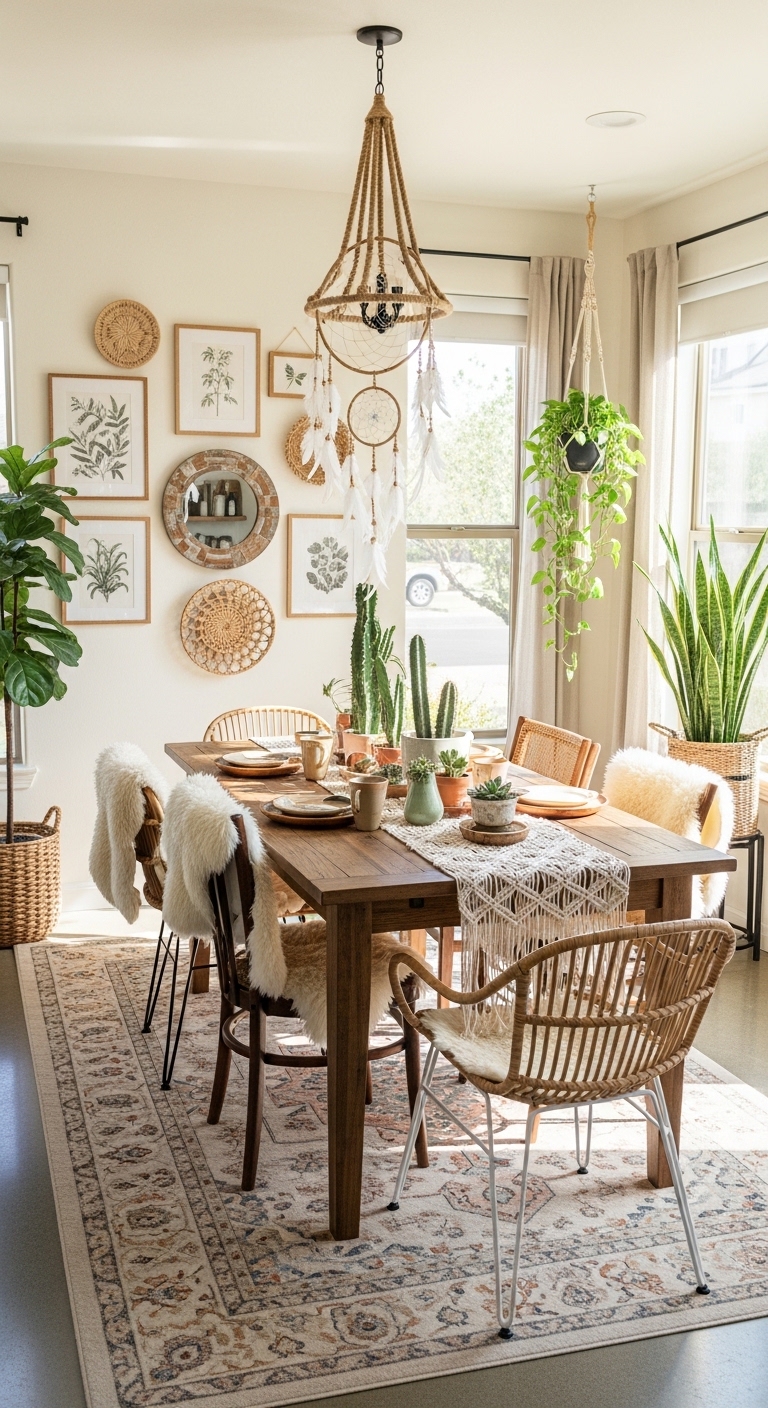


A successful boho dining room never feels accidental, even though it looks unforced. The foundation begins with understanding how the room is used. Dining spaces often double as homework zones, work-from-home corners, or casual gathering areas, so the layout must allow movement and flexibility. Start by placing the table where circulation feels natural rather than centered by default. In many homes, shifting the table slightly off-center creates better flow and makes space for storage or seating along a wall.
Layering Materials for Depth and Comfort
Boho dining rooms feel rich because they rely on material contrast rather than bold color alone. Mixing textures is essential. Hard surfaces like wood, ceramic, and metal need soft counterparts such as woven fibers, textiles, and upholstery to feel welcoming. A flat space with only one or two finishes often feels unfinished, no matter how stylish the pieces are.
Start from the floor up. Rugs define the dining zone and add warmth, especially in open-plan homes. Flatweave rugs, vintage-inspired patterns, or natural fiber rugs work well, but scale is critical. The rug should extend beyond the chairs even when they are pulled out. Too-small rugs are one of the most common design errors and instantly cheapen the look. For renters or tight budgets, layering a smaller patterned rug over a larger neutral base can achieve proper scale without replacing existing flooring.
Furniture finishes should complement rather than match. A wooden table pairs beautifully with cane-backed chairs, woven seats, or upholstered benches. Metal accents, such as iron legs or brass details, add contrast without pulling the room toward an industrial look. Avoid using too many polished or glossy finishes; boho dining rooms thrive on matte surfaces that feel tactile and lived-in.
Textiles are where personality truly comes through. Table runners, seat cushions, and window treatments soften acoustics and add comfort. Choose fabrics that can withstand regular use. Linen blends, cotton, and washable covers are practical choices. A common mistake is using delicate fabrics that stain easily or feel precious. A boho dining room should invite daily use, not constant worry.
Color Palettes That Feel Warm and Enduring
Color in boho dining rooms should feel grounded rather than loud. Earth tones form the backbone of the palette: warm whites, sand, terracotta, clay, olive, and muted browns. These hues reflect natural landscapes and age gracefully over time. Brighter colors can appear, but they should feel collected rather than applied all at once.
Walls set the emotional tone. Warm neutrals create a calm backdrop that allows furniture and decor to shine. In smaller dining rooms, lighter wall colors help maintain openness, while deeper shades can work beautifully in rooms with good natural light. When using darker colors, balance them with lighter furniture and reflective surfaces to prevent heaviness.
Accent colors are best introduced through textiles and art. This allows easy updates without major renovations. One mistake homeowners often make is committing to strong colors in permanent elements like cabinets or built-ins without testing how the room feels at different times of day. Boho spaces benefit from adaptability. Let the room evolve slowly as new pieces are added.
Ceilings are frequently overlooked. Painting the ceiling a soft warm tone or using subtle wood paneling can add intimacy, especially in dining rooms that feel tall or echo-prone. This approach works particularly well in older homes where architectural quirks add character rather than distraction.
Furniture Choices That Encourage Gathering
Dining furniture in boho spaces prioritizes comfort and sociability. The table should invite people to linger rather than rush through meals. Rectangular tables work well for families and frequent hosts, while round tables foster conversation in smaller spaces. Extendable tables are especially valuable for homeowners who entertain occasionally but need flexibility day to day.
Seating should never feel rigid or uniform. Mixing chair styles adds visual interest and allows you to choose pieces based on comfort rather than matching sets. Benches are a practical option along one side of the table, especially in narrow rooms. They save space and feel casual, which aligns naturally with boho principles.
When choosing chairs, pay attention to seat height and back support. A beautiful chair that becomes uncomfortable after ten minutes undermines the purpose of the room. Upholstered seats, even lightly padded ones, make a significant difference. For renters or budget-conscious homeowners, adding removable seat cushions can instantly upgrade comfort without replacing furniture.
Storage furniture also deserves consideration. Sideboards, buffets, or open shelving provide space for serving dishes, linens, and everyday items. In boho dining rooms, these pieces often double as display surfaces. Choose storage that feels substantial but not bulky. One common mistake is overcrowding the room with multiple storage units when one well-chosen piece would suffice.
Wall Treatments That Tell a Story
Boho dining rooms often use walls as a canvas for personal expression. Rather than a single focal artwork, collections work beautifully here. Gallery walls, textile hangings, and shelves filled with meaningful objects create depth and narrative. The key is restraint. Curate thoughtfully instead of filling every inch.
When arranging wall decor, consider sightlines from seated positions. Art that feels balanced when standing may appear awkward when viewed from the table. Hang pieces slightly lower than standard gallery height to maintain connection with diners. Mixing frame styles, materials, and sizes adds character, but anchor the arrangement with a unifying element such as color tone or theme.
Textured wall treatments can replace or complement artwork. Plaster finishes, limewash paint, or subtle wood paneling add dimension without clutter. These finishes are especially helpful in smaller dining rooms where visual interest must come from surfaces rather than objects.
A frequent mistake is using oversized statement art that overwhelms the room. Boho spaces favor layered interest over singular dominance. If you love a large piece, balance it with quieter elements elsewhere to maintain harmony.
Lighting That Enhances Mood and Function
Lighting in a boho dining room should feel warm, layered, and adjustable. The central pendant or chandelier anchors the space and defines the dining zone. Choose fixtures made from natural materials or with organic forms to reinforce the overall aesthetic. Scale is critical here; too small and the fixture feels insignificant, too large and it becomes oppressive.
Supplement overhead lighting with secondary sources. Wall sconces add softness and can highlight artwork or architectural features. Nearby floor or table lamps create ambient light that makes the space feel inviting after dark. Dimmers are highly recommended. They allow you to shift the room’s energy depending on the occasion.
Natural light should be embraced whenever possible. Window treatments should filter light rather than block it completely. Sheer curtains, woven shades, or lightweight drapery maintain privacy without sacrificing brightness. A common mistake is choosing heavy curtains that darken the room unnecessarily, especially in homes with limited daylight.
Pay attention to bulb temperature. Cool white lighting clashes with the warmth of boho interiors. Opt for bulbs in the warm spectrum to maintain a cohesive atmosphere. This small detail makes a noticeable difference in how colors and textures appear.
Styling With Objects That Feel Collected, Not Staged
Decorative objects in a boho dining room should feel personal and layered over time. Handmade ceramics, wooden bowls, woven baskets, and found objects bring authenticity. These items work best when grouped thoughtfully rather than scattered randomly.
Tablescapes deserve special care. A dining table should not be permanently cluttered, but a simple centerpiece can add character. Consider low arrangements that do not obstruct sightlines. Bowls filled with natural elements, a cluster of candles, or a textile runner paired with minimal decor keeps the table functional.
Shelving and sideboards are opportunities to display collections. Vary heights and textures to avoid monotony. Leave negative space so each item has room to breathe. One of the most common styling mistakes is overcrowding surfaces, which quickly turns a relaxed room into a chaotic one.
Plants are a natural fit for boho dining rooms. Choose species that tolerate indoor conditions and occasional neglect. Hanging plants, potted trees, or trailing greenery soften hard edges and improve air quality. Be mindful of scale; oversized plants in small rooms can overwhelm, while tiny plants may get lost.
Practical Considerations for Small Dining Areas
Boho dining rooms can work beautifully in compact spaces when designed thoughtfully. Start by selecting furniture with a lighter visual footprint. Tables with slender legs or glass elements feel less imposing. Wall-mounted or drop-leaf tables provide flexibility without permanent bulk.
Mirrors can help amplify light and create a sense of openness. Place them strategically to reflect windows or light sources rather than cluttered areas. In rental homes, removable wall treatments and adhesive hooks allow personalization without permanent changes.


