How to Style a Coffee Table Decor: Complete Guide
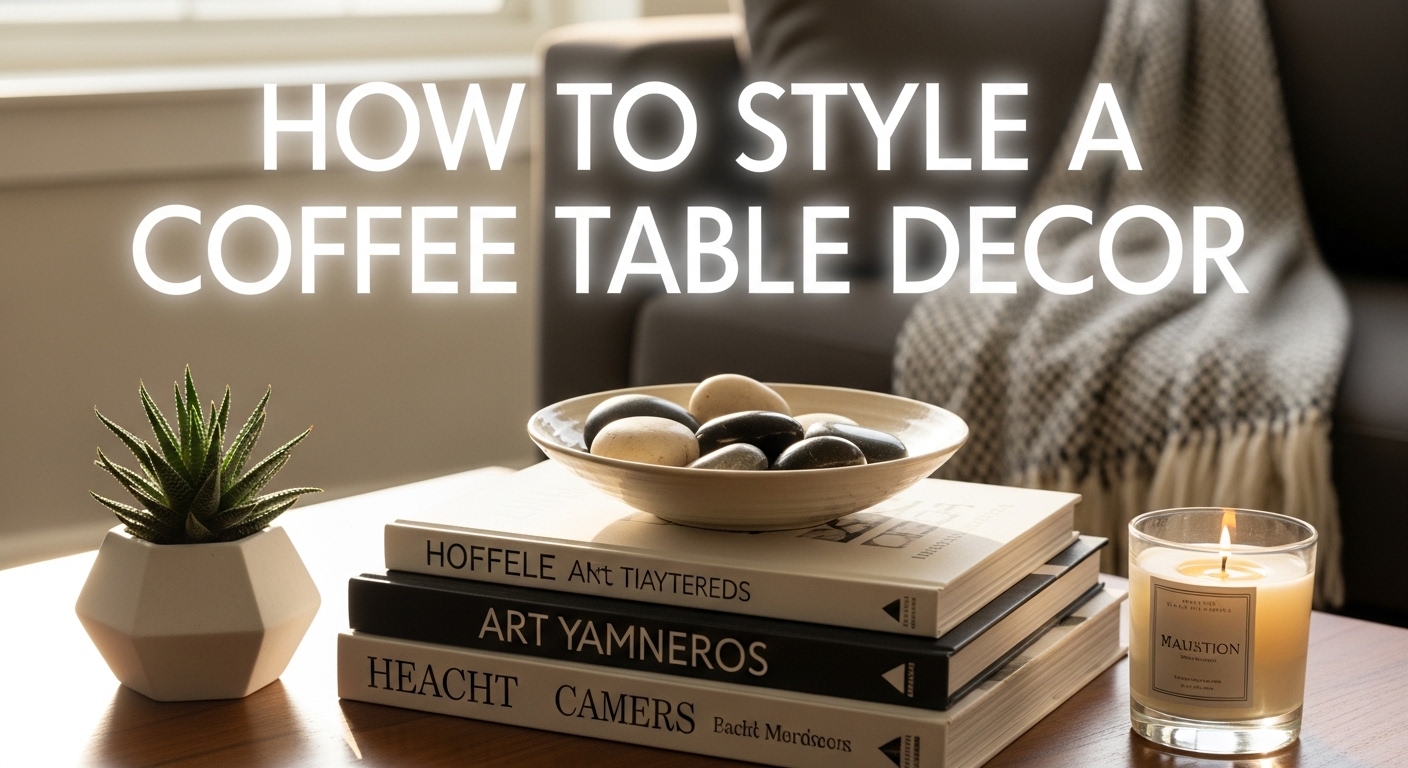
A coffee table is more than a functional surface for drinks and remotes. It is the visual anchor of your living room, the place where style, personality, and everyday living meet. When styled well, a coffee table instantly elevates the entire space. It makes a room feel intentional, polished, and thoughtfully designed. When styled poorly, however, it can feel cluttered, empty, awkward, or disconnected from the rest of the room.
Many homeowners struggle with the same questions: How much is too much? What items actually belong on a coffee table? How do you make it look styled without making it unusable? Why do professionally designed coffee tables look effortless while DIY attempts often feel forced?
This guide answers those questions in depth. You will learn the principles designers use to create balance and visual interest, how to choose the right objects, how to adapt styling to different table shapes and home styles, and how to keep your coffee table beautiful while still practical for everyday life. Whether your aesthetic is modern, cozy, minimal, traditional, or eclectic, the strategies here will help you transform your coffee table into a curated focal point that enhances your entire living space.
The Foundation: What Coffee Table Styling Really Means
Coffee table styling is the art of arranging functional and decorative items in a way that creates visual balance, reflects your personality, and supports how you actually use your living room. It is not about filling the surface with random décor. It is about creating composition, proportion, and intention.
At its core, good styling combines three elements: structure, variation, and restraint. Structure provides a sense of order through grouping and alignment. Variation adds interest through differences in height, texture, and shape. Restraint prevents clutter and allows each item to stand out.
Why Coffee Table Styling Matters
A well-styled coffee table:
- Anchors the seating area visually
- Adds warmth and personality to the room
- Connects colors and materials from surrounding furniture
- Creates a welcoming, lived-in atmosphere
- Enhances the overall design without overwhelming the space
Who This Guide Is For
This approach works for:
- Homeowners wanting a polished living room
- Renters looking for easy upgrades without renovation
- Minimalists who want intentional décor
- Decor lovers who enjoy seasonal styling
- Anyone who wants a designer look without hiring a professional
Who Might Not Need Heavy Styling
If your coffee table is used heavily for daily work, meals, or children’s activities, minimal styling may be more practical. In such cases, focus on one or two functional pieces rather than decorative arrangements.
Common Misconceptions
Misconception: More décor makes the table look better
Reality: Overcrowding creates visual chaos
Misconception: Everything must match
Reality: Layered, varied pieces create a richer look
Misconception: Styling is purely decorative
Reality: The best coffee tables balance beauty and function
The Designer Formula: The Core Principles of Coffee Table Styling
Professional stylists rely on a simple framework that works across styles and spaces.
The Rule of Three
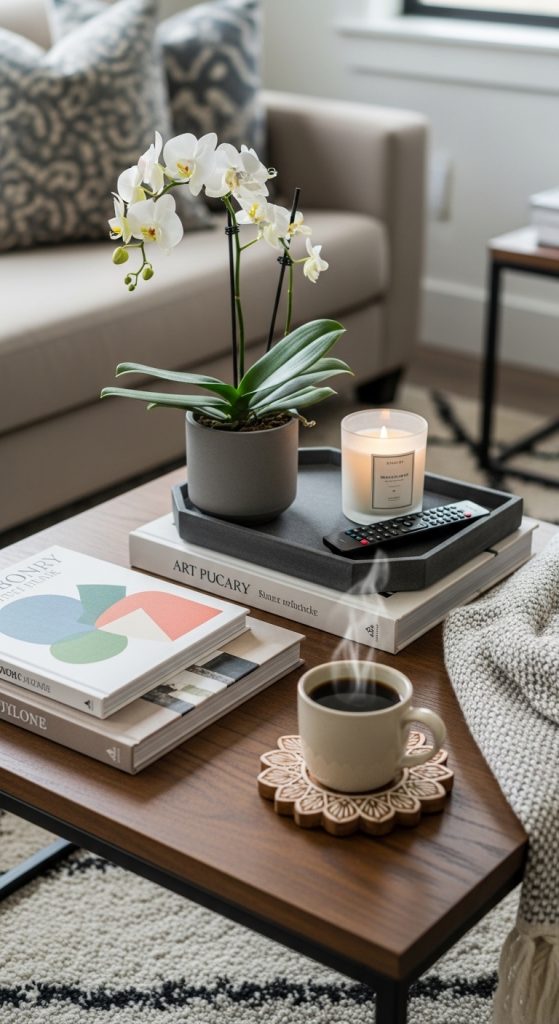
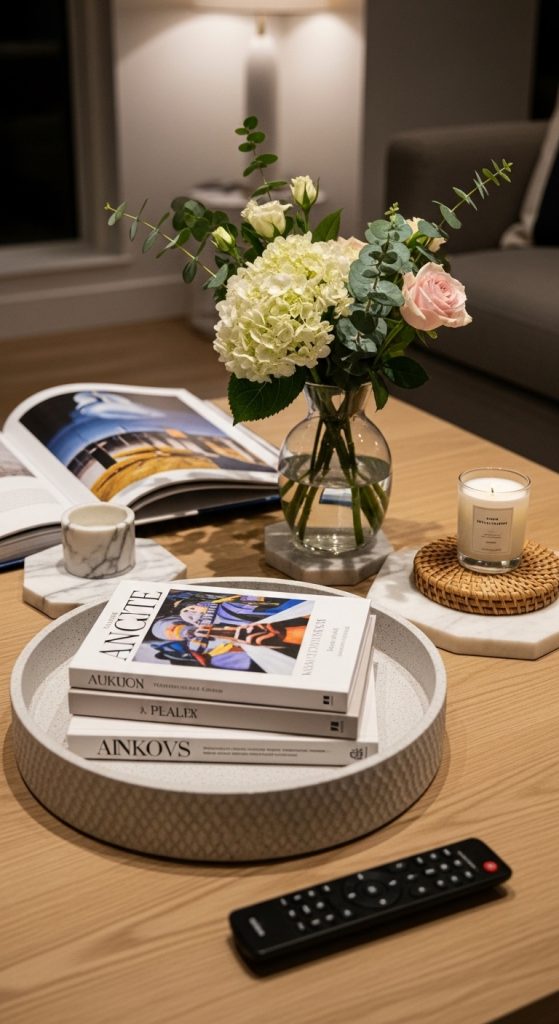
Grouping items in threes creates natural visual balance. A typical trio might include:
- Something tall (vase or plant)
- Something low (books or tray)
- Something sculptural or personal (object or candle)
Odd-numbered groupings feel more organic than even-numbered ones.
Vary Heights and Shapes
Contrast prevents the arrangement from feeling flat.
- Combine tall and short elements
- Mix round objects with rectangular books
- Pair smooth surfaces with textured materials
Create Visual Weight Balance
If one side of the table has a tall object, balance the other side with a wider or grouped arrangement so the composition feels stable.
Leave Negative Space
Empty space is essential. It gives the eye a place to rest and keeps the table functional.
Essential Coffee Table Decor Elements
Most beautifully styled tables use a mix of these foundational pieces.
Books
Coffee table books add height, structure, and personality. Choose titles related to design, travel, art, or your interests. Stack two or three for layering.
Trays
A tray organizes smaller objects and creates a defined styling zone. It also makes it easy to move items when the table needs to be cleared.
Natural Elements
Plants, flowers, or branches bring life and softness. Even a small arrangement can make the table feel fresh.
Candles
Candles add warmth and atmosphere. Choose sculptural holders or interesting shapes for visual interest.
Decorative Objects
These might include:
- Small sculptures
- Bowls
- Beads
- Boxes
- Personal souvenirs
Functional Items
Keep everyday use in mind:
- Coasters
- Remote holders
- Small storage boxes
Coffee Table Styling Formula (Step-by-Step)
Step 1: Start with a Clean Surface
Remove everything and evaluate the table size, shape, and material.
Step 2: Choose a Focal Piece
This could be a plant, a large candle, or a decorative object that draws attention.
Step 3: Add a Base Layer
Use a tray or a stack of books to ground smaller items.
Step 4: Layer Heights
Place taller items toward the back or center, with lower items surrounding them.
Step 5: Edit Ruthlessly
Remove anything that feels unnecessary. Good styling is often about what you leave out.
Styling by Coffee Table Shape
| Table Shape | Best Layout Strategy | Ideal For |
|---|---|---|
| Rectangular | Divide into thirds or zones | Larger seating areas |
| Square | Centered arrangement or four quadrants | Sectionals |
| Round | One central cluster | Small spaces |
| Oval | Balanced clusters at both ends | Narrow rooms |
Rectangular tables benefit from multiple groupings, while round tables look best with a single layered composition to maintain flow.
Style Direction Guide
| Style | Key Elements | Materials |
|---|---|---|
| Modern | Minimal objects, clean lines | Glass, metal, marble |
| Cozy/Traditional | Books, candles, florals | Wood, ceramics |
| Boho | Textures, beads, layered items | Rattan, woven materials |
| Minimalist | One or two statement pieces | Stone, neutral tones |
| Luxury | Sculptural décor, symmetry | Marble, brass, crystal |
Choose décor that reflects the larger room style so the coffee table feels integrated.
Practical Implementation for Everyday Living
A beautiful coffee table must also work for real life.
Daily-Use Strategy
Keep styling confined to:
- One tray
- One small cluster
- Open space for drinks or laptops
Family-Friendly Approach
Use:
- Durable materials
- Rounded edges
- Lightweight trays for quick clearing
Small Space Strategy
Choose fewer, larger items instead of many small pieces. This reduces visual clutter.
Common Coffee Table Styling Mistakes
- Overcrowding the surface with too many small items
- Using décor that is too tall and blocks sightlines
- Ignoring scale relative to table size
- Matching everything too perfectly, creating a staged look
- Forgetting functionality
- Leaving the table completely empty, which can feel unfinished
Expert Designer Tips
- Use books as platforms to elevate smaller objects
- Incorporate one personal item to make the table feel authentic
- Repeat materials from the room, such as wood tone or metal finish
- Change florals seasonally for an easy refresh
- Use odd numbers for grouping whenever possible
- Photograph your table to evaluate balance objectively
Seasonal Coffee Table Styling Ideas
Spring: Fresh flowers, light ceramics, pastel books
Summer: Coastal elements, shells, light textures
Fall: Warm tones, wood accents, candles
Winter: Evergreen branches, metallic accents, layered textures
Seasonal changes keep your space feeling current without major redecorating.
Coffee Table Decor Checklist
- One focal element
- One grounding base (tray or books)
- One natural element
- Height variation
- Mixed textures
- Open space remaining
Advanced Styling Techniques
Layering for Depth
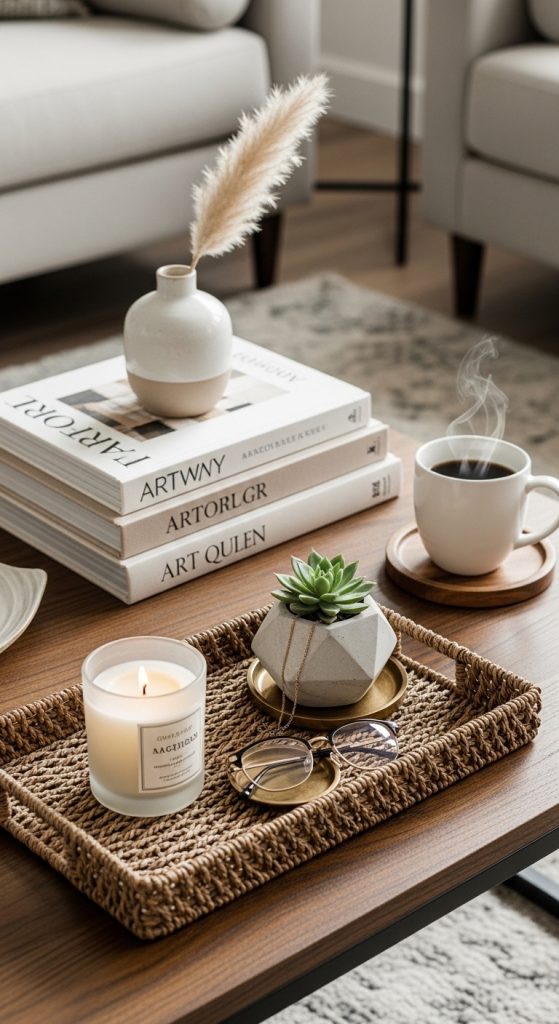
Place a tray on books, then layer objects within the tray. This creates dimension and a designer-level look.
Color Strategy
Use one of these approaches:
- Monochromatic palette
- Two-color contrast
- Neutral base with one accent color
Texture Mixing
Combine:
- Smooth (glass, marble)
- Matte (ceramic, wood)
- Soft (linen, beads)
Texture variation adds richness even in neutral spaces.
Comparison: Minimal vs Layered Styling
| Feature | Minimal Styling | Layered Styling | Best For |
|---|---|---|---|
| Number of items | 1–3 | 4–8 | Depends on room style |
| Visual impact | Clean, calm | Rich, styled | Modern vs traditional spaces |
| Maintenance | Easy | Moderate | Busy households |
| Flexibility | High | Medium | Everyday use vs decorative rooms |
Minimal styling works best in modern homes, while layered styling suits cozy or traditional interiors.