
Rainscaping Ideas to Manage Stormwater and Beautify Your Landscape

Rainscaping is an eco-conscious approach to landscaping that not only manages stormwater runoff effectively but also enhances the beauty and functionality of your outdoor space. By using natural systems to capture, filter, and redirect rainwater, you can prevent erosion, minimize flooding, and support local biodiversity. Whether you’re dealing with water pooling in your yard or simply want a more sustainable landscape design, rainscaping offers a range of creative, attractive solutions that work with nature rather than against it.
Rain Garden with Native Plants
A shallow, bowl-shaped garden designed to collect and absorb rainwater runoff. Use native plants like sedges, black-eyed Susans, and swamp milkweed for best results.
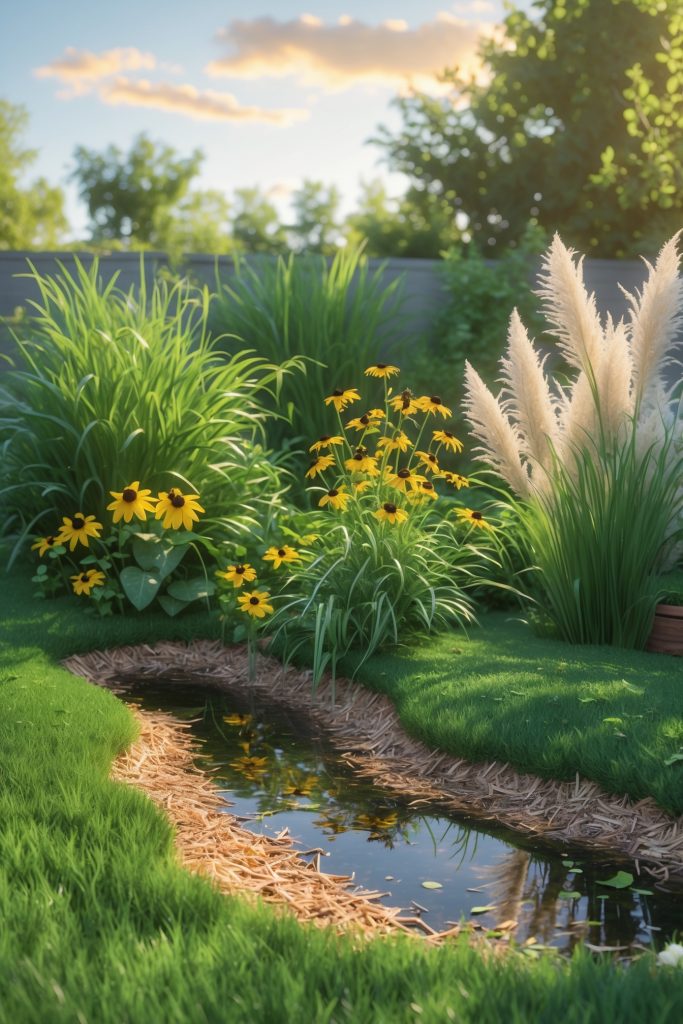
A rain garden is one of the most effective and visually appealing rainscaping techniques. This shallow, bowl-shaped garden is designed to capture and absorb runoff from roofs, driveways, and other hard surfaces. The depression collects rainwater and allows it to slowly soak into the ground rather than rushing into storm drains. Native plants like black-eyed Susans, swamp milkweed, sedges, and Joe-Pye weed thrive in the varying moisture levels of rain gardens, making them perfect for these natural basins. In addition to filtering pollutants, rain gardens provide valuable habitat for butterflies, bees, and other pollinators, creating a vibrant ecosystem in your yard.
Permeable Paver Driveway
Traditional driveways made from concrete or asphalt prevent rainwater from seeping into the ground, leading to increased runoff and flooding risks. A permeable paver driveway solves this by using interlocking pavers spaced with gravel or other porous materials that allow water to drain directly into the soil below. This system reduces the pressure on storm drains and can even help recharge groundwater. Beyond its functionality, a permeable driveway adds architectural interest to your landscape and is available in various styles, textures, and colors to match any home aesthetic.

Dry Creek Bed for Runoff Control
Create a decorative stone-lined channel that mimics a natural streambed to guide rainwater through your yard and prevent erosion.
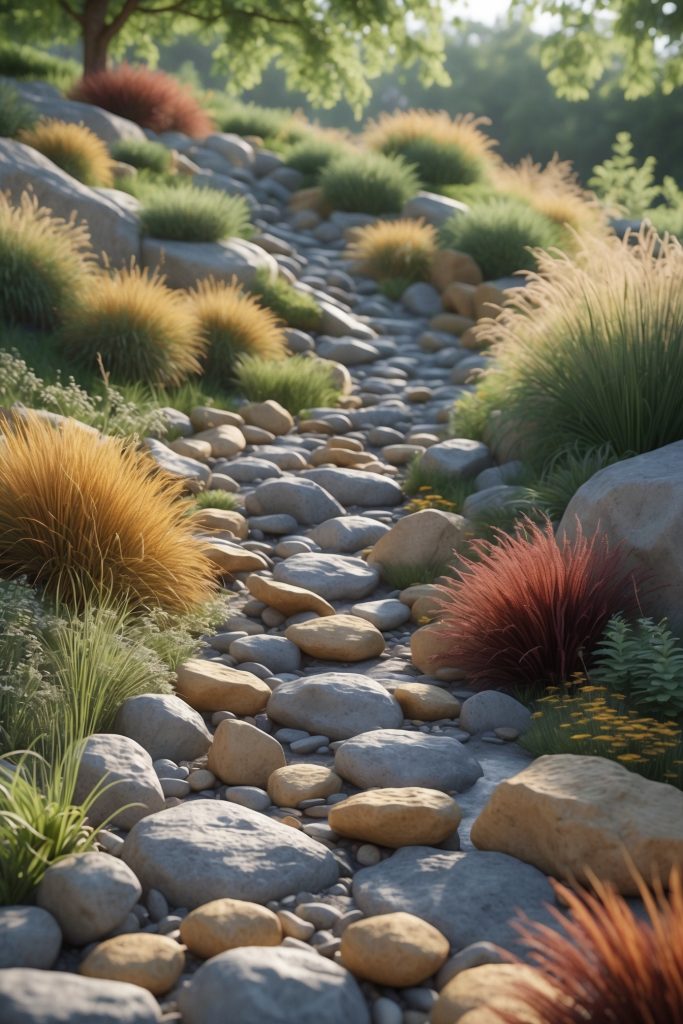
A dry creek bed is a practical and attractive way to channel stormwater naturally through your yard. Designed to mimic a natural stream, it consists of a shallow, stone-lined trench that guides excess water away from buildings or low-lying areas. During heavy rain, the creek bed comes to life, moving water efficiently while preventing erosion. In dry weather, it doubles as a striking landscape feature. To enhance the effect, line the bed with river rocks, boulders, and drought-tolerant plants like blue fescue or yarrow along the edges for a look that blends seamlessly with the surrounding garden.
Rain Barrel System for Water Collection
Install rain barrels under downspouts to collect roof runoff for garden irrigation. It’s practical and conserves water.
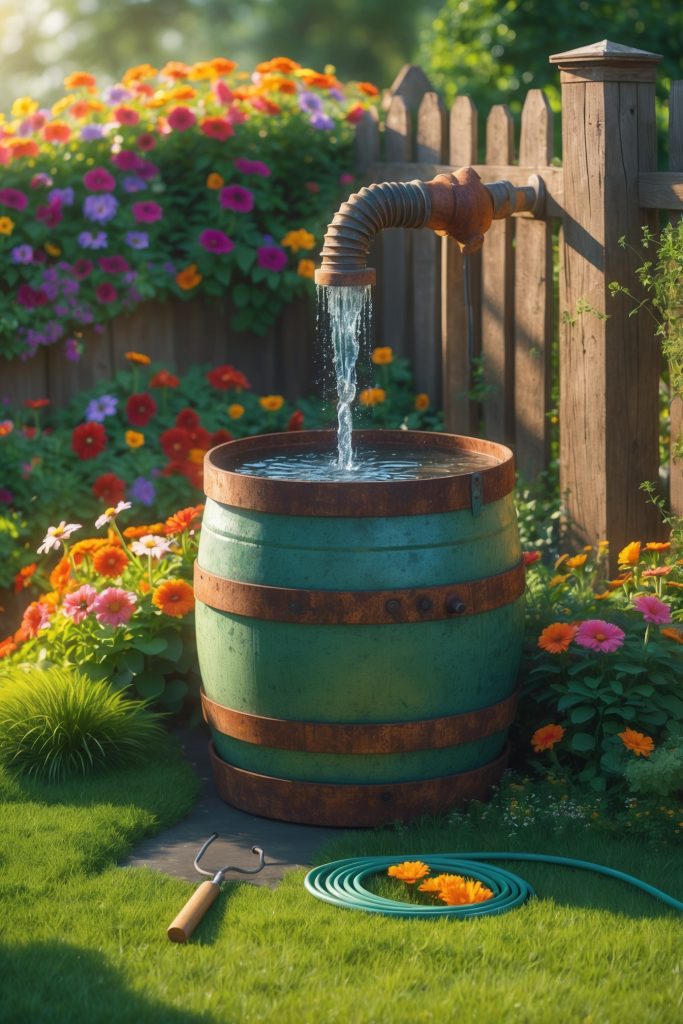
A rain barrel system is one of the simplest and most cost-effective ways to capture and reuse rainwater. Placed under downspouts, rain barrels collect runoff from your roof that can later be used to irrigate your garden, wash outdoor tools, or even water houseplants. This reduces your dependence on municipal water and helps lower your utility bills. Many modern barrels come with built-in filters, spigots, and overflow valves, making them both functional and easy to use. Choose a barrel that complements your outdoor décor, or paint one yourself for a personalized touch.
Green Roof for Urban Stormwater Management
A planted roof absorbs rainwater, insulates your home, and provides habitat for birds and pollinators.

In urban areas where green space is limited, a green roof can provide a powerful rainscaping solution. By covering a roof with layers of vegetation, soil, and waterproofing materials, you can absorb and slow down rainfall before it ever hits the ground. Green roofs not only reduce runoff and relieve pressure on city drainage systems but also insulate your building, lower urban temperatures, and create habitats for birds and insects. Whether it’s a full rooftop garden or a modest planted area over a shed or garage, green roofs offer a creative blend of ecology and architecture.
Bioswale with Native Grasses
A bioswale is a gently sloped channel filled with vegetation and mulch that filters and slows down water as it moves across the land.
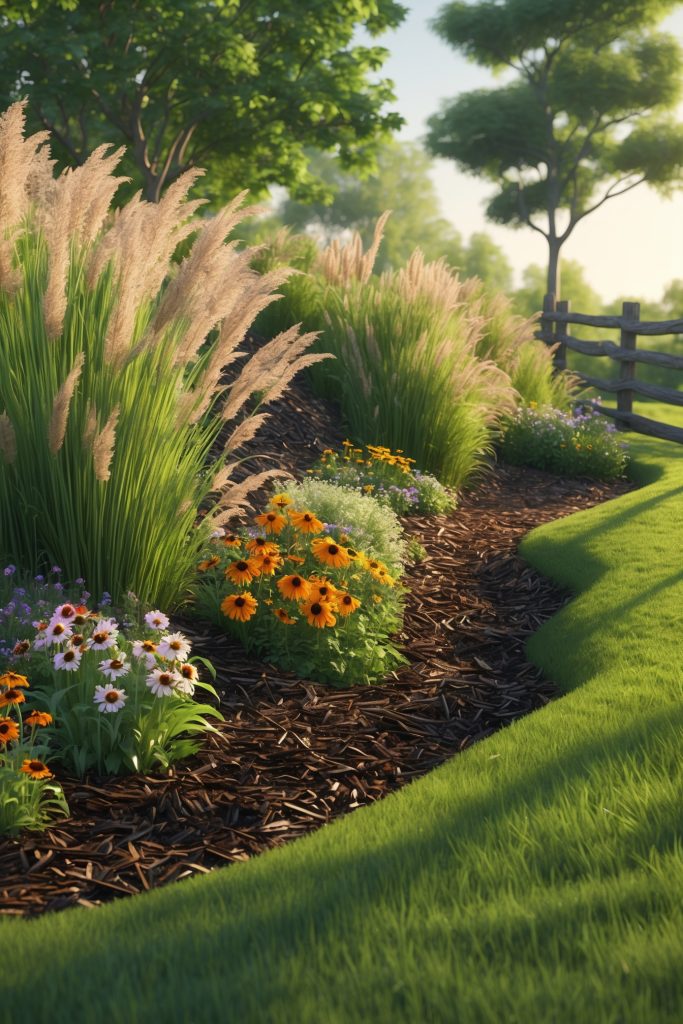
A bioswale is a gently sloped trench that slows, filters, and directs stormwater as it travels across your landscape. Often planted with native grasses, shrubs, and perennials, bioswales help remove pollutants from runoff before it reaches local waterways. Their deep-rooted plants promote infiltration, while the shape of the swale reduces erosion and encourages water absorption. Unlike standard drainage ditches, bioswales are both functional and beautiful. Fill them with plants like switchgrass, prairie dropseed, or butterfly weed, and add a mulch layer to retain moisture and further filter the water.
Gravel or Mulch Pathways
Swap concrete walkways for gravel or mulch paths that absorb water instead of redirecting it.
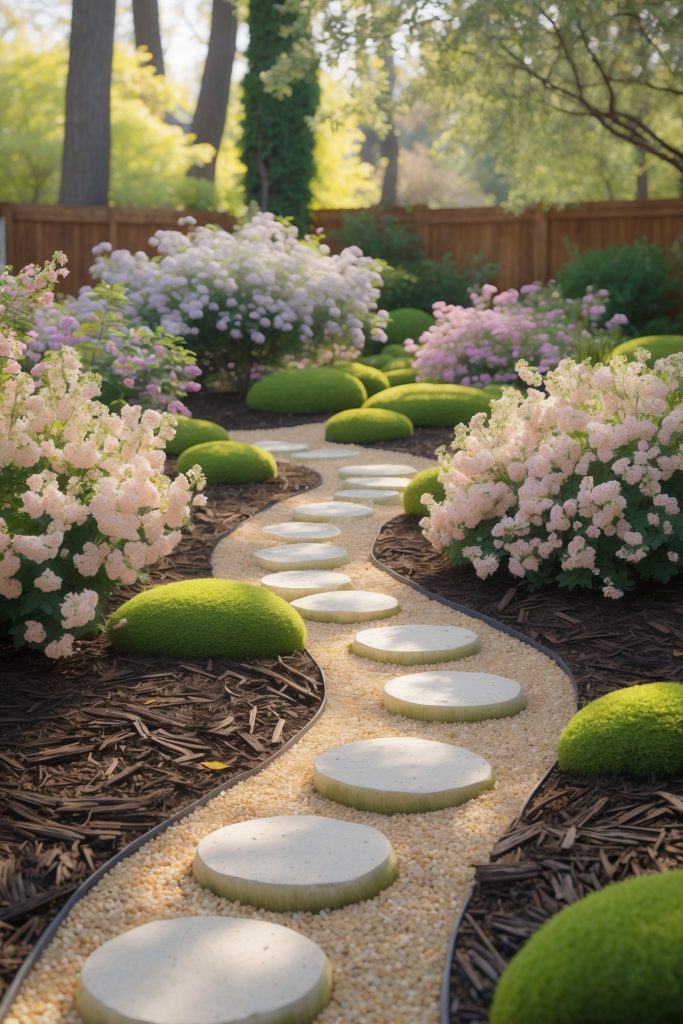
Instead of using solid concrete for walkways, consider installing gravel or mulch paths. These permeable materials allow rainwater to soak into the ground naturally, reducing runoff and promoting healthy soil. Gravel paths offer a more formal appearance and are well-suited for modern or Mediterranean-style gardens, while mulch paths blend beautifully into woodland or cottage landscapes. Both options are affordable, easy to install, and low-maintenance. Add edging to keep the materials contained, and consider incorporating stepping stones or pavers for added texture and usability.
Rain Chain Water Feature
A decorative rain chain guides water from the roof to the ground or barrel, combining beauty and function.
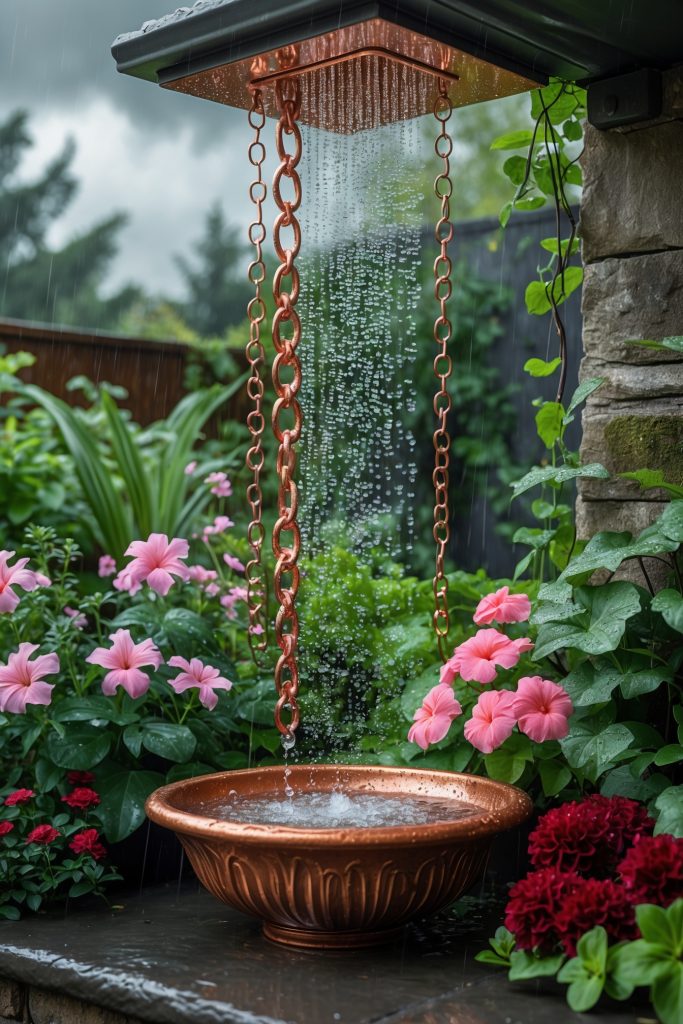
A rain chain offers a stylish alternative to traditional downspouts. These decorative chains guide rainwater from your roof gutter to the ground or into a rain barrel in a slow, controlled flow. As the water travels down the chain—often made of linked cups or rings—it creates a soothing, waterfall-like sound. Rain chains come in a variety of materials like copper, aluminum, or steel and serve as functional art in your garden. Pair one with a rock basin or ceramic bowl at the base to catch and slow the water while enhancing the visual appeal.
Downspout Rock Splash Pad
Place river rocks at the base of your downspout to reduce erosion and slow down the water flow.
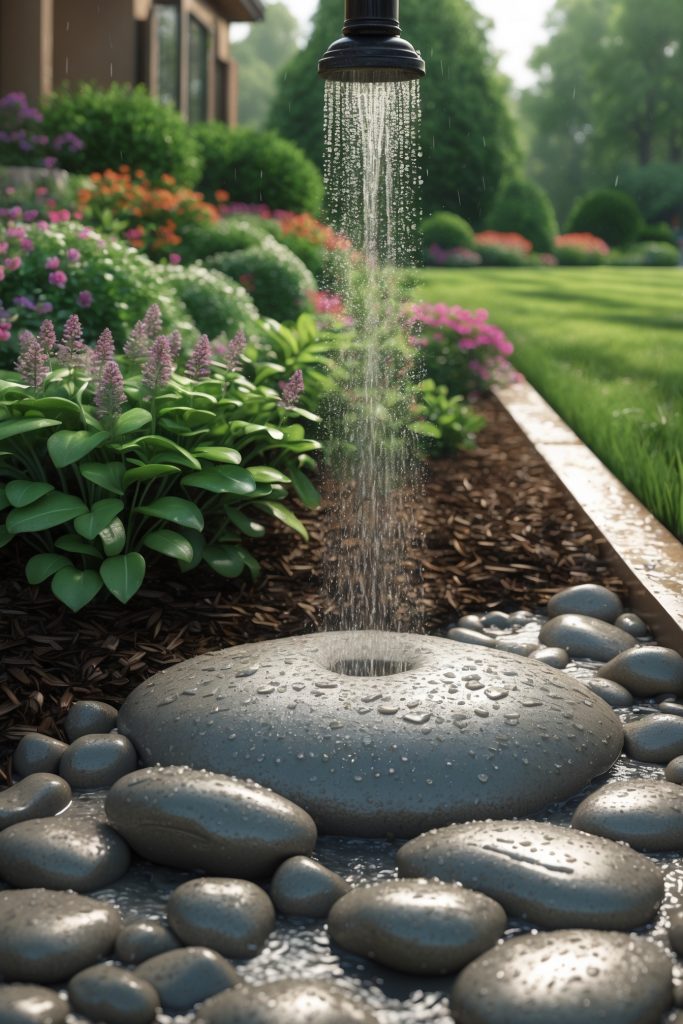
Erosion around your home’s downspouts can be both unsightly and damaging. A rock splash pad is a simple yet effective solution that reduces water speed and spreads flow. By placing a bed of river rocks, gravel, or cobblestones directly beneath the downspout, you can prevent soil displacement and water pooling. This low-maintenance addition not only protects your foundation but also blends beautifully with natural landscape themes. Enhance it with native ground covers or mosses around the edge for a polished, integrated look.
Native Meadow Lawn Alternative
Replace traditional grass with a native wildflower or meadow garden to absorb water, support pollinators, and reduce mowing.

Swap out high-maintenance turfgrass for a native meadow lawn that handles rainfall with ease. Meadows filled with native wildflowers and grasses like little bluestem, bee balm, and goldenrod are excellent at absorbing stormwater while supporting pollinators and reducing the need for mowing or chemical treatments. These lawns thrive with minimal input and provide changing beauty throughout the seasons. You can convert an entire lawn area or start small with a corner meadow bed that expands over time. It’s a fantastic way to add resilience and biodiversity to your landscape.
Infiltration Trench or French Drain
Install a gravel-filled trench underground to collect and disperse water slowly, ideal for soggy yards or areas with poor drainage.
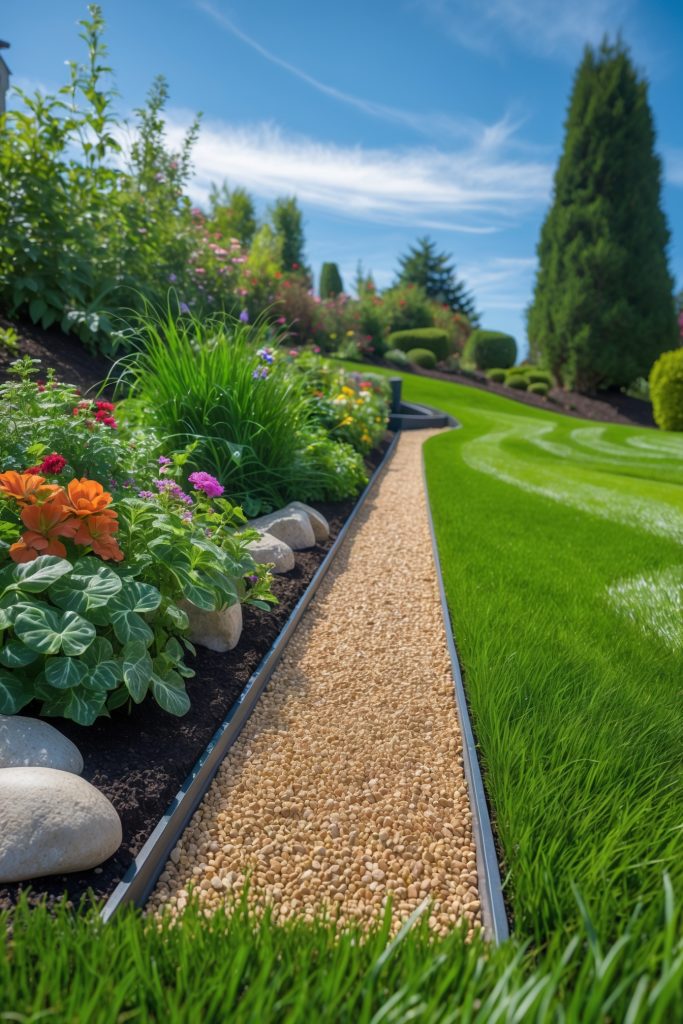
For areas of your yard that stay soggy or have poor drainage, an infiltration trench—commonly known as a French drain—offers an efficient underground solution. This system involves digging a trench, lining it with landscape fabric, and filling it with gravel and a perforated pipe that redirects water away from problem spots. The water slowly seeps through the gravel and into the soil or exits through a designated outlet. While hidden from view, you can cover the trench with turf, gravel, or decorative stone to integrate it seamlessly into your landscape.
Final Thoughts
Rainscaping is more than just a landscaping trend—it’s a practical, eco-friendly solution for managing stormwater while adding beauty and resilience to your property. Whether you’re looking to prevent water damage, reduce erosion, or create a more sustainable outdoor environment, these 11 rainscaping ideas offer something for every space and budget.
From lush rain gardens to stylish rain chains and innovative permeable driveways, each method helps you work with nature rather than against it. Start with a small project like a downspout splash pad or gravel path, and gradually transform your yard into a stormwater-savvy sanctuary that benefits your home and the planet.