Old Money Home Decor: Get That Quiet Luxury Look
There’s a certain enduring charm to the ‘old money’ aesthetic that never seems to go out of style. It’s less about ostentatious displays and more about appreciating fine craftsmanship, a sense of history, and environments that appear to have evolved gracefully through time, rather than being assembled in a single shopping spree. And here’s the exciting part: you absolutely don’t need a massive inheritance to achieve this sophisticated look.
We’re going to show you exactly how to infuse your home with that classic old money elegance, all without breaking the bank.

What Actually Is Old Money Decor?
Instead of picturing an extravagant, over-the-top estate, imagine a cherished family summer home that has been passed down through generations since the early 20th century. The essence of old money decor lies in its subtle sophistication, timeless furnishings, and an inviting, well-loved atmosphere. You won’t find anything that shouts ‘brand new purchase’; instead, every item subtly suggests a long and storied past.
The core ideas behind this style are prioritizing durability over sheer volume, utilizing muted color schemes complemented by luxurious textures, incorporating genuine antiques or items that evoke a vintage feel, and completely avoiding any overt branding or fleeting fashion trends.

Start with a Neutral Foundation
Homes with an old money aesthetic frequently feature a palette dominated by creamy tones, various shades of beige, inviting warm whites, gentle grays, and subdued greens. Far from being dull, these neutral hues serve as elegant canvases, allowing the inherent quality of your furnishings and decor to truly stand out.
Consider painting your walls in timeless colors such as Benjamin Moore’s White Dove or Farrow & Ball’s Elephant’s Breath. If you opt for wallpaper, apply it sparingly and select understated designs like fine stripes, gentle floral motifs, or classic damask patterns in subdued shades.
Your flooring choice also plays a significant role. Ideally, natural-toned hardwood floors or high-quality laminate resembling weathered oak are excellent options. Enhance these with traditional area rugs, such as Persian, Oriental, or other classic designs featuring muted, aged colors.

Invest in Classic Furniture (Or Fake It)
The aim is to select furnishings that appear as though they’ve been passed down through generations. Envision pieces like Chesterfield sofas, elegant wingback chairs, wooden coffee tables featuring intricately turned legs, and side tables that are either genuine antiques or designed to look like them.
For this particular style, places like second-hand stores, estate auctions, and vintage boutiques are absolute treasures. A sturdy wooden dresser from the 1960s, for instance, would integrate seamlessly into an old money setting. You can often discover incredible deals on family heirlooms on Facebook Marketplace.
If authentic vintage items are hard to come by, don’t worry. Stores such as Pottery Barn, Restoration Hardware (especially during sales), and even Target’s Threshold collection provide furniture with traditional profiles. The key is to prioritize straightforward, enduring designs rather than chasing fleeting fads.

Layer Textures Like It’s Your Job
The luxurious feel of old money residences comes from a rich interplay of textures, not necessarily from exorbitant price tags. Incorporate layers of linen, velvet, wool, silk, and other natural fabrics throughout your rooms.
Cream or white linen curtains, allowed to gently pool on the floor, instantly elevate a room’s sophistication. Adding velvet throw pillows to a plain sofa introduces a sense of richness. A thick, knitted blanket casually tossed over a chair exudes an easy luxury. Finally, wool or silk rugs beneath your feet perfect this multi-layered aesthetic.
Even your bedding contributes significantly; imagine crisp white or cream linen sheets, a refined quilted coverlet, and a select few pillows in soft, understated colors. This combination evokes the feeling of a high-end hotel suite blended with the comfort of a grand country estate.

Art and Accessories: Curated, Not Cluttered
In old money decor, you won’t typically find a haphazard collection of prints arranged as a gallery wall. Instead, the focus is on a handful of thoughtfully selected artworks: traditional oil paintings (whether originals or excellent reproductions), antique botanical illustrations, monochromatic photographs in understated frames, or abstract pieces rendered in subdued hues.
Second-hand shops are frequently brimming with old paintings and prints that are ideal for this style. Search for items featuring weathered frames or depictions of natural scenery, still life compositions, or portraits. Even if the artwork isn’t a masterpiece, the appropriate frame and subject can perfectly convey the desired ambiance.
When it comes to accessories, restraint is key. Showcase items intentionally: a collection of hardcover books with elegant bindings, an antique brass tray gracing the coffee table, a timeless table lamp topped with a linen shade, fresh blooms in an unadorned vase, or a sophisticated marble chess set.

The Library/Study Aesthetic
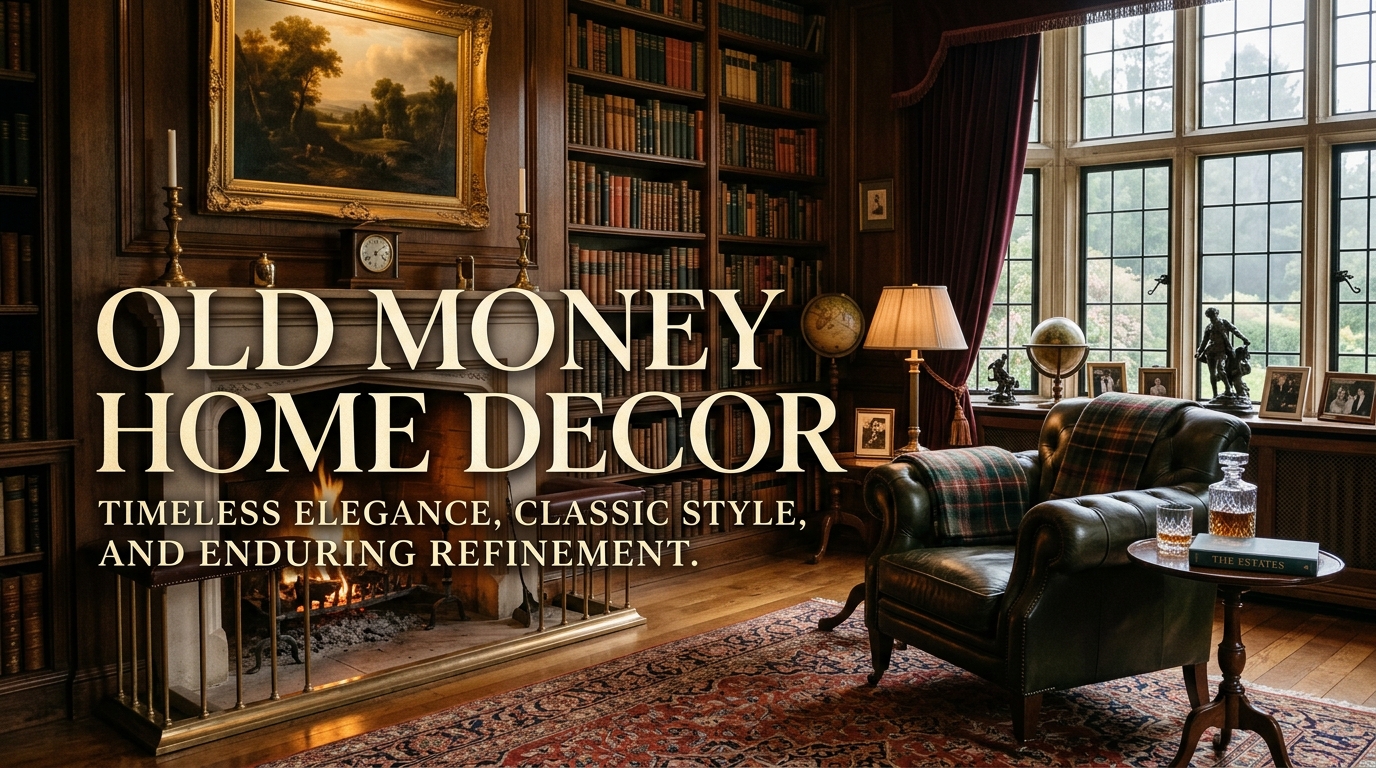
If any single space embodies the old money aesthetic, it’s undoubtedly a well-appointed library or study. Imagine towering bookshelves brimming with genuine books (not merely decorative covers), a comfortable leather armchair or a cozy reading alcove, a sturdy wooden desk, and soft, inviting illumination—these elements immediately establish an air of authenticity.
No dedicated room for a library? No problem! You can easily carve out a charming reading nook. Just combine a cozy chair, a modest bookshelf, a side table featuring a classic lamp, and you’ll effortlessly capture the desired atmosphere.
You can acquire books affordably from thrift shops, library clearance events, or even ‘free book’ bins. Hardcover editions with traditional designs are ideal. While some might find it debatable, arranging them by color can be visually appealing, or you can simply display their spines for that genuine library ambiance.

Lighting: Warm and Layered
While overhead fixtures are acceptable, true old money interiors prioritize a multi-layered lighting approach. The strategic placement of table lamps, floor lamps, wall sconces, and even candles contributes to a rich sense of warmth and dimension.
Seek out lamps featuring classic bases made of materials like ceramic, brass, or wood, paired with understated linen or silk shades. Antique or vintage-inspired light fixtures are also perfect choices. Crucially, use warm-toned bulbs (around 2700K) to avoid any stark, bright white illumination.
Candles, housed in simple holders and positioned on mantels or side tables, further enhance the mood. It’s best to avoid strongly scented options; a delicate fragrance or unscented candles are more fitting for this particular style.

Bring Nature Inside
You’ll consistently find fresh flowers or lush greenery in old money residences. This doesn’t require an extravagant display; a modest arrangement of white tulips, some eucalyptus branches, or even blooms from the supermarket placed in a traditional vase will suffice beautifully.
Opt for vases crafted from ceramic, glass, or metal, keeping their forms uncomplicated. Steer clear of anything overly contemporary or vibrantly colored. Remember to refresh your arrangements frequently to maintain their pristine appearance.
Indoor plants are also a welcome addition, but stick to timeless varieties like fiddle leaf figs, snake plants, or pothos. Place them in conventional planters, bypassing fashionable ceramic face pots or brightly colored neon containers.

The Kitchen and Dining Room
Kitchens in old money residences typically favor a classic design over an ultra-modern one. When decorating, envision white or cream-colored cabinets, countertops made of marble or butcher block (or convincing alternatives), and open shelving showcasing plain white dinnerware or charming vintage discoveries.
In the dining room, the essentials include a sturdy wooden table (it doesn’t need to be enormous, just genuine wood), straightforward chairs, and traditional white or cream dinnerware. Enhance this base with fabric napkins, unembellished glassware, and perhaps some antique silverware sourced from a second-hand shop.
A sideboard or buffet, ideal for stowing away dishes and linens, perfectly complements this style. Adorn its surface with a table lamp, a modest plant, or an elegant serving tray.