
Mood Tracker Ideas – Easy Ways to Track Your Emotions
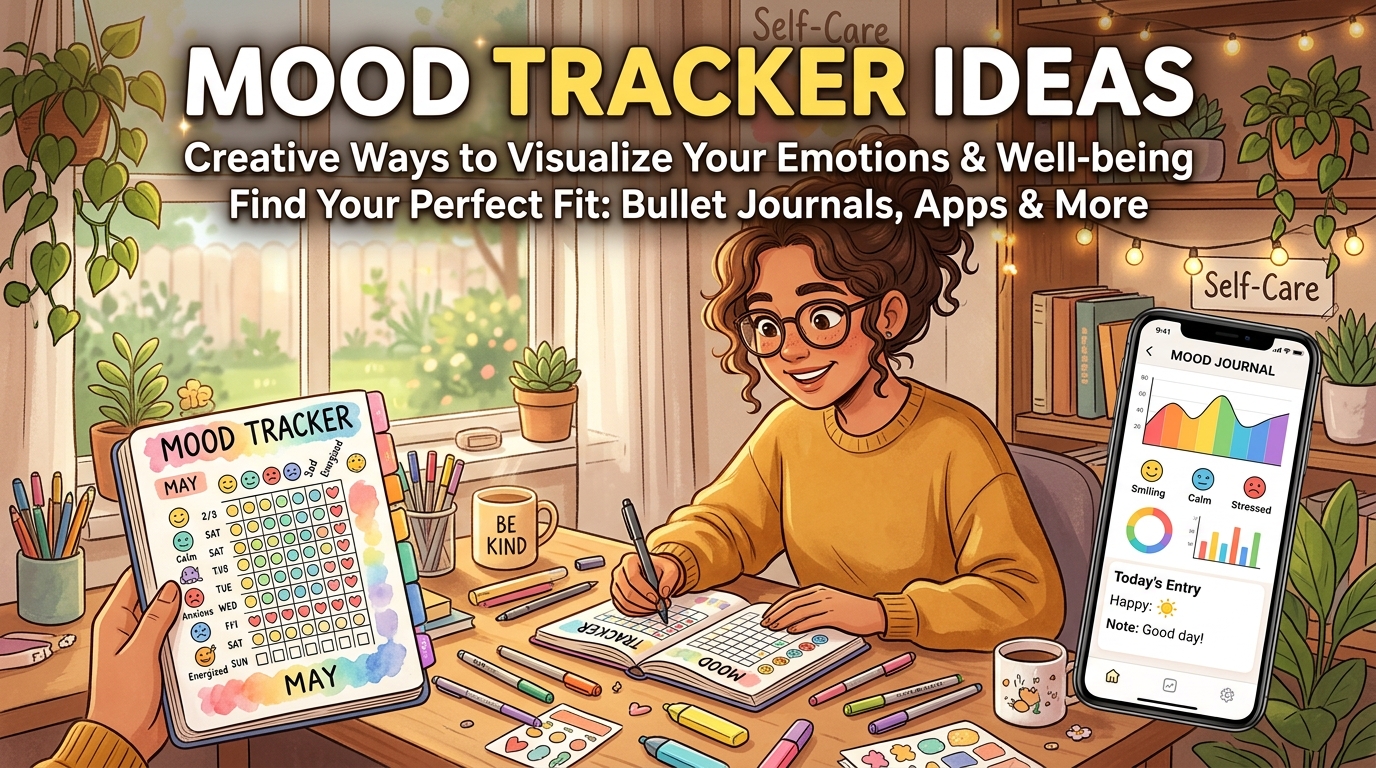
Let’s take a moment to discuss the concept of mood tracking. You’ve likely encountered the idea that keeping tabs on your emotional state can help you pinpoint patterns, recognize what sets off certain feelings, and gain a deeper understanding of your mental well-being. All of this is absolutely true. However, many mood tracking methods tend to be either too intricate to stick with consistently or so simplistic they offer no real benefit.
Whether your goal is to boost your mental health awareness, identify recurring anxiety or depression, understand the factors influencing your overall well-being, or simply become more attuned to your emotional landscape, these mood tracker suggestions are designed to be straightforward enough for you to maintain long-term.

The Simple Color Grid
The Setup: In your journal or planner, draw a grid with one square designated for each day of the current month.
The Method: At the end of each day, fill in that day’s square with a color that best represents your overall mood for the day.
Color Key (Example):
- Green = A positive day, feeling good
- Yellow = An average day, feeling neutral or a mix of emotions
- Orange = A challenging day, experiencing difficulties
- Red = A very tough day, feeling particularly down
- Blue = A day marked by anxiety or stress
Why It Works: This method takes mere seconds to complete. It instantly reveals visual patterns, allowing you to quickly identify which weeks were difficult and which were more positive.
The Variation: If you prefer, you can use stickers or unique symbols instead of a color-coding system.
Best For: Individuals seeking the most basic tracking method that provides immediate visual feedback.

The 1-10 Scale Tracker
The Setup: Each day, assign a numerical rating from 1 to 10 to describe your general mood.
The Method:
- 1-3: Indicates a poor mood or significant struggles
- 4-6: Represents a neutral or acceptable mood
- 7-10: Signifies a good to excellent mood
Track It: You can simply jot down the number in your planner, create a visual line graph, or utilize a dedicated mood tracking application.
The Advantage: This approach offers more specific detail compared to a simple good/bad/neutral categorization. It’s also excellent for charting mood trends over time with a line graph.
Add Context: Make a brief note about what might have contributed to particularly high or low scores. For example, “8 – fantastic day, caught up with a friend over coffee” or “3 – very anxious about a big work presentation.”
Best For: Those who desire more specific information than a color-based system but wish to avoid excessive complexity.
The Wheel of Emotions
The Setup: Sketch a circular shape and divide it into eight equal segments, much like slicing a pie. Assign a different emotion to each segment.
Common Emotions: Joyful, Sad, Worried, Angry, Peaceful, Energized, Fatigued, Content
The Method: Daily, shade or color in the sections to reflect how strongly you experienced each emotion. It’s perfectly normal to feel multiple emotions in a single day.
The Result: This helps you visualize which emotions are most prevalent in your weeks and months. You might notice patterns, such as consistently feeling tired on Mondays or anxious every Thursday before a specific meeting.
Variation: To indicate different levels of intensity for each emotion, you could use various shades of the same color.
Best For: Individuals who frequently experience a range of emotions daily and want to track this complexity.
The Four-Square Daily Tracker
The Setup: Draw a small square and divide it into four smaller, equal sections.
The Sections:
- Top left: Your mood in the morning
- Top right: Your mood in the afternoon
- Bottom left: Your mood in the evening
- Bottom right: Your overall assessment of the day
The Method: Color or rate each individual section. This allows you to observe how your mood fluctuates throughout the day.
Why It Matters: This method can reveal significant patterns, such as consistently feeling low in the mornings but improving by evening, or starting the day strong only to feel depleted by the afternoon.
The Hack: Try this for a month, then review when you consistently feel your best or worst. Use this knowledge to schedule important tasks during your peak energy times.
Best For: People whose moods vary throughout the day and who wish to understand their natural emotional rhythms.

The Emoji Tracker
The Setup: Utilize emojis to visually represent your daily emotional state.
Simple Version: Assign one emoji to each day in your planner or journal.
Common Choices: 😊 Excellent day 🙂 Good day 😐 Neutral/okay day 😕 Challenging day 😢 Sad day 😰 Anxious day 😴 Drained day
Digital Option: If you use a notes app or a digital planner, you can simply insert actual emojis. It’s both easy and enjoyable.
Why It Works: This method is highly visual, intuitive, and quick. Emojis naturally convey a wide range of emotions.
Best For: Individuals who appreciate visual tracking and primarily use digital planners or journals.

The Mood + Factors Tracker
The Setup: Record your mood alongside various elements that might be influencing it.
Daily Log:
- Your mood rating (e.g., 1-10 or a specific color)
- The quality of your sleep (e.g., hours slept or a rating)
- Any exercise you did (e.g., yes/no or the type of activity)
- Your social interactions (e.g., yes/no or who you spent time with)
- Any significant events or sources of stress
- Menstrual cycle tracking (if relevant)
The Analysis: After about a month, review your entries to look for connections. Do you notice your mood declining when your sleep is poor? Does it improve after physical activity? Does it consistently drop during certain times of the month?
The Format: A simple table or a series of columns works perfectly. There’s no need for an overly elaborate design.
Why It Matters: This approach helps you link your emotional state to concrete factors that you might be able to modify.
Best For: People who want to pinpoint what influences their mental health and make informed adjustments to their lifestyle.

The Year in Pixels
The Concept: Dedicate one tiny square, or “pixel,” to each day of the entire year.
The Setup: Create a grid containing 365 squares. Each day, color in the corresponding square based on your mood for that day.
The Result: By the end of the year, you’ll have a comprehensive visual representation of your emotional journey over twelve months.
Variation: Some individuals choose to implement this digitally using conditional formatting in a spreadsheet program.
The Advantage: This method makes long-term patterns incredibly clear. You can easily spot seasonal trends, challenging months, and periods of sustained well-being.
The Commitment: While it requires consistent daily input for a full year, it only takes a few seconds each day.
Best For: Those who desire a broad, long-term perspective on their mental health patterns.
The Bullet Journal Mood Mandala
The Setup: Draw a circle and divide it into segments, with one segment for each day of the month. Begin coloring from the center and work your way outwards.
The Method: Each day, color the next segment moving outward, reflecting your mood for that day. This gradually forms a beautiful, mandala-like design.
The Appeal: This method is both artistic and can be a meditative process to create, resulting in a visually pleasing representation.
The Downside: It typically demands more time and physical space in your journal compared to simpler grid systems.
Best For: Creative individuals who enjoy the artistic aspect of journaling and find it therapeutic.

The Mood Tracker App Approach
Popular Apps:
- Daylio (uses icons, also tracks activities)
- Moodpath (focuses on mental health assessments)
- Reflectly (offers AI-powered journaling features)
- eMoods (designed specifically for bipolar disorder but useful for anyone)
- Pixels (a digital version of the “year in pixels” concept)
The Advantage: These apps often provide helpful reminders, automatically generate charts, analyze your data, and can even identify correlations for you.
The Downside: It involves more screen time, raises potential privacy concerns, and requires constant access to your phone.
The Hack: Set a consistent daily reminder for tracking. To avoid distractions, disable all other notifications from the app.
Best For: People who always have their phone nearby and prefer digital tools over paper-based methods.

The Check-In Questions Method
Instead of Rating: Rather than assigning a number or color, answer a few brief questions each day.
Sample Questions:
- How am I truly feeling at this moment?
- What was one positive thing that happened today?
- What was a particular challenge I faced today?
- What do I feel I need more of tomorrow?
The Format: Jot down a few sentences in a journal or a notes app. It’s quick yet encourages self-reflection.
Why It Works: This method provides valuable context that simple numbers or colors cannot. It helps uncover the underlying reasons for your feelings.
Best For: Individuals who process their thoughts through writing and prefer qualitative insights over purely quantitative data.

The Weekly Summary Approach
The Method: Instead of daily tracking, take time to reflect on your entire week.
Weekly Questions:
- Overall, how would I describe this past week? (Rate 1-10)
- What were the standout positive moments?
- What were the most challenging aspects?
- Did I notice any recurring patterns in my mood?
- What is one thing I want to focus on improving next week?
Why It Works: This method reduces the pressure of daily tracking. It still allows you to identify patterns without requiring a daily commitment.
The Tradeoff: You’ll get less granular data, and it might be harder to recall specific details from individual days accurately.
Best For: People who feel overwhelmed by daily tracking or have unpredictable schedules.
Adding Context to Any Tracker
Enhance Basic Tracking: Incorporate small symbols or brief notes alongside your mood ratings to provide additional context.
Helpful Symbols: ☀️ Good sleep 💤 Poor sleep 🏃 Exercised 👥 Social time 💊 Missed meds 🌙 Period began 💼 Work stress ✈️ Travel
Why: This helps you pinpoint what factors are influencing your mood without needing to set up an elaborate tracking system.
The Method: Simply draw the relevant symbol next to your mood rating for that particular day.
Making Mood Tracking Useful
Review Monthly: At the end of each month, take a look back at your collected data. What consistent patterns emerge? Were there any surprises?
Identify Triggers: What events or circumstances reliably precede periods of low mood? What seems to correlate with your good moods?
Take Action: Use the insights you gain to make positive changes. If exercise consistently boosts your mood, make it a priority. If certain activities drain your energy, try to reduce them.
Share With Professionals: If you’re working with a therapist or doctor, your mood tracking data can be an incredibly valuable resource for them.
Adjust the System: If your current tracking method stops being effective, don’t hesitate to change it. No system needs to be permanent.

What Doesn’t Work
Too Complicated: Systems that demand 20 minutes of your time daily are unlikely to last. Simplicity is key.
Too Vague: Simply categorizing moods as “happy/sad” offers very limited insight. Aim for a bit more detail.
Judgment: The purpose of tracking isn’t to achieve perfect moods every day. It’s about building self-awareness. Avoid judging yourself for days when your mood is low.
Perfectionism: If you miss a day, just pick up where you left off. Don’t feel the need to restart or abandon the entire system.
No Follow-Through: Simply tracking without regularly reviewing and applying the data means you’re just collecting information that will never be put to use.

The Real Point
Here’s the crucial takeaway: mood tracking isn’t about maintaining a perfect emotional state every single day. Its true value lies in helping you become more aware of your emotional patterns, enabling you to better understand yourself and make thoughtful decisions.
The most effective mood tracker is the one that reveals insights you wouldn’t have otherwise noticed. Perhaps you consistently feel down on Sundays, anticipating the start of the work week. Maybe you always experience an uplift in mood after spending time with friends. Or perhaps your emotional state reliably dips at a specific point in your monthly cycle.
These kinds of valuable insights only become apparent through consistent tracking over an extended period.