
What Makes a Bedroom Truly Relaxing? Designing for Deep Rest and Calm
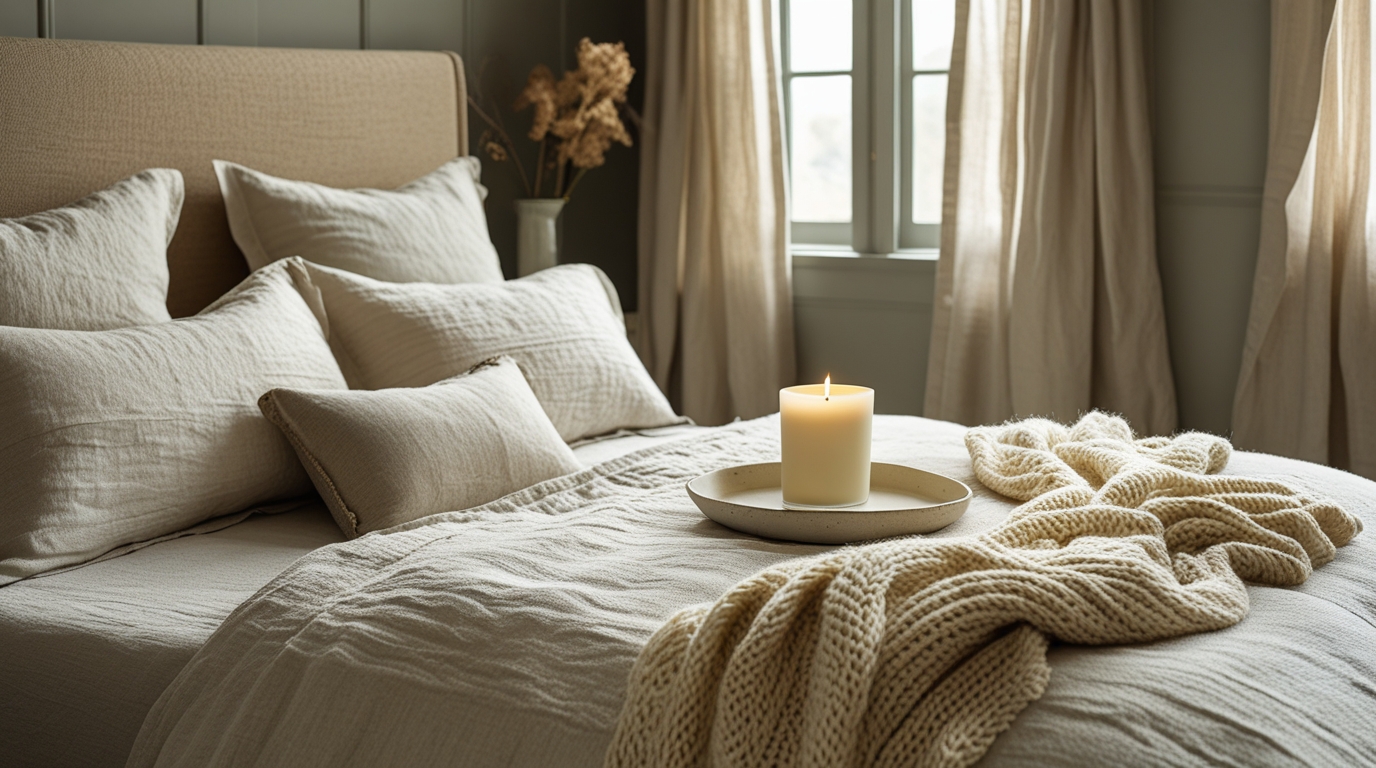
In a world that moves faster with every passing day, our bedrooms have become more important than ever — not just as places to sleep, but as sanctuaries for stillness and emotional reset. A truly relaxing bedroom isn’t simply about aesthetics; it’s about creating an environment where your body can unwind and your mind can let go.
But what actually makes a bedroom feel restful?
It’s a thoughtful combination of subtle design choices — from the psychology of color to the arrangement of furniture, the layering of textures, and the presence (or absence) of light and sound. In this guide, we’ll explore how to intentionally design a bedroom that promotes calm, encourages deep rest, and feels like an exhale every time you walk in.
The Psychology of Color: Tones That Soothe
Color affects more than just how a space looks — it affects how we feel. This is especially true in the bedroom, where every visual element interacts with our nervous system at the end of the day. Choosing the right color palette is the first step in creating a restful atmosphere.
Cool tones like soft blues, gentle greys, muted greens, and lavender are often associated with relaxation and have been shown to reduce heart rate and blood pressure. These colors signal the brain that it’s time to wind down, making them ideal for walls, bedding, and décor accents.
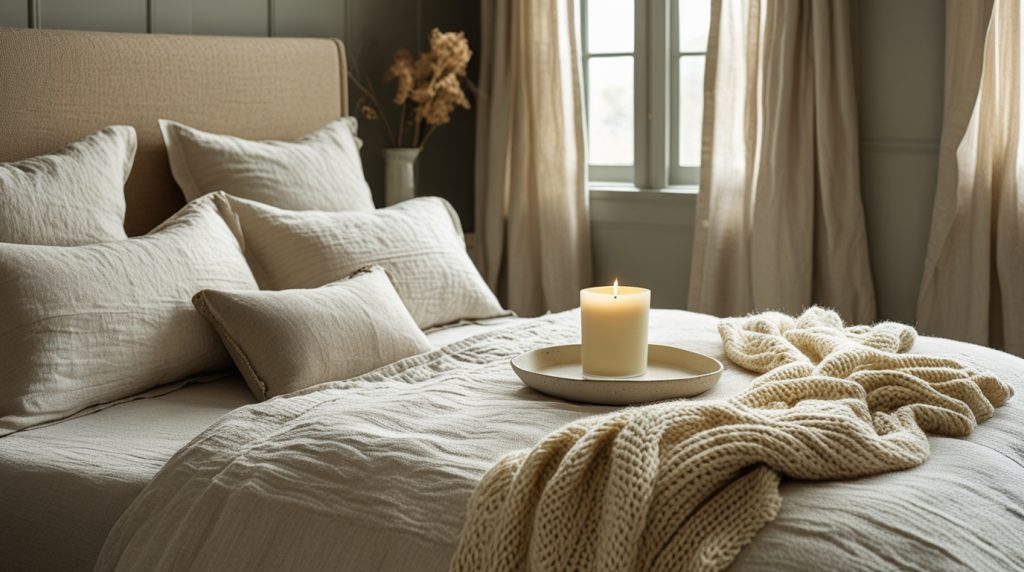
Earthy neutrals such as warm taupes, beiges, oatmeal, and creamy whites also promote calm by connecting us to natural environments. They offer visual warmth and pair beautifully with layered textures and natural materials, which is key in a serene bedroom design.
Bright colors, high contrast patterns, and saturated hues may energize rather than relax, so it’s wise to use them sparingly — perhaps in artwork or a throw pillow, not as dominant tones.
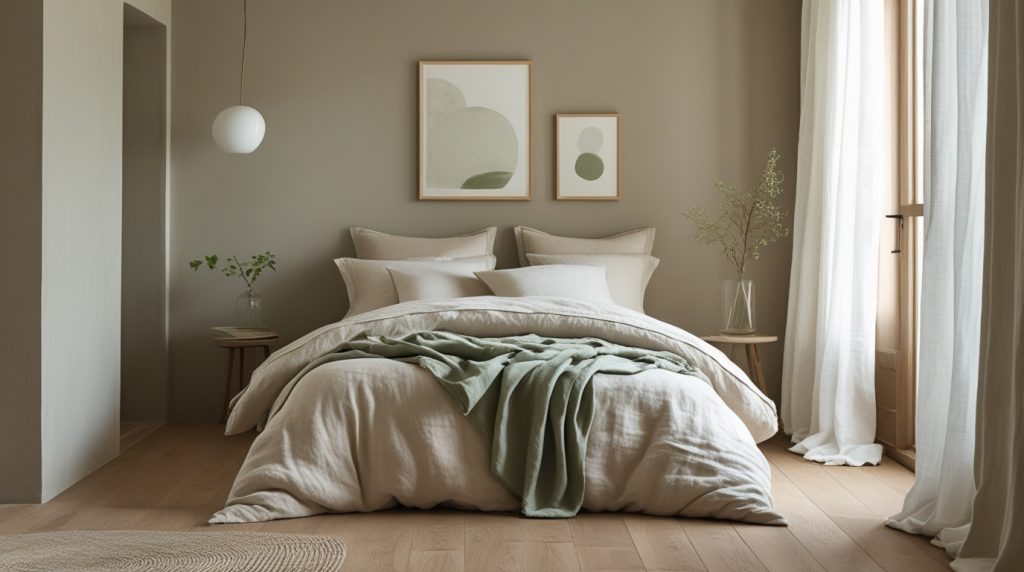
Furniture Placement: Flow, Function, and Psychological Anchoring
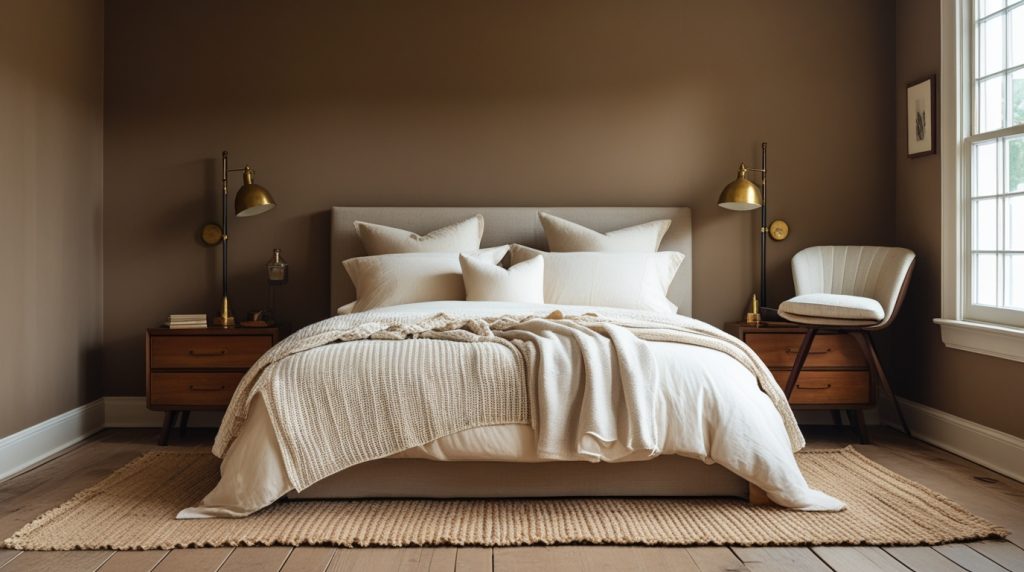
The way furniture is arranged in a bedroom impacts both physical comfort and psychological ease. In spaces meant for rest, flow and symmetry create a feeling of security and balance.
Start with the bed — it should be the visual and energetic anchor of the room. Ideally, the headboard is placed against a solid wall, with sightlines to the door but not directly in line with it. This placement subconsciously supports a sense of safety and calm.
Avoid crowding the space. Allow clear walking paths around the bed and between major pieces like dressers and nightstands. Too much furniture or cluttered arrangement can subconsciously feel chaotic, even if the room is clean.
Nightstands on either side of the bed help establish visual balance and allow room for essential items like a lamp, book, or cup of tea. If space allows, consider a small reading nook with a plush chair in a quiet corner — a place to unwind before slipping into sleep.
Lighting: Setting the Mood for Restfulness
Light — both natural and artificial — has a profound effect on the body’s circadian rhythm. In the bedroom, lighting should support the transition from day to night, gradually encouraging your body to release melatonin and prepare for rest.
Start with natural light. Use sheer curtains to diffuse daylight gently, avoiding harsh glares but still allowing your body to sync with the rhythms of the sun. If privacy is needed, consider layering blackout curtains behind lighter drapes, giving you control without cutting off natural cues entirely.
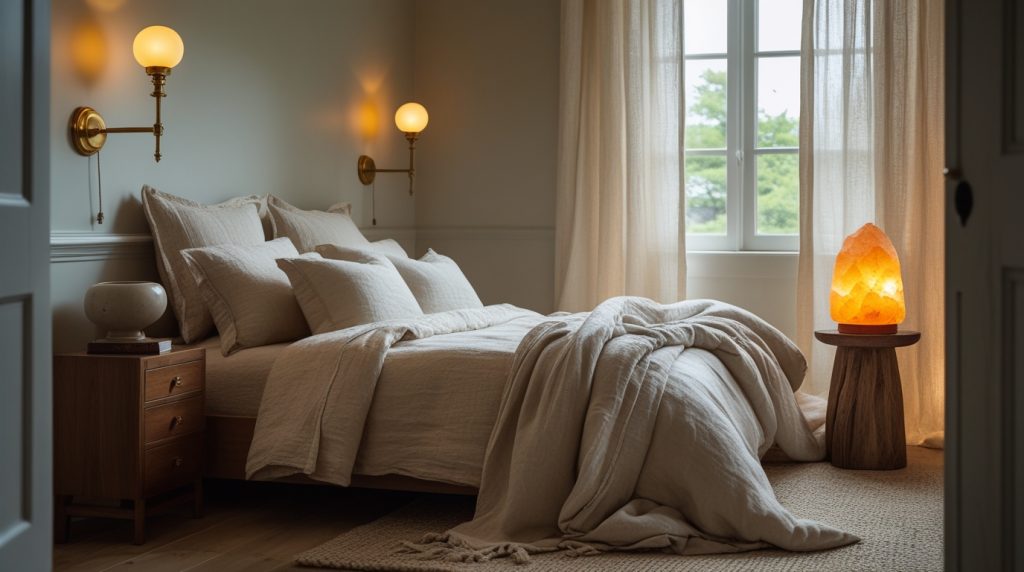
In the evening, shift to warm artificial lighting. Avoid bright overhead lights, especially those with cool or blue tones. Instead, use multiple light sources — bedside lamps, wall sconces, or a dimmable floor lamp — to create a soft, layered glow.
Bulbs in the 2700K–3000K range are ideal for bedrooms, offering a warm, candlelight-like hue. For ultimate relaxation, consider a small salt lamp or a smart bulb that gradually dims as you prepare for bed.
Texture and Sound: Engaging the Senses Gently
Sight is only part of the equation — a relaxing bedroom engages multiple senses in gentle, subtle ways. Texture and sound play crucial roles in making the room feel not just beautiful, but deeply comforting.
Layered bedding is one of the easiest ways to introduce texture. Start with soft cotton or linen sheets, then add a duvet in a neutral tone, a chunky knit throw at the end of the bed, and a mix of cushions in varied fabrics like velvet, bouclé, or washed linen.
Textiles like plush rugs, natural fiber curtains, and upholstered headboards help muffle sound, adding to the cocoon-like feel of the room. If hardwood floors feel too echoey, layering a thick area rug beneath the bed brings acoustic softness and physical comfort.
Sound itself can also be shaped. White noise machines, nature sound apps, or even a gentle fan can drown out disruptive noise. If silence is your preference, make sure windows and doors are well-insulated — not just for energy efficiency, but for peace of mind.
Personal Touches: Designing for Emotional Comfort
While many relaxing bedrooms share a common language of neutrals and simplicity, your space should still feel uniquely yours. The key is curated personalization — small elements that carry emotional weight without overwhelming visual calm.
This could be a framed photo of a meaningful memory, a piece of art you love, or a favorite book on your nightstand. A tray with your nightly tea ritual, a woven basket of lavender sachets, or even a handwritten note by the bed can imbue the room with warmth and authenticity.
Avoid clutter and over-accessorizing. Instead, give personal items space to breathe. Let them be intentional — each one placed with care, each one reflecting something that brings you joy or peace.
The goal is for your bedroom to feel like a retreat, not a showroom. When you walk in, it should feel like an invitation to return to yourself.
Designing for the Nervous System: The Invisible Architecture of Rest
Beyond the aesthetics, a truly relaxing bedroom is designed with the nervous system in mind. Our environment constantly sends signals to the brain about whether we are safe, threatened, energized, or at ease.
When a room is visually crowded, overlit, loud, or full of sharp lines and cold surfaces, it can subtly activate the sympathetic nervous system — the fight-or-flight response. Conversely, softness, symmetry, natural materials, and warm light all activate the parasympathetic nervous system — the rest-and-digest mode we need for quality sleep.
This isn’t just theory. Studies show that people sleep better in rooms that are tidy, quiet, and cool, with access to soft light and familiar scents. Design is physiological. It shapes how we rest and how we heal.
So, whether you’re redesigning your bedroom entirely or simply updating a few key elements, keep this truth in mind: your space is a message to your nervous system. Make sure it says, “You’re safe here. You can rest now.”
Conclusion: A Bedroom That Feels Like a Deep Breath
Designing a truly relaxing bedroom isn’t about following trends — it’s about tuning into what helps you let go of the day. By combining thoughtful color choices, intuitive furniture placement, soft lighting, tactile textures, and personal touches, you create not just a beautiful space, but a therapeutic one.
In this way, your bedroom becomes more than a place to sleep. It becomes a space to recover, reflect, and reconnect — a quiet, grounded refuge in a noisy world.