
How to Reset a Tripped Breaker Safely?
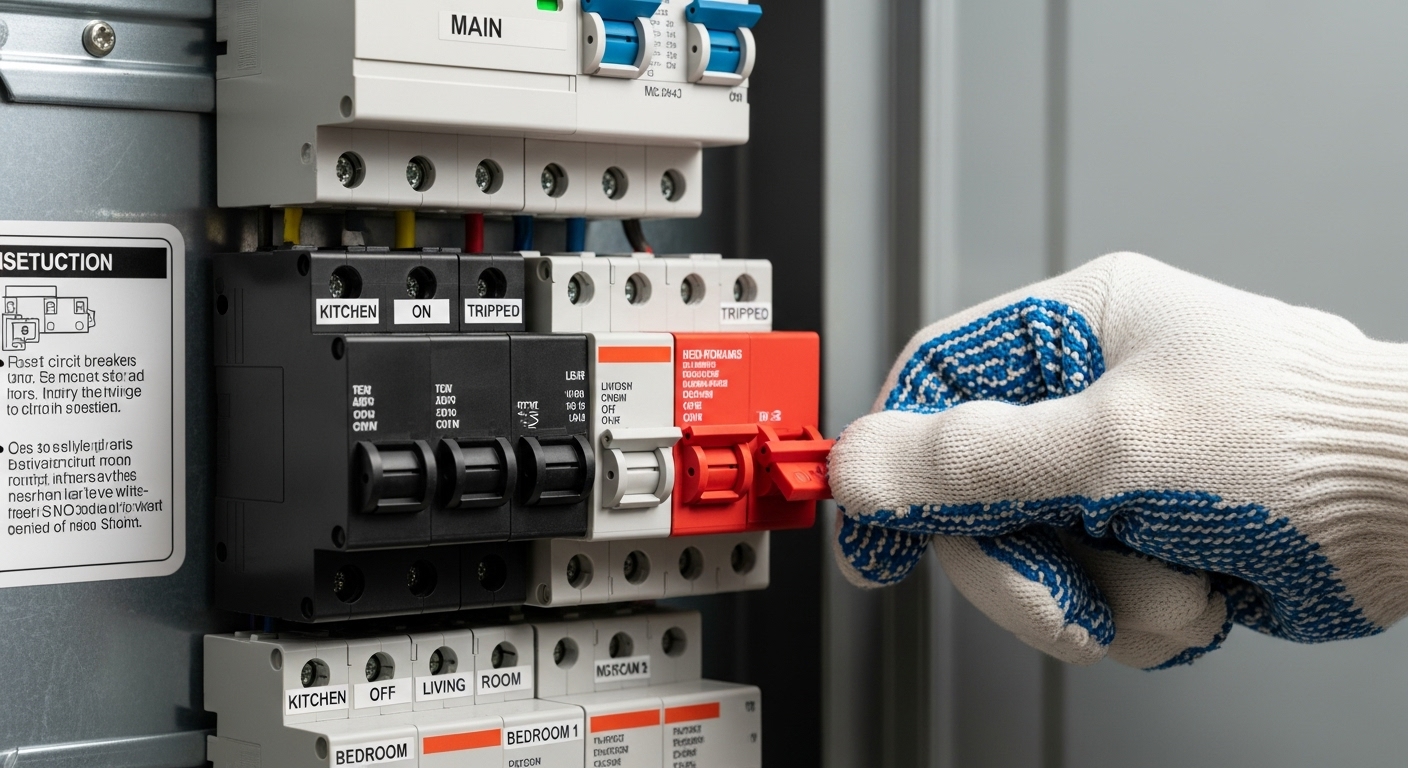
Almost every homeowner has experienced the sudden loss of power in part of their home—lights flicker off, appliances stop working, or a room goes completely dark. Often, the culprit is a tripped breaker in your electrical panel. Circuit breakers are designed as safety devices, cutting off electricity when circuits become overloaded or shorted.
Knowing how to reset a breaker safely is an essential home skill. Done correctly, it restores power quickly. Done carelessly, it can create hazards or mask a deeper electrical issue. This guide explains not only how to reset a tripped breaker step by step, but also why breakers trip, how to avoid repeated trips, and when to call an electrician.
Why Breakers Trip
Circuit breakers trip when the electrical load exceeds safe levels. Common causes include:
- Overloaded circuits: Too many appliances running at once.
- Short circuits: A hot wire touches a neutral or ground wire, causing a surge.
- Ground faults: Current flows where it shouldn’t, often due to faulty wiring or appliances.
- Arc faults: Dangerous sparks from damaged wiring or outlets.
Each of these scenarios triggers the breaker to trip, preventing overheating, fires, or equipment damage.
Understanding Your Electrical Panel
Before resetting a breaker, it’s helpful to know the parts of your electrical panel:
- Main breaker: Controls power to the entire house.
- Individual circuit breakers: Control specific rooms or appliances.
- Labels: Should indicate which breaker corresponds to each part of the house.
Safety Precautions Before Resetting
- Identify the cause: Unplug or switch off devices you suspect caused the overload.
- Stand on a dry surface: Avoid resetting if standing on wet floors.
- Use one hand: Helps reduce risk of electric shock if something goes wrong.
- Wear rubber-soled shoes: Adds protection against accidental contact.
- Keep a flashlight handy: Panels are often in dark basements or garages.
Step-by-Step Guide to Resetting a Tripped Breaker
Step 1: Locate the Electrical Panel
Usually found in basements, garages, utility rooms, or hallways.
Step 2: Identify the Tripped Breaker
- Look for a breaker handle in the middle position—not fully ON or OFF.
- Some breakers have a red or orange indicator showing they’ve tripped.
Step 3: Turn the Breaker Fully Off
Gently but firmly move the switch to the OFF position.
Step 4: Reset to ON
Push the switch back to the ON position until you hear or feel a click.
Step 5: Check Power Restoration
Verify lights and outlets in the affected area are working.
Step 6: Monitor the Circuit
If it trips again immediately, there’s likely a deeper electrical problem.
Visualization Example
Imagine a flow chart:
- Power loss →
- Check panel →
- Locate tripped breaker →
- Reset OFF → ON →
- Power restored (yes/no) →
- Yes: Resume use carefully.
- No: Call electrician.
Common Mistakes to Avoid
- Forcing a stiff breaker (could damage it).
- Ignoring repeated trips (a serious electrical issue).
- Touching metal parts inside the panel.
- Resetting with wet hands.
Troubleshooting After Reset
If the breaker keeps tripping:
- Overload: Move some devices to another circuit.
- Faulty appliance: Test appliances one by one.
- Damaged wiring: Requires professional inspection.
Comparison Table: Causes of Tripped Breakers
| Cause | Symptoms | Solution |
|---|---|---|
| Overloaded Circuit | Breaker trips after multiple devices run | Unplug devices or redistribute load |
| Short Circuit | Sparks, burning smell, immediate trip | Call electrician, inspect wiring |
| Ground Fault | Trips in areas with moisture (bathroom, kitchen) | Check GFCI outlets, repair wiring |
| Arc Fault | Buzzing, flickering lights | Install AFCI breakers, professional repair |
Example Calculation: Circuit Load
Total Load (Watts) = Sum of Appliance Wattages
Circuit Load (Amps) = Total Load ÷ Voltage (120V in U.S.)
Example:
- Microwave (1,200W) + Toaster (800W) + Coffee Maker (900W) = 2,900W
- 2,900 ÷ 120 = 24.1A
On a 20A breaker, this overload will trip the breaker.
Statistics and Insights
- The U.S. Consumer Product Safety Commission reports that circuit breakers prevent thousands of electrical fires annually.
- Electrical Safety Foundation International (ESFI) notes that electrical malfunctions cause over 50,000 house fires per year in the U.S.
- AFCI and GFCI breakers significantly reduce risks in living areas and wet zones.
Regional Considerations
- Older homes: May have undersized or outdated panels prone to frequent tripping.
- Modern homes: Often feature specialized breakers for added protection.
- Wet climates: GFCIs are essential for outdoor, bathroom, and kitchen outlets.
Pseudo-Code: Breaker Reset Safety Logic
function resetBreaker():
    if floorWet or handsWet:
        return "Do not reset – unsafe conditions"
    if breakerTripped == true:
        switch OFF
        wait 5 seconds
        switch ON
        if tripsAgain:
            return "Call electrician"
    else:
        return "Breaker not tripped"
When to Call an Electrician
- Breaker won’t reset or feels hot to the touch.
- Breaker trips immediately after reset.
- You notice burning smells or scorch marks.
- Frequent tripping without obvious overload.
Helpful Resources
- U.S. Consumer Product Safety Commission
- Electrical Safety Foundation International
- National Fire Protection Association
For a demonstration of resetting a breaker, see this [YouTube guide](INSERT LINK).
For troubleshooting tripped breakers, see this [YouTube tutorial](INSERT LINK).
For understanding breaker panels, see this [YouTube video](INSERT LINK).
Conclusion
Resetting a tripped breaker is a basic yet essential home skill. Done safely, it restores power in minutes. However, breakers trip for a reason, and ignoring the cause can risk electrical hazards. By understanding overloads, short circuits, and ground faults, homeowners can act safely and responsibly.
In my experience, the most important lessons are: never rush, always prioritize safety, and don’t hesitate to call an electrician when in doubt. With this knowledge, you can handle minor power outages confidently while protecting your home and family from hidden dangers.